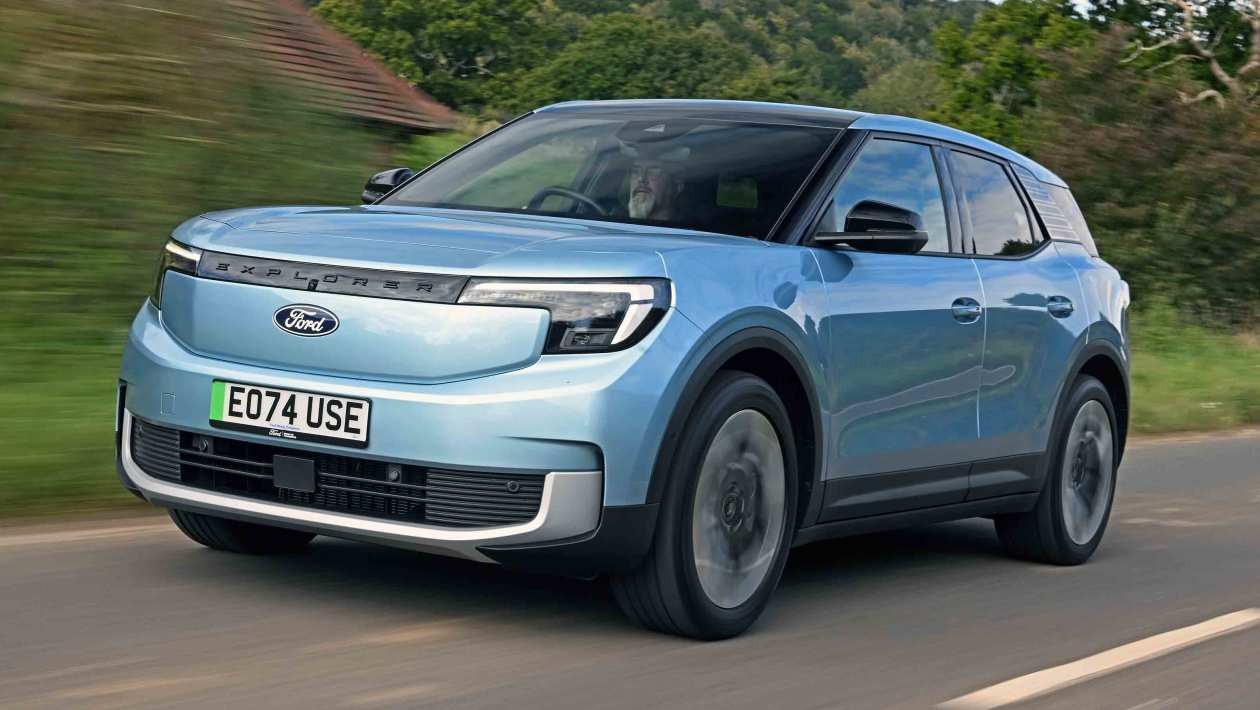
The Ford Explorer stands out in the competitive electric SUV segment by offering a distinctive design and a surprisingly enjoyable driving experience. While it leverages Volkswagen’s MEB platform, the Explorer improves on the formula, making it a compelling alternative to models like the VW ID.4 and ID.5.
A Familiar Foundation, Improved Execution
The Explorer doesn’t rewrite the rules of electric SUVs, but it refines them. Built on the MEB platform developed by Volkswagen, Ford fast-tracked its entry into the EV market with this model. The result is a vehicle that feels well-engineered and offers a blend of practicality and comfort.
Positioning in Ford’s EV Lineup
The Explorer occupies a middle ground in Ford’s electric offerings, positioned between the earlier Mustang Mach-E and the later Capri. Unlike its siblings, the Explorer has avoided major controversy among Ford enthusiasts, blending familiar design cues with modern EV technology.
Trim Levels and Value
The Explorer range is straightforward, starting with the Style trim and progressing to the recommended Select, and then the Premium. While the Premium trim offers four-wheel drive and additional features, the Select trim provides the best balance of value and equipment.
Performance and Driving Experience
Ford has made effective use of VW’s electric platform, resulting in a convincing family SUV. The Explorer offers multiple powertrain options:
- Standard Range: 52kWh battery, 168bhp, RWD
- Extended Range (RWD): 77kWh battery, 282bhp
- Extended Range (AWD): 79kWh battery, 335bhp
The Explorer is not the fastest EV on the market, but it delivers adequate acceleration and a smooth ride. The absence of a one-pedal driving mode is a minor drawback, and larger wheels can make the ride feel unsettled.
Practicality and Comfort
The Explorer offers good visibility, aided by unique C-pillar windows. Parking is easy thanks to light steering and responsive throttle control. Interior materials are high-quality, though the touchscreen controls can be awkward to use on the move.
Range, Charging, and Running Costs
The Explorer offers competitive range and efficiency, with the 77kWh model achieving up to 374 miles on a single charge. DC fast charging times are decent, though not exceptional. A heat pump is a pricey but valuable option for cold climates.
- Battery Sizes: 52kWh, 77kWh, 79kWh
- Range (WLTP): 233-374 miles (depending on trim)
- Charging (DC): 25-28 minutes (10-80%)
Insurance and Depreciation
Insurance costs are slightly higher than for traditional petrol or diesel cars, but within the expected range for electric SUVs. The Explorer is expected to hold onto 46-51% of its original value after three years, comparable to rivals like the VW ID.4.
Interior and Technology
The Explorer’s interior shares some design elements with VW models but features a distinctive layout, including a large 14.6-inch touchscreen. The cabin is well-built, though the touchscreen slider can be awkward to use.
Conclusion: The Ford Explorer is a well-rounded electric SUV that delivers a more engaging driving experience than its VW-based counterparts. With a competitive range, comfortable interior, and distinctive design, it’s a solid choice for families looking to make the switch to electric.