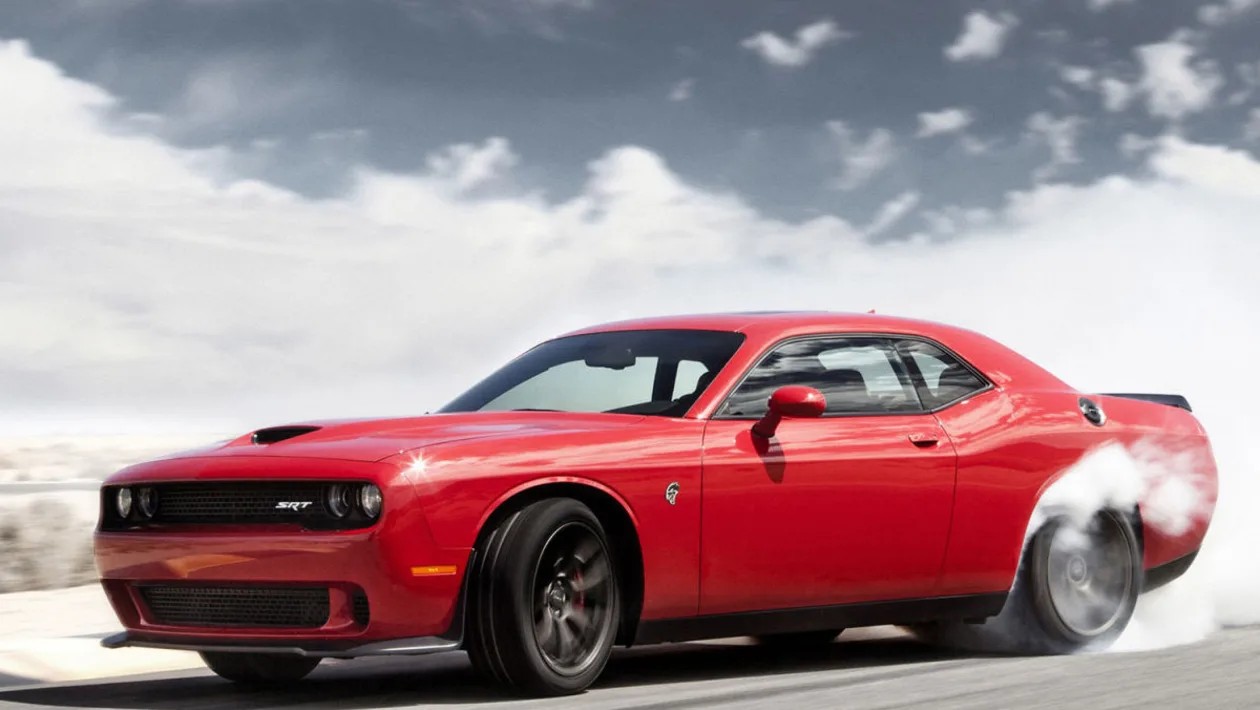
The Dodge Challenger Hellcat isn’t just a muscle car; it’s a statement. Emerging from the 2010s muscle car revival, it quickly established itself as the most powerful and outrageous option on the market. While competitors like the Chevrolet Camaro ZL1 and Ford Mustang GT500 offered impressive performance, the Hellcat raised the bar with a staggering 707 horsepower from its 6.2-liter Hemi V8.
The Power Escalation
The Hellcat’s initial power output was already supercar territory, delivering a 0-60 mph time of 3.6 seconds with the optional eight-speed automatic transmission. Priced at around $71,000 in 2024 (roughly £55,000), it offered extreme performance at a relatively accessible price point.
But Dodge didn’t stop there. The SRT Demon arrived with an unbelievable 840 bhp when fueled with high-octane gasoline. This variant came equipped with drag-racing tires and two key fobs: one for street use with reduced power, and another unlocking its full potential.
The Final Push: SRT Demon 170
The final evolution of the Challenger came with the 2023 SRT Demon 170, boasting a mind-bending 1,025 bhp and 1,281 Nm of torque. Dodge claimed a 0-60 mph time of just 1.66 seconds, making it potentially the world’s fastest-accelerating production car. The Demon 170’s acceleration generates 2G forces, making it a visceral experience.
The Price of Speed
This level of performance came with a caveat. The Demon 170 was so fast that it was deemed illegal for sanctioned drag racing without additional safety features like a roll cage or parachutes. Despite this, it represents the ultimate expression of American muscle, pushing the boundaries of what’s possible in a production car.
The Dodge Challenger Hellcat’s legacy isn’t just about horsepower; it’s about relentless escalation. The model redefined the segment, proving that there’s always room for more power, more speed, and more absurdity in the world of high-performance vehicles.