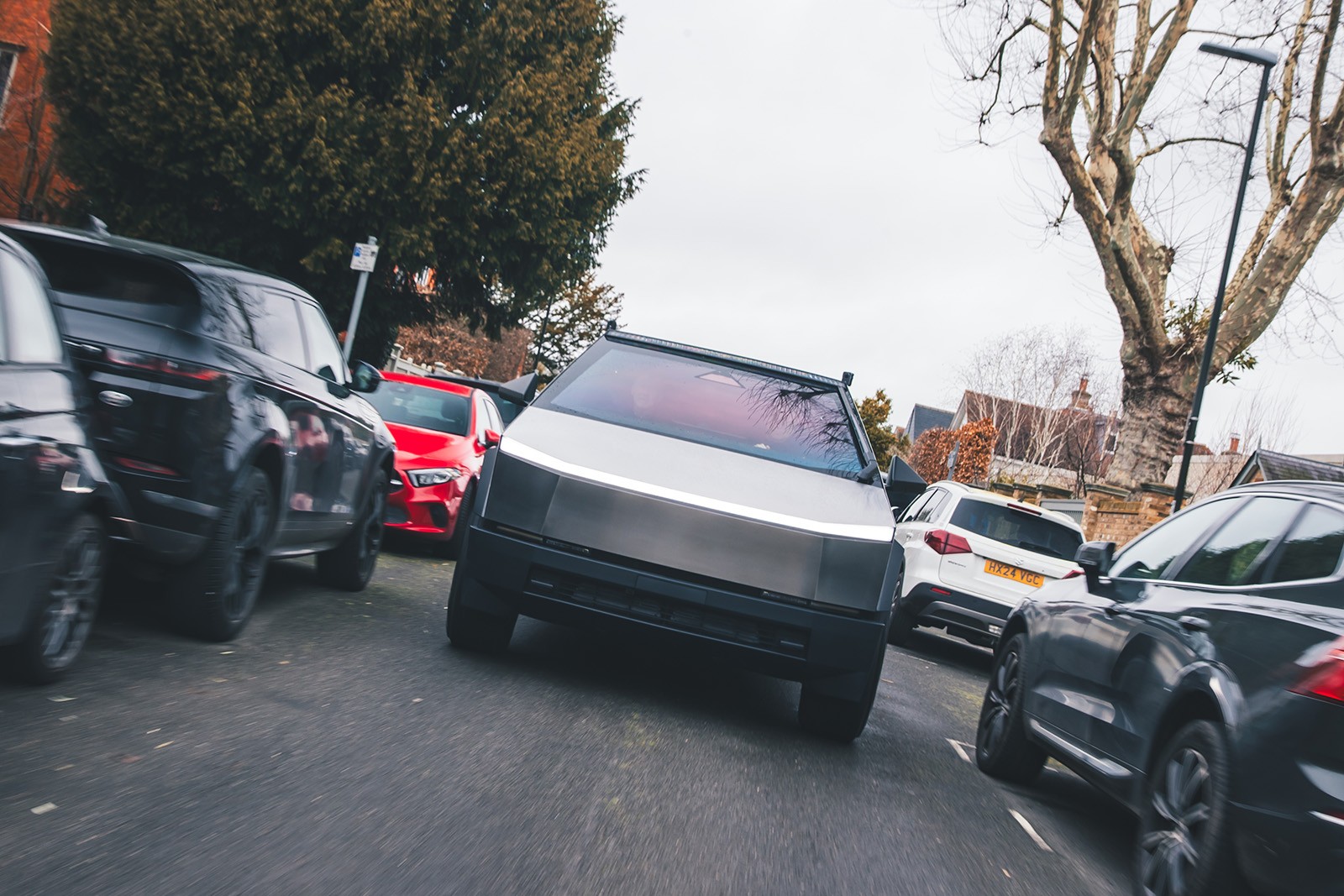
The Tesla Cybertruck, Elon Musk’s polarizing electric pickup, has made a rare appearance in the United Kingdom. Unlike most vehicles, the Cybertruck isn’t here for long-term sales; it’s a curiosity, a demonstration of Tesla’s engineering, and a gauge of public reaction.
The Wimbledon Spectacle
The Cybertruck was brought to the “Southside Hustle,” a monthly gathering of car enthusiasts in Wimbledon, London. The event draws collectors and drivers of everything from classic cars to high-end exotics. The owner, Sam Seppälä, imported a high-performance “Cyberbeast” variant, aiming to gauge how it would be received by a crowd accustomed to traditional vehicles.
Legal Barriers and Temporary Status
The Cybertruck’s presence is strictly temporary. The UK’s Driver and Vehicle Standards Agency (DVSA) hasn’t approved the model for “Individual Vehicle Approval” due to concerns over its drive-by-wire steering and safety regulations. This means it cannot be legally registered for permanent use.
However, the owner can drive the vehicle in the UK for up to six months within a 12-month period, as long as it’s already registered and insured in its country of origin (the US). The Cybertruck’s presence is therefore more of an experiment than an attempt at market entry.
Why Bring It Here?
Seppälä, a tech entrepreneur with ties to both the UK and California, imported the vehicle to observe public response. He finds value in the reactions, both positive and negative, and asserts that the Cybertruck handles surprisingly well. Despite its American origins, he claims it boasts a wealth of safety features.
“I love the reactions, both good and bad, that it provokes,” Seppälä said. “It drives and handles really well, too—not at all like other American cars. And it has a wealth of safety tech. In fact, it’s a very safe car.”
The Cybertruck’s UK visit highlights the challenges of homologating radically designed vehicles for markets with strict regulations. It also shows how personal fascination can drive unusual imports, even when those vehicles can’t be fully integrated into a country’s road system.
The vehicle will be returned to the US by December, leaving behind only impressions and questions about Tesla’s future in Europe.