


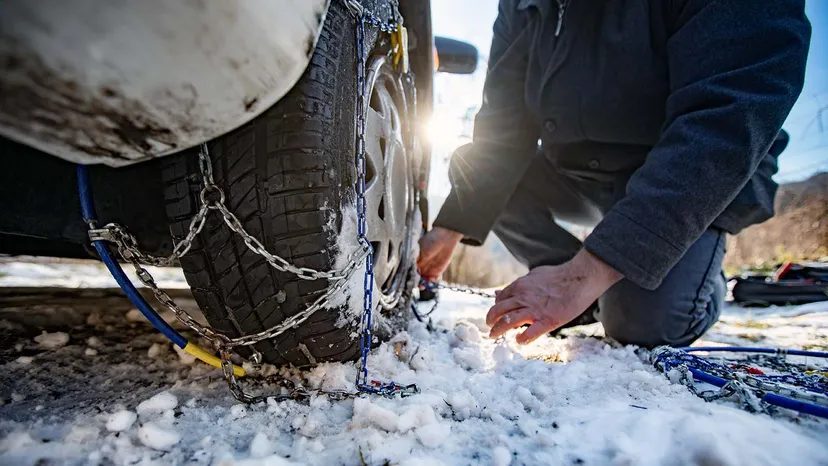
Snow packing into your tread and black ice lurking on asphalt are the twin killers of traction. When grip vanishes, chains are your mechanical lifeline. But buying the wrong set or installing them incorrectly turns a safety tool into a hazard. You need the right fit, the right laws on your side, and the discipline to drive slowly.
Check Local Laws Before You Buy
Not every snowy mountain pass allows chains. Some regions ban them entirely during mild winters or specific months. Even in places that permit them, restrictions change. Call your local Department of Transportation or check official road condition websites. Don’t assume legality based on geography alone. Regulations shift.
Sizing and Fitment Matter
Chains must match your tire width and diameter exactly. Look at the sidewall numbers. A mismatch means poor traction or, worse, damage. But size isn’t the only factor. You need clearance. Measure the space between your tire and the wheel well, suspension components, and brake lines. Some sports cars or lowered SUVs simply don’t have room for bulky chains. Also, consider storage. Chains are heavy, awkward, and take up significant trunk or cargo space. Make sure you can carry them home.
Installation: Only on Drive Wheels
This is where many drivers make costly mistakes. Chains belong on the drive wheels only. For front-wheel-drive vehicles, that’s the front tires. Rear-wheel-drive? Rear tires. All-wheel-drive? It’s complicated. Consult your owner’s manual. Some AWD systems require chains on all four wheels. Others allow only one axle. Using the wrong axle can damage differentials or transfer cases. Never guess.
Step-by-Step Installation
Find a flat, safe spot. Pull-offs are designed for this. Spread the chains out completely flat. Tangles waste time and lead to errors.
- Drape the chain over the top of the tire.
- Connect the inner and outer ends on the side facing you. Use hooks or clamps as designed.
- Roll the vehicle forward slowly. This pulls the chain into the tread.
- Secure the outer side connections.
Some chains require you to drive a few feet to tension them properly. Others need manual adjustment. Follow the manufacturer’s guide.
Tighten Immediately
After driving about 15 feet (5 meters), stop and tighten the chains again. Metal stretches. Cold contracts. Initial installation is never final. Loose chains slap against your wheel wells, damaging paint, sensors, and bodywork. Tighten them until they’re snug but not crushing the tire.
Driving Dynamics: Slow Down
Chains change your car’s behavior. They’re not for cruising. Speed limits posted for chain use are usually 30 mph (48 km/h). Adhere to them. Going faster generates heat, accelerates wear, and reduces traction. The chains can fly off. Or worse, they can shred your brake lines or suspension arms.
Accelerate gently. Brake early. Decelerate slowly. Sudden inputs break traction. The chains grip, but your momentum doesn’t care.
Broken Chains Are Emergencies
If a chain breaks or comes loose, stop immediately. Do not drive on broken links. They act like a flail, beating your car with every rotation. This destroys tires, rims, and body panels. If you can’t repair it, remove the chains completely. Drive with extreme caution to the nearest safe location. No chain is better than a broken one.
Remove Chains on Clear Roads
Once the snow and ice are gone, take the chains off. Driving on dry pavement with chains destroys your tires. It also damages the road surface. Many jurisdictions fine drivers for chain use on clear roads. It’s not just about wear. It’s about safety and law.
Common Questions
What are the easiest snow chains to install?
Look for “easy fit” models. Thule Easy Fit and Michelin Easy Grip are designed for quick snap-on installation. They reduce fumbling in cold weather.
How fast can you drive with snow chains?
Check the manufacturer’s rating. Most recommend 30 mph (48 km/h) or slower. Some heavy-duty chains allow slightly higher speeds, but slow is always safer.
What size tire chains do I need?
Match the chain size to your tire’s sidewall marking (e.g., 225/65R17). Precision matters.
Are snow chains bad for tires?
Only if used on clear roads. On snow and ice, they’re protective. On asphalt, they’re destructive.
Are tire cables as good as chains?
Cables are lighter and easier to store. They allow slightly higher speeds. But chains are more durable and provide superior traction in deep snow. Choose based on your needs.


