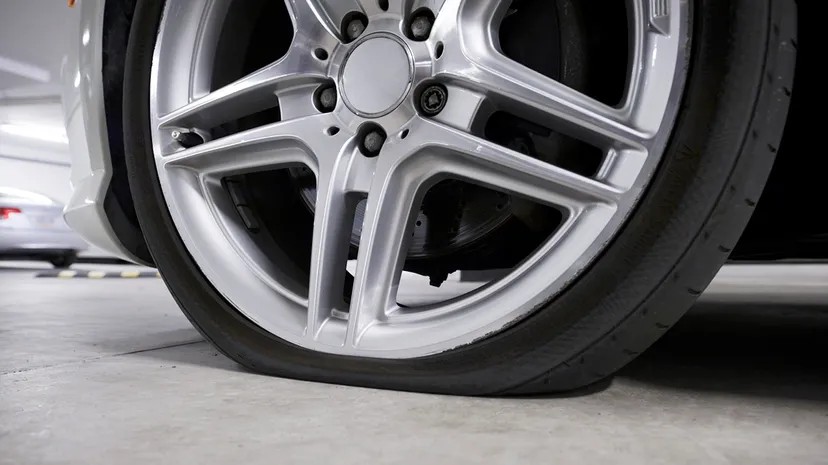
You bought the car. You got the keys. You probably didn’t check the trunk. Then the nail hit the road, the pressure warning light flashed, and you realized the hole where the spare used to be is now empty.
It happens more than you think. AAA data shows that nearly one-third of new 2017 model year vehicles shipped without a spare tire. The trend peaked earlier, with 36 percent of new cars lacking spares in 2015, but the number has dropped slightly. Still, millions of drivers are flying blind. AAA took over 450,000 calls from members in 2016 who found themselves stranded with flat tires and no backup.
How run-flat tires replace the spare
If you drive a BMW, this isn’t news. The brand has long relied on run-flat tires. These aren’t just regular tires; they have a stiff sidewall or internal reinforcement. When punctured, you can drive up to 50 miles at no more than 50 mph (80.47 kph) to reach a safe spot.
Once you get there, the tire is done. You can’t patch it and keep driving like you might with a standard radial. Run-flats are more expensive, harder to find, and require special rims. But they free up space and weight.
Why automakers cut the spare tire
Money is the obvious answer, even if companies say otherwise. A spare tire, jack, and wrench cost the automaker less than the $100+ you’d pay at a dealership. The savings per vehicle might be modest, but at scale, it adds up.
Hyundai has been cited often in this space. The company says weight is the driver, not cost. Michele Tinson, a Hyundai representative, explained that swapping a temporary spare for a tire mobility kit saves nearly 25 pounds.
“The main benefit of equipping a vehicle with a tire mending kit over a temporary spare tire is the nearly 25-pound weight savings; cost was never a significant decision factor for Hyundai,” Tinson says.
That weight matters. Tire Rack analysis suggests weight reduction can improve fuel consumption by up to 1 percent. For a brand juggling marketing numbers and EPA ratings, that fraction counts.
Where the battery goes when the tire is gone
Space is the other major factor. Hybrids and EVs need battery packs. Those packs don’t fit in the engine bay. They usually go under the rear seat or in the trunk.
That means the traditional spare tire well is gone. Hyundai engineers placed their hybrid and electric battery systems in the spare tire well to maximize passenger and cargo volume.
So you have a choice. You can buy a portable air compressor and sealant kit. You can buy a space-saver donut tire. Or you can just hope you don’t get a flat. And if you do, you’ll be calling roadside assistance. Again.
Why manufacturers ditch the spare for compact EVs and PHEVs
Packaging is the killer here. Large SUVs can swallow a full-size spare without much penalty. Compact plug-in hybrids and hatchbacks cannot. Automakers sacrifice cargo volume to squeeze in battery packs and, increasingly, tire inflator kits instead of a rotating wheel. The result is a tradeoff that hurts owners who prefer mechanical redundancy over electronic convenience.
Hyundai admitted the error early on. Customer pushback forced a strategy shift for non-hybrid models. The Accent and Elantra returned to full-size spares. This specific model change highlights the fragility of the “no-spare” trend. Until other OEMs follow that lead, buyers bear the risk.
Practical limits of tire inflator kits
Inflator kits save space. They are lightweight and easy to deploy. They are not a universal fix. The puncture must be small, no larger than 4 mm, and located in the tread area. Sidewall damage is a hard no. Once the sealant fails or the hole is too large, you are stranded.
Spare tire compatibility and usage rules
Do not assume a spare from a neighbor fits your car. TireRack.com confirms spare wheels are designed for specific tire dimensions. Most are compact “toy tires” built exclusively for that vehicle. Using a compact spare from another make or model is unsafe and often physically impossible.
Even with the correct spare, driving time is limited. Owner’s manuals dictate specific limits. A general rule is 70 miles maximum distance and 50 mph top speed. Exceeding these parameters risks damaging the temporary tire or compromising vehicle handling.
If your car lacks a spare, check for run-flat tires. These feature stiff sidewalls or internal reinforcement that allows limited driving after a puncture. Some brands, like Hyundai in certain configurations, include a mobility kit as the primary backup. If you are shopping for a new car, ask the dealer explicitly about the rear storage configuration. A quick peek into the trunk before signing the lease saves you from discovering the missing spare when your tire goes flat on the highway.