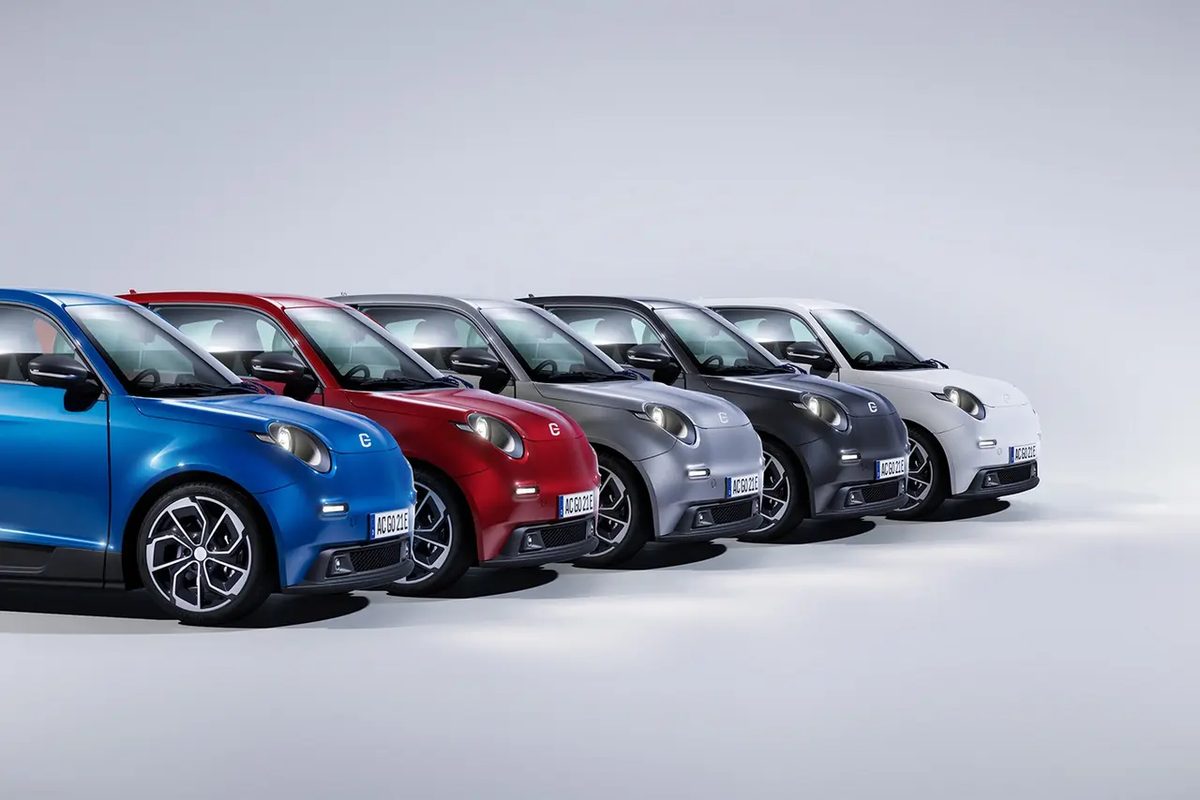
A small electric entry is hitting the urban segment this week. It’s the e.GO Life. This compact 2+2 city car comes from the German brand e.GO, which has been developing this project since 2015. The first deliveries of the “First Edition” start on May 9. These early units won’t have every feature found in the mass-production model rolling off the line this autumn.
Compact Dimensions and Powertrain Options
The e.GO Life is tiny by modern standards. It measures just 3.3 meters long and 1.7 meters wide. This footprint makes it ideal for dense city environments where parking is a nightmare.
Under the skin, buyers can choose from three electric motorizations. The power output ranges from 20 kW to 60 kW. Top speeds vary accordingly, sitting between 112 km/h and 142 km/h. It’s not built for highway cruising. It’s built for getting around corners and navigating traffic jams.
Battery Range and Real-World Utility
Range is where the differences between trims become obvious. Each motor version pairs with a specific lithium-ion battery capacity.
- The base model holds 14.5 kWh. It offers an autonomy of 100 km.
- The mid-tier version steps up to 17.5 kWh. Range jumps to 113 km.
- The top-spec variant packs a 23.5 kWh battery. You get 145 km of range.
These numbers define the e.GO Life electric city car as a strictly local vehicle. It’s not a long-distance cruiser. It’s a solution for short commutes and errands within a metropolitan area. The mass production starting in the fall will likely refine these specs, but the initial First Edition sets the baseline for what this German micro-EV is trying to achieve.
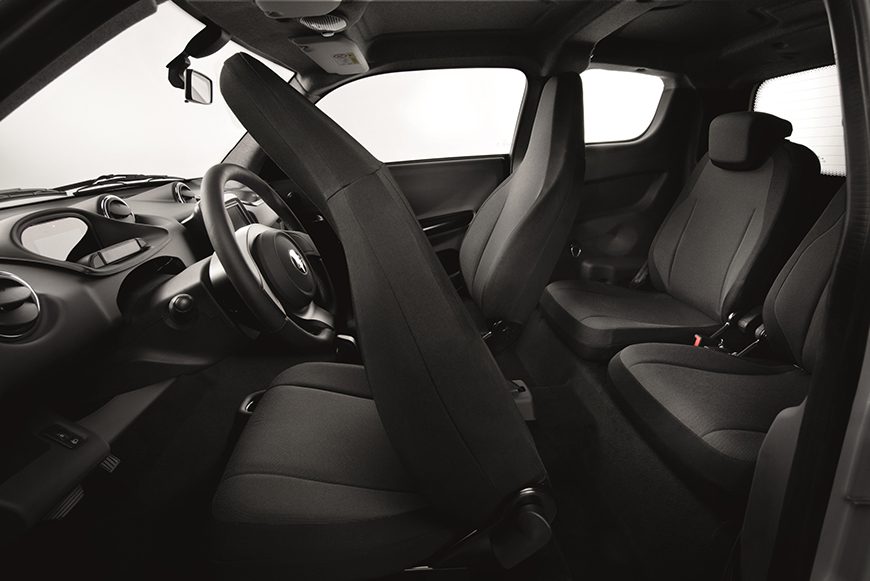
The e.GO Life: Why This €6,000 Cheaper EV Claims Kart-Like Handling
Forget the spec sheet. Forget the modest numbers on paper. e.GO is betting everything on the idea that driving dynamics matter more than raw stats. Gunther Schuh, the founder, didn’t mince words when speaking to Der Tagesspiegel. He called the e.GO Life a “mini-Porsche.”
It sounds like hype. But there’s a technical reason behind the claim. The chassis has an extremely low center of gravity. The handling characteristics mimic a go-kart. Direct steering. Minimal body roll. That’s the promise.
Missing Tech, Built Green
The first batch of 1,000 units is shipping this week. But buyers will notice gaps. There is no Electronic Stability Program (ESP). There is no regenerative braking. These weren’t cut to save money. They are missing due to supplier delays. e.GO is waiting on specific components from partners. It’s a production snafu.
The factory tells a different story. Located in a 16,000-square-meter facility. The roof is covered in photovoltaic panels. Annual energy capacity hits 1,300 MWh. That’s serious solar power for an assembly line.
Production targets remain aggressive. Automobile Propre reports 4,300 units must roll off the line by year-end. The ramp-up is fast. The constraints are real.
Price War with Volkswagen
Here is where it gets interesting for the budget-conscious EV shopper. The e.GO Life undercuts its biggest rival significantly.
- Entry Model (20 kW): Starts at €15,900
- Top Spec Model: Rises to €19,900
Compare that to the Volkswagen e-Up!. The VW costs roughly €6,000 more. That’s not a rounding error. That’s a massive gap for a city car.
Why does e.GO price it so low? Schuh argues the value proposition is clear. You get a dedicated electric city car. No ICE range anxiety. No complex hybrid systems. Just a clean sheet design focused on urban agility.
Is the Trade-off Worth It?
You are paying €6,000 less. But you are also getting a car without ESP. Without regen braking. In the first 1,000 units.
For some, that’s a dealbreaker. Safety tech isn’t optional. Regen braking is a huge part of the EV experience. It affects range. It affects one-pedal driving feel.
For others, it’s a bargain. The base price is hard to beat. The handling promise is unique. A kart-like feel in a production car? That’s rare.
Schuh says the sensations will surprise people. He’s banking on the driving experience outweighing the missing tech. We’ll see if the buyers agree when the second batch arrives. And when ESP finally gets added.