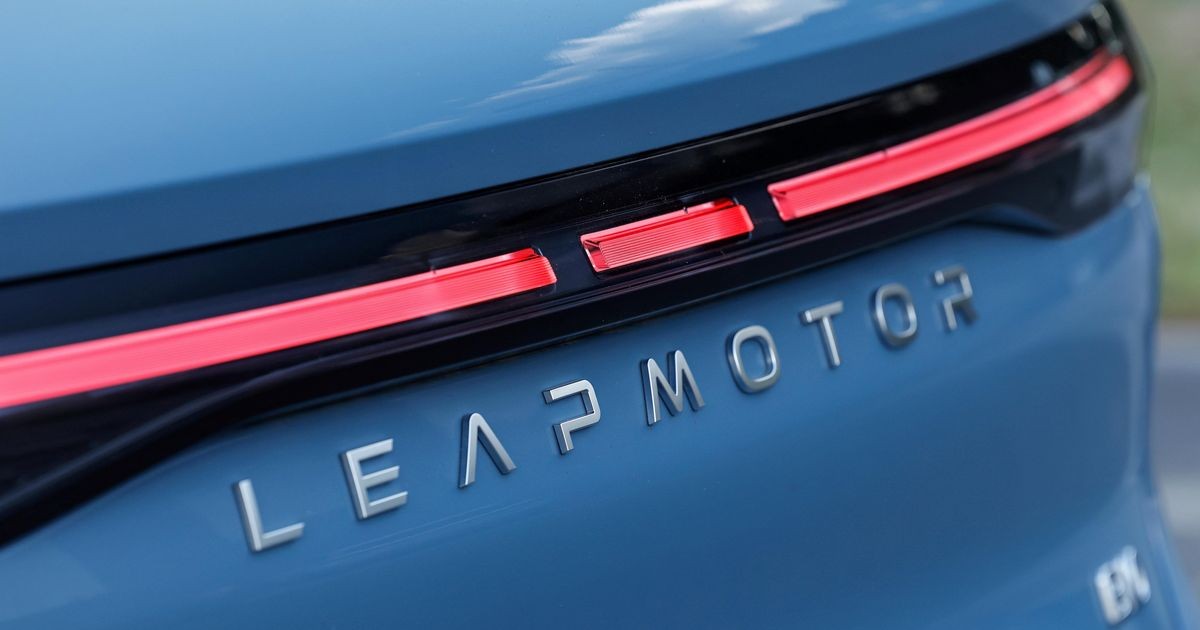
While many Chinese automakers are flooding the Australian market with a growing family of sub-brands, Leapmotor is taking a different, more concentrated approach. Instead of launching multiple names to capture different niches, the company intends to build its entire global identity around a single brand.
The Single-Brand Gamble
In an era where Chinese automotive giants are diversifying their portfolios, Leapmotor is doubling down on its namesake. Francesco Giacalone, Leapmotor International’s Global Head of Brand Strategy, Product, and Marketing, has confirmed that the company is focusing on building value around the Leapmotor brand alone rather than launching sub-brands to target specific demographics.
This strategy sets them apart from several key competitors:
– Chery Group: Operates a “horizontal” brand family including Chery, Omoda Jaecoo, and Lepas.
– BYD: Has introduced the premium Denza brand.
– MG: Has launched the premium IM Motors brand.
By eschewing the “multi-brand” trend, Leapmotor is betting that a single, strong brand identity will be more effective than a fragmented collection of smaller labels.
Scaling the Model Range
Choosing a single brand does not mean a limited selection. To succeed, Leapmotor must ensure its single name can appeal to a wide variety of buyers—from budget-conscious commuters to premium SUV enthusiasts. The company aims to cover 65% of Australian market segments within three years through a diverse lineup:
- Small/Entry Level: The B10 small SUV (starting at approx. $37,888) and the potential A10 (to rival the BYD Atto 2).
- Mid-Size: The C10 mid-size SUV, which launched in late 2024.
- Performance & Hatchbacks: The B05 electric hatch, including the high-performance B05 Ultra variant.
- Flagship: The D19 flagship SUV to anchor the upper end of the range.
The Competitive Landscape: Beyond Stellantis
Recent sales data shows Leapmotor is already making inroads in Australia, though it is still in its early stages. In the first quarter of 2026, Leapmotor delivered 277 vehicles—surpassing established brands like Peugeot (252), Jeep (191), and Alfa Romeo (96).
However, comparing Leapmotor to these European-heritage brands is somewhat misleading. The real battleground lies with the high-volume Chinese leaders. The scale of competition is massive:
– BYD: ~16,000 deliveries (Q1 2026)
– GWM: ~14,800 deliveries (Q1 2026)
– Chery: ~11,700 deliveries (Q1 2026)
Leapmotor’s challenge is not just to sell cars, but to gain relevance in a market where rivals are launching new models and brands at an unprecedented pace.
The Stellantis Advantage
Leapmotor is not operating in isolation. A significant factor in its international expansion is its relationship with the automotive giant Stellantis. In 2023, Stellantis invested €1.5 billion (approx. A$2.5bn) for a 21% stake in Leapmotor and now controls 51% of Leapmotor International.
This partnership provides Leapmotor with a level of European industrial backing and global distribution expertise that many other emerging Chinese brands lack. It also gives the brand a unique “hybrid” identity: a Chinese-born EV specialist backed by a global automotive heavyweight.
Leapmotor is betting that a single, versatile brand name can compete with the sheer volume and variety of its Chinese rivals by leveraging its diverse model range and strategic European backing.
Conclusion
Leapmotor’s strategy is a test of brand strength versus brand breadth. If they can successfully stretch the Leapmotor name from affordable small cars to premium SUVs, they may prove that a focused identity is more powerful than a crowded house of sub-brands.