You’re probably thinking “I told you so.” A year after launch. A whole year of silence before Nissan finally slapped the six-speed manual back into its flagship Nismo trim. Good news. It changes everything.
It’s not just the gearbox they tossed in there. The rest of the car got a glow up too. Two-piece front rotors taken straight from the original GT-R. Retuned steering. A short-throw shifter that actually makes the shift lever feel alive. All this sits on top of the upgrades that were already standard for the Nismo.
So we aren’t talking about a brand new car. It’s the same Z Nismo you saw last year, just with your hand back on the gearstick. I’m not going to waste breath re-hashing the automatic version we tested at launch. That felt off. Now? It feels like a real contender.
The Missing Link
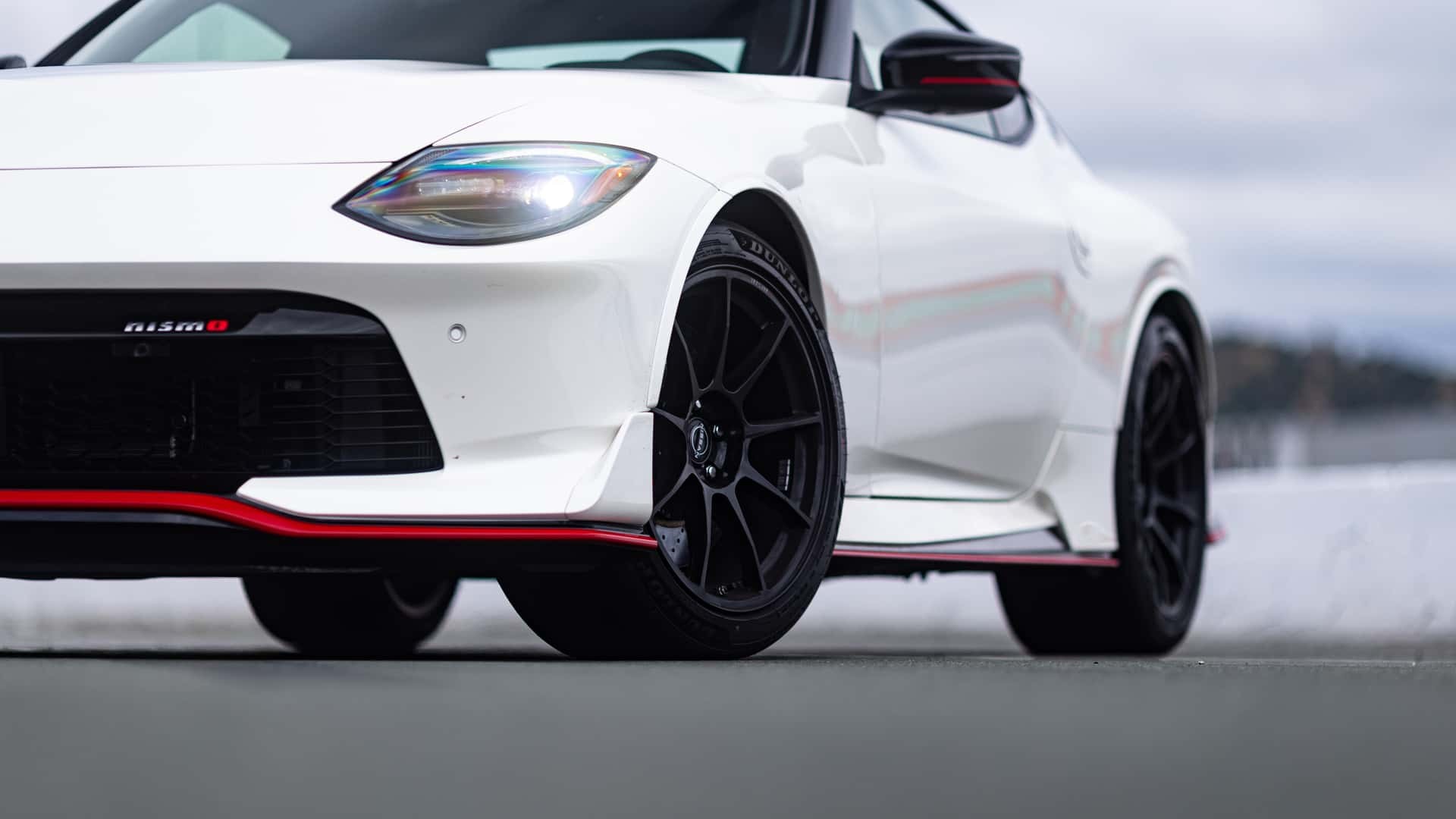
Driving this thing through the clouds at Sonoma, you might miss it at first glance. Visually? Identical to any other Nismo. Unless you’re really staring at the brake calipers for those new two-piece rotors reserved for 2026 models, you won’t see a thing.
Thank God Nissan didn’t plaster “WE HAVE THE STICK BACK” all over the side of it. The inclusion feels quiet. Unpretentious. Like the engineers were just nodding at each other in a boardroom, saying “Finally, we built the Nismo as it should have been from day one.”
Under the skin, though, it’s tighter. They reduced internal friction in the steering rack which forced a re-tune of the electric assist. Losing the torque converter dropped the curb weight from 3677 lbs to 3624 lbs. Enough to warrant a fresh suspension calibration.
The VR30DDTT engine? Same old turbocharged 3.0 V6. Still packing independent ignition timing and water-to-air intercooling to manage those 420 horsepower. But they did touch the throttle mapping. More blip. More snap. The auto didn’t need it. The manual demands it.
And the transmission itself? Same unit as the base Z, technically. But with that short-throw adapter, the throws are shorter by 6 millimeters. Six millimeters doesn’t sound like a lot on a spec sheet. On the road? It makes a massive difference.
Three Pedal Goodness
The ergonomics are still a little wonky. The shifter sits further back toward the driver than it should. You’re leaning a bit more than ideal. Minor? Sure. In the grand scheme of driving fun, it barely registers.
But stepping on that clutch pedal? That’s pure joy. As soon as the track session starts, you feel the drivetrain mounts stiffening up. No rocking. No bucking when you hammer it. We swapped cars for a quick hot-lap comparison. The difference was stark. Blatant, even.
Creeping out of the pit lane at low speeds is surprisingly rewarding. The revs drop fast. The short throw is notchy, precise. It doesn’t “slide” into gear like a cheap plastic toy. You feel the gates. You respect the mechanism.
“It’s incredibly easy to meet the limit and dance with it.”
Sonoma is tricky. Undulating. You can crash here easily if you get cocky. But the Nismo manual wants you to push it.
Making it slide? Forget it. The car fights drift. Hard. Slam the gas and you might get a slight tail wiggle. That’s it. It is stubbornly stable. Almost too much so. Drifting this thing takes effort I don’t want to admit I’m capable of.
But stability has perks. The steering feedback is elite. More texture than the BMW. More than the Audi. You hear the tires talking through the rim. Loud and clear. The only weird thing is how the front feels a split-second slower than the rear when things finally let loose.
Drive it straight. Drive it sharp. It’s a track animal now. Its manners rival Porsche. It handles with a German precision that shouldn’t come from a Nissan. Nothing flaps. Nothing dives awkwardly. The gearbox slots in perfectly where the automatic left a gap. Where the auto bored you with its efficiency, the stick adds the dopamine hit of manual intervention.
The One You Should Buy
Here’s the truth. The Z Nismo needed the manual to give you a job.
It’s just dangerous enough to keep average drivers awake. Precise enough for good drivers to nail heel-toe shifts without upsetting the balance. It fixes the Nismo’s original sin. Boredom.
With the stick shifter, that ~$70k price tag looks different. It feels earned. Previously? I would’ve looked at it and shrugged toward an M2. Now I’m genuinely considering the Nissan.
It fixes the Z Nismo’s primary sin: Boredom.
It’s a worthy competitor. Maybe the most engaging one in its price bracket right now.
Nissan Z Nismo vs Competitors:
– BMW M2
– Ford Mustang Dark Horse
– Porsche 718 Cayman
I’ll be honest. I’m waiting for the official pricing to drop. But if it stays around that $70k mark…