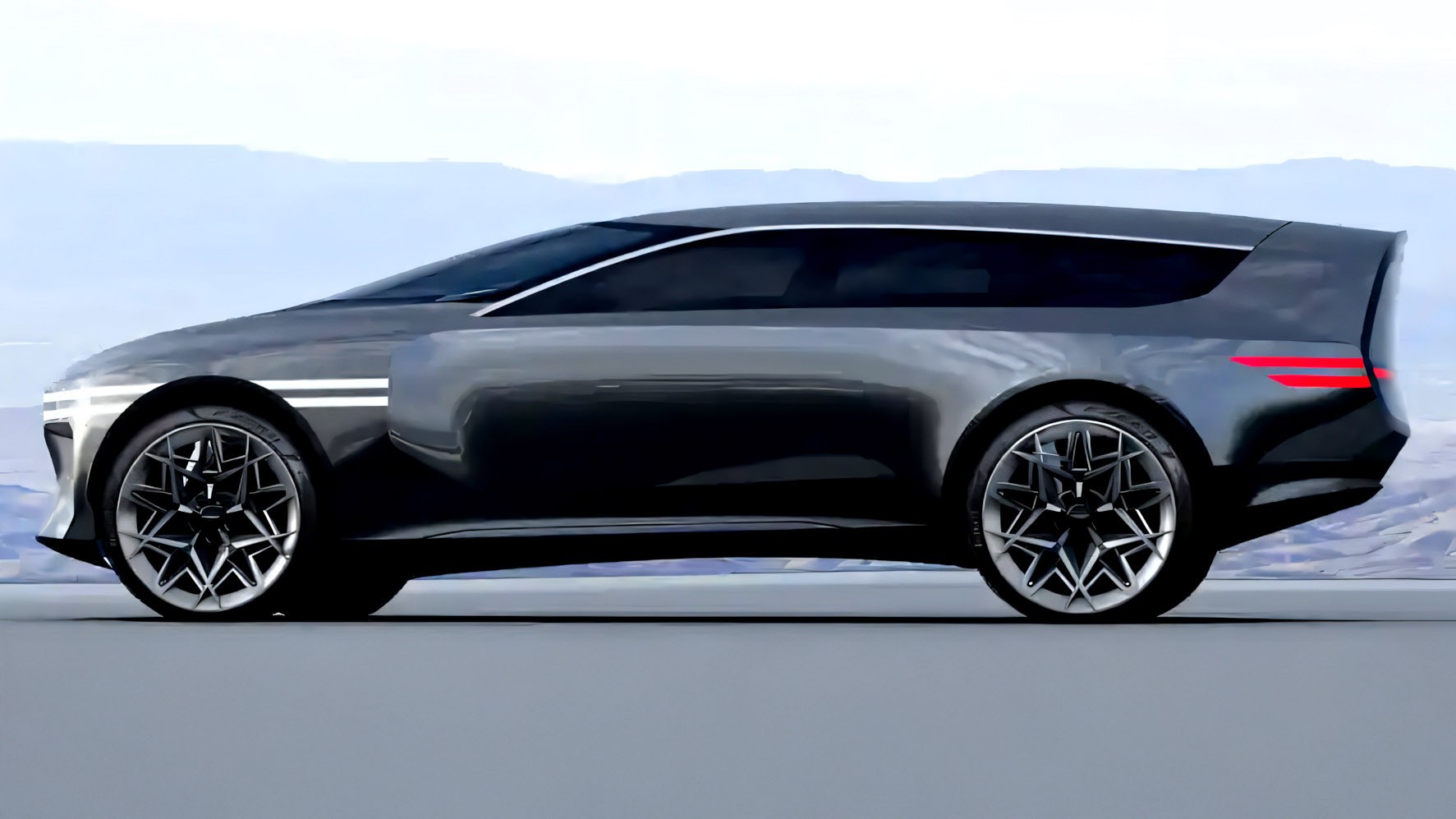
Genesis is actively experimenting with bold, unconventional vehicle concepts, pushing far beyond its current luxury sedan and SUV lineup. The brand’s recent design studies include a strikingly futuristic minivan, dubbed the “Jet On Wheels,” alongside a shelved hydrogen-powered SUV project internally known as JH. These explorations signal Genesis’s willingness to challenge market expectations and consider diverse vehicle segments, including the growing luxury minivan sector – particularly in China, where such vehicles have evolved into status symbols.
The “Jet On Wheels” Concept: A Minivan From Another World 🛸
The minivan concept isn’t just a sketch; it’s a full-scale prototype. Its design features a sharply raked windshield reminiscent of the 1990s Pontiac Trans Sport, oversized wheels, and a heavily sculpted, almost entirely glass rear end that evokes science fiction aesthetics. Genesis’s Chief Creative Officer, Luc Donckerwolke, confirmed the project as a deliberate exploration of the minivan typology, stating that they “might make a van sooner or later” and that this concept is part of their internal design work.
The design retains Genesis’s signature “Two Line” lighting and parabolic creases but amplifies them into something far more expressive. While production isn’t confirmed, the concept demonstrates the brand’s willingness to consider unconventional vehicles.
Hydrogen SUV Study: A Glimpse into a Shelved Future 🌿
Internally, Genesis also explored a hydrogen fuel cell SUV (JH), leveraging Hyundai’s existing technology from vehicles like the Nexo. Though ultimately shelved, the concept featured a sleek three-row design with distinctive surfacing, an unusually low-set Crest Grille, frameless windows, and aggressive lighting details. Alternate renderings explored more coupe-like rooflines and closer adherence to traditional SUV proportions, suggesting a flexible approach to design.
Why This Matters: Expanding Beyond Luxury 💡
Genesis’s willingness to prototype radical designs – even if they don’t reach production – demonstrates the brand’s ambition to compete in evolving markets. The luxury minivan segment, driven largely by demand in China, presents a unique opportunity for premium brands. These experiments aren’t simply aesthetic exercises; they are internal tools that showcase the design team’s capabilities and prepare the brand for potential expansion into new vehicle categories.
In essence, Genesis isn’t limiting itself to conventional luxury vehicles. It’s testing boundaries, gathering data, and positioning itself to respond to shifting consumer preferences and emerging market trends. The company is willing to go all-in on bold experimentation, even if the end result is just an internal study.