For years, I stuck with Formula 1. The roar of naturally aspirated V8s, the early buzz cuts of Hamilton and Alonso… it was a perfect era. But as the sport evolved, so did my curiosity. I always knew other racing series offered similar thrills, maybe even more, but the thought of re-learning a whole new world of rules, teams, and histories felt exhausting. I had built up a comfortable parasocial relationship with F1, knew all the inside jokes, and wasn’t ready to start from scratch.
Then came the Rolex 24 Hours at Daytona. It was a perfect excuse to dive in headfirst. One of the biggest races in the IMSA WeatherTech SportsCar Championship, it seemed like a good place to test the waters. Turns out, I’d been missing out on something incredible.
The Chaos of Multi-Class Racing
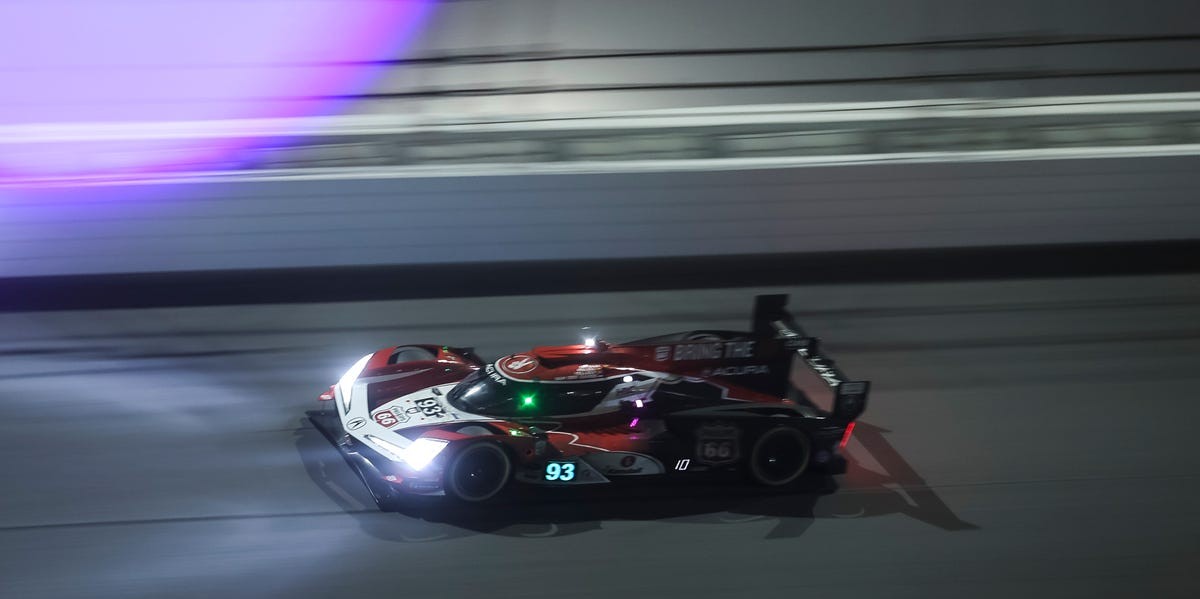
Formula 1 is simple: two identical cars from each team, racing against rivals using the same engine and regulations. IMSA? A whole different beast. The series is multi-class, meaning different types of cars battle on the same track simultaneously. At Daytona, you have four classes: GTP, LMP2, GTD Pro, and GTD.
GTP cars are the fastest, built to LMDh regulations with extreme aerodynamics. LMP2 cars are closed-cockpit prototypes, standardized with an Oreca chassis and Gibson V8 engine. GTD and GTD Pro cars follow FIA GT3 rules, closely resembling their road-going counterparts.
To level the playing field, IMSA uses a “Balance of Performance” (BOP) system, adjusting power, weight, and aero to keep the competition tight. It’s a constant tweaking process to ensure no single manufacturer dominates.
The result is near-constant action. GTP cars slice through slower traffic, while GTD machines fight for every position. You can focus on one class, switch to another, or just let the chaos wash over you. The racing is relentless.
In the 2024 race, the winning margins were razor-thin: Porsche Penske won GTP by just 1.569 seconds, CrowdStrike Racing took LMP2 by 5.5 seconds, and BMW and Mercedes battled in GTD Pro down to the final 2.2 seconds. The Winward Racing Mercedes won GTD after contact on the last lap. This wasn’t just a race; it was a brawl.
The Symphony of Engines
Modern F1 engines are efficient, but they lack the raw soul of other motorsports. IMSA offers variety. GTP and GTD cars run different engines, creating a unique soundscape. Sit in the infield, and you’re immersed in a cacophony of snaps, crackles, and pops as cars roar past.
GTD cars must use engines similar to their road versions, while LMP2 cars all run a shared 4.2-liter Gibson V8. The GTP class is the most diverse, allowing gas-powered four-stroke engines up to 10,000 rpm with mandatory hybrid systems.
You’ll hear everything from the twin-turbo V6 in the Acura ARX-06 to the naturally aspirated V8 in the Lexus RC F GT3 and the V10 in the Lamborghini Huracán GT3. The sound is raw, visceral, and constantly changing.
Imagine hearing a Cosworth V12 pass a Mercedes-AMG GT3. Where else can you experience that kind of auditory overload?
The Fan Experience: Back to Racing’s Roots
I’ve been to F1 races, but Daytona was different. The access was incredible. Two-day GA tickets start at just $120 and include pit lane access, a track walk, and open grandstand seating. Compare that to the exorbitant prices for similar experiences in Formula 1.
The Rolex 24 feels like a throwback to the glory days of the 1960s and 70s. Some teams are factory-backed, but others are passionate groups of enthusiasts simply in it for the love of racing. Mechanics work openly in the garages, drivers interact with fans, and the atmosphere is electric.
During a pre-race track walk, I stood just feet away from Alex Palou as he practiced driver changes. This kind of access doesn’t exist in modern F1. Daytona isn’t just a race; it’s a community.
The Rolex 24 at Daytona isn’t just an event; it’s a revelation. It’s a reminder that motorsports can be raw, accessible, and utterly captivating. If you’re looking for a racing experience that delivers on speed, sound, and fan engagement, look no further.