Most of the survivors are sitting in garages.
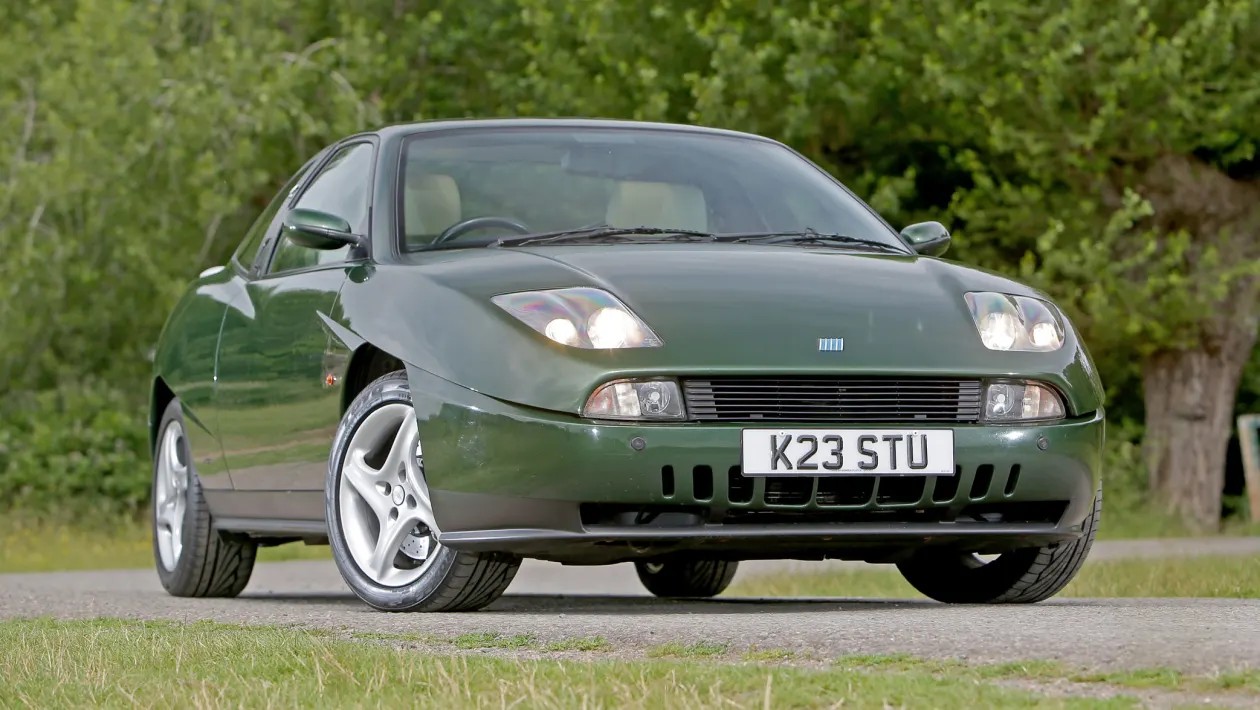
About 2,400 Fiat Coupes remain in the UK. Out of over 7,000 sold. The 2009 scrappage scheme wiped out the rest, mostly the cheaper 16-valve models that looked worthless at the time. Now? Those early ones are ghosts. Rare. You can still find decent cars to drive, whether you want a daily commuter or a weekend toy.
Why buy it?
It rides on a shared platform. Think Tipo, Alfa 146, Lancia Dedra. But with better clothes. Designed by Chris Bangle. He went on to shape BMWs. Pininfarina handled the interior. The result is something unique. Not just pretty either. Practical. Affordable. Fun.
A Quick History
Arrived in the UK in June 1995. Early cars had one engine really: a 2.0-litre 16-valve four-cylinder. You got 137bhp or, if you paid for turbo, 195bhp.
By November 1996 the five-cylinder arrived. A 2.0-litre with 20 valves. 147bhp normally aspirated. Or 220bhp with turbo.
July 1998 brought the Limited Edition. Body kit. Red Brembo brakes. Sparco pedals. Recaro seats. Six-speed gearbox.
June 1999 killed the NA 20V, replacing it with a VIS variant at 154bhp. August 1999 made six gears standard across the board. Then the Turbo Plus appeared. It added a limited-slip diff.
Production stopped in 2000. That is that.
Which One?
You will likely buy the five-cylinder. The good four-cylinder examples are almost extinct.
They drive differently.
The four is loud. Peak power. Heavy steering. The brakes are soft compared to later cars. You have to push harder.
The five is smooth. More low-down torque. Better for motorways. Steering is lighter. Brakes inspire more confidence.
The 139bhp base model exists. But the 220bhp Turbo is the star. 0 to 60 in 6.5 seconds. Top speed of 155mph. It eats front tires, though.
Is speed everything? No.
The five-cylinder sound is fantastic at high revs. Steering is sharp. Ride quality is decent, not punishing.
What They Cost
Halo models command prices. Limited Editions and Turbo Pluses sit at the top.
- Projects: £2,000 – £2,500
- Good Turbo examples: £7,000 – £8,000
- Super low mileage specimens: £12,000+
Naturally aspirated and 16-valve cars are cheaper. Projects start around £1,500. Tidy examples sit at £3,500 – £5,000. You won’t pay much more than £7k unless the condition is extraordinary.
Rust and Repairs
Four-cylinder models weren’t galvanized. Five-cylinders were. Check the sills, arches, floors, and boot on the older engines. A leaking tailgate seal will rot your car out from the inside.
Hoses die. Specifically the one from the thermostat. Don’t buy cheap rubber. Spend the £200 on proper silicon sets.
Turbos leak seals. Look for blue smoke at idle. Swapping to a later unit costs about £1,000 but lasts longer.
Air con fails. Central locking gives up. Radio amplifiers quit. All fixable. All available used. DIY friendly.
The interior? Simple. A panel of body color runs down the middle. Not daring, but logical. Instruments are clear. Seats hold you in well. You can fit two adults in the back, assuming they aren’t giants. The boot is 290 liters. Seats do not fold.
Keeping It Alive
Parts are mostly available. Trim pieces are getting harder to find new. Join the Fiat Coupe Club UK or the Fiat Motor Club GB. They help. They know people.
Running costs are low. Oil change every 6,000? Do it yourself, spend £100.
Cam belts are non-negotiable.
16V engines need replacement every three years or 32k miles. Budget £550.
20V engines have longer intervals—five years or 50k miles—but access is tight. Budget £1,000 because the job is harder.
Road tax is fixed at £375 a year since registration is before March 2001. Insurance should be cheap. Fuel economy? Expect 30 to 35 mpg if you treat it well.
So you stand there, key in hand. It’s imperfect. It’s old. But nobody else has one exactly like yours. The world kept moving, leaving this specific style behind. Maybe that’s why you want it. Maybe not. Either way, start the engine and listen to those five cylinders scream.