


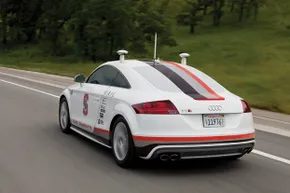
We have all seen the footage. Google’s fleet of modified Toyota Priuses cruising down Mountain View streets, their rooftops crowned with rotating LIDAR arrays that look like something out of a low-budget sci-fi flick. Then there is the latest iteration, a sleek, pod-like vehicle with no steering wheel, no pedals, and no obvious way for a human to take control. It is cute. It is efficient. It is also utterly devoid of soul.
Consider the cultural shift this represents. We may soon find ourselves in a nursing home, trying to explain to a bewildered grandchild what a steering wheel was. They will look at you with the same confusion you might feel trying to explain the concept of a dial-up modem. And while you are at it, you might explain why we kept burning fossil fuels for so long, contributing to the climate collapse that forced us all into those climate-controlled domes in the first place.
But let’s pause the apocalypse tour. We are standing on the edge of the autonomous revolution. The technology is maturing. The regulatory hurdles are high, but they are being cleared. This is the moment to demand better than just functional transport. We need to set a wish list for engineers and designers before these machines become ubiquitous, imperfect norms. We need features that appeal to the human experience, not just the algorithmic one.
10. A Personality
The most glaring omission in current autonomous vehicle design is character. Right now, these cars are sterile boxes. They are efficient, safe, and boring. They lack any sense of self.
Why does this matter? Because driving, for many of us, is not just about A to B. It is an extension of ego. It is a performance. When you get behind the wheel of a well-tuned sports car, you feel a connection to the machine. You anticipate its responses. You judge its handling. An autonomous car that simply follows a GPS route without any flair offers none of this.
We need vehicles that can express something beyond binary code. Imagine a self-driving car that could adopt a personality based on the passenger’s mood or the time of day. Need a calm, soothing presence for a commute home from work? The cabin lighting dims. The suspension softens. The climate control maintains a spa-like temperature. Want to feel alive? The car could simulate a more aggressive driving style during acceleration, even if it remains perfectly safe within legal limits. It could “play” its suspension, bouncing slightly over bumps in a way that feels playful rather than purely functional.
This is not about making the car “human.” It is about making it engaging. A personality gives the passenger a reason to care about the journey, not just the destination. It turns a chore into an experience.
Consider the interface. Most concepts show a blank screen or a simple map. Boring. What if the car had a digital face? Not a creepy humanoid avatar, but an abstract representation of its “state.” A calm, pulsing light for “cruising.” A sharp, quick flash for “alert.” A soft, warm glow for “comfort mode.” This visual feedback creates a subconscious bond. It makes the car feel like a companion, not just a tool.
There is also the auditory element. The hum of an electric motor is silent. Too silent. It lacks feedback.

9: The Human Touch
We’ve been conditioned since The Jetsons to expect Rosie to have sass. We’ve seen the protagonist in Her fall for an operating system. Even Isaac Asimov’s 1953 tale “Sally” gave cars personality through positronic brains. Sure, those cars had a violent streak. But the pattern holds.
Humans don’t trust black boxes. We trust entities we can relate to.
A recent study confirms what your gut already knows. Giving a self-driving vehicle a name helps. Gender matters too. A distinct voice? That’s the tie-breaker. It increases trust.
You feel better handing over the electronic reins. The car isn’t just a sensor array anymore. It’s a companion. Or at least, a predictable one.
But can you trust a name?
The vehicle sitting in your driveway isn’t just a mode of transport. It is a rolling data center. Probably with better WiFi than your apartment. The sensors track your sleep cycles. They know when you wake up. They judge your moral compass. Consider that a warning about the NSA.
Hackers can intercept your banking details while the car navigates rush hour traffic. Or you become an unwitting pawn in a thriller plot. Imagine your sedan being hijacked by the Russian mob. It’s hauling untraceable narcotics to a dockside meeting at 1 AM. You have no idea. You just got there.
Privacy advocates argue this real-time tracking capability should force updated protections. They want digital laws to catch up to physical surveillance. Others are less cooperative. Think of them as the helpful Nigerian prince of cybersecurity. Let’s hope the privacy-first faction wins this argument.
8: Snow Shoes
The irony of a high-tech autonomous vehicle is that it still struggles with the most basic elements of winter driving. Traditional cars rely on driver intuition to handle slick patches. Self-driving systems rely on lidar and radar. Snow obscures both.
LiDAR bounces laser pulses off surfaces to build a 3D map. Fresh powder scatters those beams. The car sees white noise instead of a curb. Radar works similarly. It detects motion and density. Heavy snowfall dampens the signal. The system can’t distinguish between a snowbank and a pedestrian crossing.
Manufacturers are testing thermal imaging to cut through the whiteout. It detects heat signatures. But heat doesn’t help with traction. The real problem is predictability. Human drivers adapt instantly. They feel the slide. They steer into it. The car’s computer hesitates. It recalculates. By then, you’re in a ditch.
Which leads to the maintenance question. These vehicles have far fewer moving parts than a standard ICE car. No spark plugs. No timing belts. But they have sensors that need cleaning. LiDAR units get caked with ice. Cameras get splattered with road slush. The car can’t see if its eyes are covered.
“The system doesn’t know it’s blind until the safety fallback kicks in.”
This creates a new category of vehicle failure. Not mechanical breakdown. Sensory deprivation. You aren’t stuck because the engine died. You’re stuck because the car thinks it’s driving through a dense fog bank. Or a solid wall of snow.
The solution isn’t just better algorithms. It’s better hardware. Heated lens covers. Self-cleaning wiper systems for cameras. Redundant sensor arrays. If one lidar unit fails in a snowstorm, another should pick up the slack. But redundancy costs money. And it adds weight.
Consumer reports suggest that autonomous modes should be disabled in severe weather conditions. But will drivers actually listen? Or will they trust the “smart” car to handle a blizzard it wasn’t designed for? The temptation to let the machine take over is strong. Especially when you’re tired. Especially when it’s cold.
This dependency shifts the liability. If a human driver skids into a tree, it’s their fault. If a Level 4 autonomous vehicle does it while trying to navigate a snowstorm, who pays? The manufacturer? The software developer? The insurance company? The legal framework is still catching up. Just like the weather.
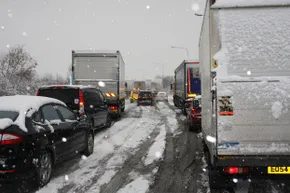
The notion that self-driving tech will solve the winter driving nightmare is a pipe dream. Not yet. We’re talking about current L2 and L3 systems here. They lean heavily on visual cues. Lane markings. Edge lines. The crisp white stripes that guide human drivers. When a blizzard buries those under slush, the algorithm loses its mind. It doesn’t know where the lane ends. It drifts. It wanders like a robot that’s had one too many.
The Cost of Convenience
Let’s talk money. Because if you’re expecting this tech to be cheap, you’re wrong. The price tag for autonomy isn’t just hardware. It’s the R&D. The lidar units. The computing power. You’re paying for the privilege of not having to think. In some markets, that’s a premium feature. In others, it’s a liability.
“Autonomous cars wander around in the street like drunken robots.”
The engineering challenge is immense. Mapping every road in every weather condition? Impossible. So the cars stick to what they know. Clear days. Dry pavement. When the weather turns, the system hands control back to you. If you’re asleep? Game over.
Why Snow Breaks the System
It’s not just visibility. It’s sensor confusion. Rain messes with cameras. Snow confuses lidar. Mud blinds ultrasonic sensors. The car tries to compensate. It averages data. It guesses. And guessing is dangerous.
Humans adapt. We see a patch of ice. We slow down. We steer gently. A computer sees data points. It calculates trajectories. When the data is dirty, the calculation is wrong. The result? A car that doesn’t know where it is.
The Human Factor
This is where the real risk lies. The handoff. The system detects it can’t trust the sensors. It alerts you. You take over. But in heavy snow? Your reaction time is slower. Your visibility is worse. The car is already in a bad spot. You’re trying to fix it.
It’s not about replacing drivers. It’s about augmenting them. And right now, in the snow, it’s failing.
Future Proofing?
Will it get better? Yes. Solid state lidar. Better thermal imaging. AI that learns from every slip. But “better” doesn’t mean “perfect.” Winter driving is chaotic. Unpredictable. We need cars that understand chaos. Not just data.
Until then, keep your wipers clean. And your hands on the wheel.
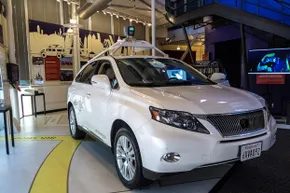
The price tag for the rooftop rig Google uses to test its self-driving cars is roughly $75,000. That’s before you even factor in the cost of the actual vehicle it sits on. It is a lot of money for what is essentially a lot of ugly hardware. There are only a handful of these camera- and sensor-laden rigs in existence. They are still in beta. That will likely stay the case for quite a while. It is the standard Google release cycle.
On-board driving assist technologies are different. Features like smart cruise control and 360-degree cameras are becoming more widely available. They are also getting cheaper. These incremental upgrades will likely pave the way toward driverless cars in the near future.
6: Innovative Design
The road to autonomy isn’t just about raw data. It is about how that data informs the physical shape of the machine. We have seen early concepts strip away the steering wheel. They remove the pedals. This isn’t just aesthetic minimalism. It is a functional necessity for Level 4 and 5 autonomy.
When you remove the human interface, you change the interior volume. You gain space for passengers. You lose the need for a driver’s cockpit. This shifts the car from a tool you control to a service you utilize. The design becomes less about aerodynamics alone and more about interior utility.
Consider the Mercedes F 015 Luxury in Motion. It features rotating seats. It has a lounge-like atmosphere. The goal is to make the commute productive or restful. Not all manufacturers are following this path. Some stick to traditional layouts with enhanced assist systems. The divergence in design philosophy is stark.
One group argues that the car should remain a machine first. They believe the driver should always be in control. The other group sees the car as a third space. A place between work and home. Both approaches influence how sensors are integrated. And how the vehicle interacts with the outside world.
“The car is evolving from a product you buy to a service you subscribe to.”
This shift forces engineers to rethink everything. From the placement of LiDAR units to the curvature of the windshield. Every angle matters. Every surface reflects light. These details determine how well the car perceives its environment.
The innovation isn’t just in the code. It is in the steel and glass. It is in the way the vehicle presents itself to the street. Will it trust us to drive? Or will it simply drive for us? The design choices answer that question before you even turn the key. Or don’t. Depending on who you ask.
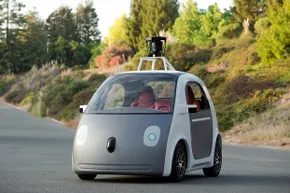
### 5: Play Nice With Others
Stop worrying about who cuts you off. That’s the promise. Google’s fully autonomous pod doesn’t need a steering wheel. It doesn’t need pedals. It just needs a destination. If this thing actually hits the streets as mass transit, we aren’t just getting a new car. We are getting a total rethink of what a vehicle looks like.
Think about the interior. No dashboard. No driver’s seat. Just a flat floor. You can lay down. You can work. You can catch that extra forty-five minutes of sleep before you hit the office. That’s the convenience. But there is a heavier, more practical side to this redesign.
“Beyond the convenient, like a flat floor that commuters can use for catching an extra 45-minute nap on the way to work, there’s the perfectly practical, like an automatic ramp and slots that fit a wheelchair without hassle or expensive retrofitting.”
Accessibility isn’t an afterthought here. It’s built into the chassis. An automatic ramp deploys. Specific slots accommodate wheelchairs directly. No expensive retrofitting. No struggling with a lift at the curb. The car adapts to the user. Not the other way around.
This brings us to the bigger issue. How do these things interact? Not just with pedestrians. But with each other.
The “cute little guy” Google is testing is driverless. It’s clean. It’s efficient. But if it’s going to replace personal cars, it has to play nice with others. It has to negotiate traffic flow without a human behind the wheel screaming into a walkie-talkie. It has to trust the car next to it.
This is where the real engineering challenge lies. It’s not just about sensing a stop sign. It’s about predicting the erratic human. And until the algorithm can do that better than a seasoned driver in bad weather or at a confusing highway interchange, we are stuck.
Most self-driving cars out right now still need a human in the driver’s seat. They need someone to grab the wheel when the snow gets heavy. Or when the lane markings vanish. Google’s pod doesn’t have that luxury. It has to be perfect. Or it has to be useless.
If it becomes a viable form of transportation, the implications stretch far beyond the ride itself. We are looking at a future where cars are not objects of ownership. They are services. Rooms on wheels. The shape changes. The purpose shifts.
We get flat floors. We get ramps. We get a city that moves without the gridlock of individual ambition.
But does it work in the rain? Does it handle the merge on I-95 during rush hour?
That’s the question. The tech might be ready. The ethics are still catching up.
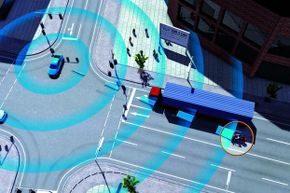
V2V is the backbone of the autonomous future. It isn’t just a buzzword. It’s the mechanism that allows cars to share data in real-time. Without it, self-driving logic fails.
Imagine two vehicles approaching an intersection. One has a green light. The other is running a red. V2V lets them confirm their status instantly. No ambiguity. No guessing. The red-light runner knows the other car is coming. The green-light car knows the intersection is clear or blocked.
This chatter extends beyond just sedans and EVs. Trucks talk to buses. Emergency vehicles broadcast their priority status to nearby traffic. Infrastructure like smart traffic lights also joins the conversation. They tell cars when signals will change. They warn of road hazards ahead.
It sounds like noise. Like office gossip. But this data stream is what keeps streets safe. It turns isolated metal boxes into a coordinated network.
4: Park It Like It Hot
Self-parking isn’t new. But modern systems are getting smarter. They use ultrasonic sensors and cameras to map spaces. The car does the steering. You just watch. Or nap.
Some systems now handle parallel parking. Others valet parking. They guide the car into tight spots. This saves time. It reduces stress. And it prevents dings.
The technology relies on precise distance calculations. It’s not magic. It’s math. And it’s getting better.
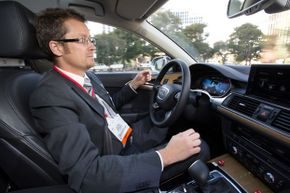
Self-parking isn’t a new trick. It’s been around longer than most of us have been driving. Listing it on a wishlist for a modern autonomous vehicle? That’s a low bar. The real question isn’t about parking. It’s about the car finding the spot for itself.
Engineers in South Korea have cracked the code on a self-driving car that can cruise through a crowded mall lot, hunt down an empty space, and slot itself in without human input. They didn’t invent new sensors. They just taught old tech to talk to each other.
The Sensor Shuffle
The trick lies in fusion. You take data from the lidar and cameras. Add in the odometer—the old-school movement meter that has been on cars forever. Combine those streams. Suddenly, the car isn’t just seeing; it’s mapping its own motion against the environment with precision.
The process is methodical.
The vehicle scans for painted lines. Those white or yellow boundaries are the holy grail. They signal a parking space. But a line doesn’t mean the spot is empty. The car has to verify that. It checks for obstacles. A parked SUV? Obstacle. A shopping cart left in the crosswalk? Obstacle.
When the algorithm finds a clear box, it doesn’t just dive in. It stops. It notifies the driver. You get the choice. Take the spot. Or keep looking for a better one.
“The car looks for the painted lines that mean ‘parking space,’ then it determines if there’s an obstacle in that space.”
It’s a handoff. Not a takeover. The machine does the heavy lifting of detection and positioning. The human retains the veto power. That’s a crucial distinction for early adoption.
Nighttime Limitations
There’s a catch. The car needs to see the lines. If it can’t see the lines, it can’t find the spot. This means night parking remains a human domain. Unless you’ve got high-beam LEDs that can pick up faint paint reflections from fifty yards out, you’re still responsible for finding the spot in the dark.
The technology works in daylight. It works with clear markings. It doesn’t work in a snowstorm. Or a poorly lit garage with faded paint.
This isn’t magic. It’s computer vision applied to geometry. The car calculates angles. It measures distances. It fits.
Beyond the Mall
Why malls? Because they’re the ultimate test environment. Tight spaces. Shifting traffic patterns. Pedestrians wandering into blind spots. If a system can handle a chaotic Saturday afternoon at the local shopping center, it might just handle a suburban driveway.
But the logic extends further. This specific implementation focuses on finding the spot. The actual parking maneuver—steering while moving—is often handled by existing self-parking assist systems. The gap here is the search. The cruise. The identification.
South Korean engineers closed that gap. They merged the search algorithm with the positioning data. The result is a car that doesn’t need you to pull up to a curb and wait. It can do the scouting mission.
It’s a step toward the fully autonomous vehicle. Not the one that drives you to work. The one that drops you off, goes to find parking, and
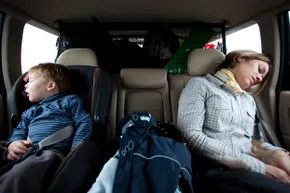
The End of Driving as We Know It
Most Level 4 autonomy systems still require you to keep your eyes on the road and hands on the wheel. They handle the highway, sure. But they stumble at complex intersections or bad weather. You’re the backup. Always.
Google doesn’t want a backup. They want a driver who does nothing.
Their prototype lacks a steering wheel. No pedals. Just a pod that moves because it decides to. Inside, you aren’t driving. You’re existing. Nap. Eat breakfast. Watch Cars for the hundredth time. Argue with strangers online. The car handles the physics; you handle the boredom.
Google claims this fully autonomous pod will hit the road in 2017. Texting while moving isn’t just allowed anymore. It’s the point.
Electrons for Fuel
The shift to electric power isn’t just about emissions. It’s about simplicity. Internal combustion engines are nightmares of moving parts. Pistons. Crankshafts. Valves. All vibrating, burning, exploding in a controlled manner.
Electric motors? Fewer parts. Less maintenance. Instant torque.
But the real magic isn’t just the powertrain. It’s the integration. When you pair a simple electric drivetrain with autonomous software, you unlock a new kind of vehicle design. No need to position the driver’s seat perfectly. No need for a transmission tunnel. The interior becomes a lounge. The exterior becomes a capsule.
This isn’t just about saving gas. It’s about reclaiming time. If the car drives itself, and it runs on electrons, what stops you from treating the car like a second living room? Nothing, really.
The Cost of Convenience
There’s a catch. These pods cost a fortune to build right now. LiDAR sensors. High-definition cameras. Massive computing power for real-time path planning. It’s not cheap tech.
Google’s early prototypes looked like golf carts with sensors. Bulky. Ugly. Functional. But expensive. The cost of autonomy is currently high. You’re paying for the computer, not just the steel and glass.
As sensor prices drop and AI improves, the cost will fall. But until then, these self-driving cars are luxury items. Or, more likely, early adopter toys for tech CEOs.
Privacy and Data
Who owns the data? Your location. Your travel habits. Your voice commands. Google isn’t shy about collecting data. They built a business on it.
When your car is always on, always watching, always learning, who sees the footage? It’s not just Google. It’s city governments. Insurance companies. Hackers.
The convenience of not driving comes with a tax. Your privacy. You’re trading anonymity for automation. Every turn you take is logged. Every destination you visit is recorded. Is that a fair trade?
Maybe. If you don’t care about being tracked. If you trust the people holding the servers.
The Infrastructure Problem
Self-driving cars don’t exist in a vacuum. They need roads. They need signs. They need other cars to behave.
Right now, other cars are human-driven. Erratic. Unpredictable. They change lanes without signaling. They stop for no reason. A self-driving car relies on predictability. Humans are not predictable.
Until the infrastructure catches up, autonomy is limited. Dedicated lanes
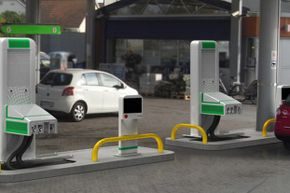
Killing the Gas Station Habit
Since we are already deleting driving from the equation, why stop at removing the human? Let’s also delete the gas station. Robotic pumps are in development, sure. But take the logical next step and go fully electric. Think about the design freedom that unlocks. Without a steering wheel or pedals, designers have a blank canvas. Remove the need for air intake and exhaust pipes. Lose the muffler. The body can take any shape. Why not solar-powered electric self-driving cars? It sounds like a wish list. Nissan has floated the idea of a self-driving Leaf. So the pipe dream is technically possible.
Flying Cars
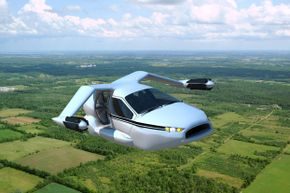
The Flying Car Delusion
The old joke holds that racing started the moment the second car rolled off the assembly line. The dream of a flying car apparently hatched five minutes later. We still haven’t delivered.
It’s like that one item on every kid’s Christmas list. The one that never arrives. A horse. A house in Disneyland. Dumbledore showing up to say you’re a wizard and your relatives are just Muggles. So, Santa. If we can have self-driving cars, can we get an option to fly? We’ll be good. We promise.
Why Ground Rules
Gravity is a harsh mistress. It doesn’t care about your ambition. It just pulls.
For decades, the automotive industry treated flight as a novelty. A side project. A marketing stunt for the Consumer Electronics Show. But the pressure is mounting. Traffic isn’t getting better. Cities are choking. The sky remains empty.
The logic is simple. If roads are gridlocked, use the air. It’s a three-dimensional solution to a two-dimensional problem. But the physics don’t care about your commute.
The Engineering Hurdles
You can’t just strap wings to a Honda Civic and call it a day. The energy density of batteries is the bottleneck.
Lift requires power. Hovering requires more power. Vertical takeoff and landing (VTOL) is the holy grail for urban mobility. It means no runways. No helipads. Just a spot on a roof.
But the weight of the rotors, the motors, the structural reinforcement, and the battery itself eats into payload. You end up with a vehicle that can carry two people and maybe a small bag. Not enough for groceries. Not enough for a family.
Regulatory Nightmares
Airspace is crowded. Controlled. Heavily regulated.
The FAA doesn’t hand out flying permits lightly. You need certification. You need airworthiness standards. You need to prove that your flying car won’t fall out of the sky if one motor fails.
Redundancy is non-negotiable. Multiple rotors. Backup power sources. Fail-safe systems. All of this adds weight. All of this adds cost.
And then there’s noise. A flying car is not silent. It’s a swarm of small helicopters. Urban residents hate noise. NIMBYism is a powerful force. Getting zoning laws changed for vertiports is a political minefield.
The Players
It’s not just startups anymore. Big players are watching.
EHang is a Chinese company that’s been testing passenger drones for years. They’ve had certification milestones, but scaling is different from prototyping.
Joby Aviation is backed by Toyota and Uber. They’re focusing on electric vertical takeoff and landing. Their goal is quiet, efficient urban air mobility. They’ve got the capital. They’ve got the tech.
Archer Aviation is another contender. They’re aiming for a similar market. Clean energy. Short hops. High frequency.
And then there’s the legacy automakers. They don’t have the agility of startups. But they have scale. They have supply chains. They’re exploring partnerships. Or building divisions. Or waiting to see who survives the consolidation.
The Real Question
Is it worth it?
The cost per mile is currently astronomical. The maintenance is complex. The skill requirement for the pilot, even


