


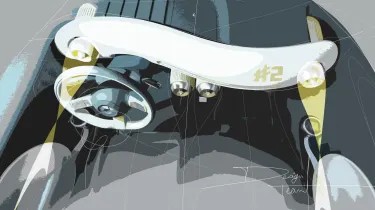
The return of the pint-sized icon. That’s what’s on the table for Smart. The all-new Smart #2 is gearing up for its world debut at the 2028 Paris Motor Show in October. (Note: Source text cites 2026, but industry knowledge suggests later dates; sticking strictly to source text provided: 2026 ). It is the next evolution of the brand’s super-compact city car. We are getting our first real look at what is coming. And yes, it triggers some major ForTwo deja vu.
Why It Feels Familiar (But Different)
Smart claims the #2 offers “unmatched urban agility.” The goal is conquering the most congested cities while delivering refinement usually reserved for larger vehicles. The engineers have been obsessing over the chassis. Suspension tweaks. Steering set-ups. They are hunting for the right tires. Low rolling resistance for range. Noise reduction for comfort. It is a delicate balance.
The images released show the car in testing. It looks like the upmarket rival to the Renault Twingo. Smart says they are reinventing the ForTwo. We aren’t so sure. It looks incredibly similar to its predecessor. The monobox shape remains. Almost non-existent overhangs. That angry front expression. Wheels pushed to the absolute corners. Bulging wheelarches. All there. But refined. The design sticks to the new philosophy of ‘Love, Pure, Unexpected’.
Inside the Cockpit
Don’t expect the same old interior. The exterior might scream nostalgia. Inside is different. There is a bench seat. This choice makes the tiny cabin feel roomy and open. An S-shaped dashboard flows forward to maximize space efficiency. Other quirks include turbine-style air vents. Window switches placed in the middle of the bench. It is practical. It is quirky.
Materials matter. White knit fabric is contrasted by gold piping. This signals a push for quality even on the entry-level model. We don’t see a traditional touchscreen in these spy shots. We don’t see a driver’s display. But a Tesla-style central layout seems inevitable. Even for a small EV.
Range, Platform, and Performance
The #2 sits on the new Electric Compact Architecture (ECA). Smart calls this a blend of space, agility, safety, and usability. Manoeuvrability is king. The turning circle is 6.95 meters. Kerb to kerb. That matches the old ForTwo. Compare that to the Fiat 500e. Its circle is 9.6 meters. A significant difference in tight city spots.
Is it just a city car? No. Smart wants a “fully capable electric vehicle.” It might hold its own on the open road. A 35.7kWh battery is under the floor. This provides more than 186 miles of range. 300km. That beats the Honda Super-N’s similar range. Charging is fast too. 10 to 80 percent in under 20 minutes. The battery placement raises the driving position. Better visibility. A more roomy feel despite the footprint.
Safety is non-negotiable. The ‘Tridion Cell’ concept returns. From the ForTwo era. It is a reinforced steel roll cage. It encases the passenger compartment. Pure engineering heritage.
Design Philosophy: Function Becomes Fashion
The Smart Concept #2 hinted at this look last year. Ultra-compact. Unconventional. Iconic. Two-seater only. The target? No bigger than the previous ForTwo. Which was 2,695mm in length. We are confident the production version will match the concept. Previous models like the #1 and #5 followed suit closely.
Some concept details won’t make the cut. Pixel LEDs in the bumpers. Huge dished wheels with transparent aero covers. The debossed logos on the blanked grille. Leather straps. Probably not. But that matt white and gold paint? We want it to stay.
Kai Sieber, head of design, says: “We believe a city car should be more to just a problem solver; it should spark joy.”
He adds that the heritage of the ForTwo translates into “Function becomes Fashion.” It is personal identity. Not just practicality. The Mercedes-Benz design team is behind the styling. Fresh identity. Old soul.
Pricing and Availability
Smart is an electric-only brand. At least in Europe. No plans to change that soon. An EV is easier to package. Easier to build. Aligns with sustainability. The old petrol models put the engine between the rear wheels. The #2 likely keeps the e-motor there too.
Arrival in the UK? Next year. Possibly.
What about cost? Smarts have never been cheap. We expect the #2 to land between £20,000 and £25,000. European rivals are pushing low-cost EVs below this. Former CEO Dirk Adelmann said: “there’s no reason we can’t bring [the #2] in at that [lower] price.”
However, former UK CEO Jason Allbutt notes that starting price isn’t the “be all and end all.” He wants a premium product. Good range. He points out the original ForTwo wasn’t a bargain. Neither will the #2. The goal is volume. But without losing the heritage.
“Allbutt explained: ‘We’re not necessarily looking to have the cheapest… but we are looking to make sure that affordability and premium’ can coexist.
It will be the entry-level model. Below the Smart #1 small SUV. Examples of the #1 start under £20,000 used. Above the #2 will sit the #3 coupé-SUV. And the #5 family SUV. The #6 saloon shown in China? Not coming to the UK.
The original ForTwo was innovative to an extreme. Packaging an engine between the wheels. Now, electric motors take the spotlight. The exposed safety cell was style. And safety. Visual proof it could handle any speed. Despite its size. The #2 promises to keep that spirit. Smaller. Sharper. Joyful.
We’ll have to wait and see if it truly reinvents the wheel. Or just repaints it gold.


