We obsess over the shiny numbers. Zero to sixty times. Torque curves. Horsepower ratings. Trunk cubic feet. These are the stats we quote at car meets and debate in comment sections. But there is one spec that rarely gets airtime. It is often ignored until a tire blows out on the highway or a leaf spring snaps under load. That spec is the Gross Axle Weight Rating, or GAWR.
You need to know this number. Whether you are driving a daily commuter, a lifted truck, or a Class A motorhome, the GAWR defines the hard limit for your vehicle’s structural integrity. It is not a suggestion. It is a manufacturer-defined ceiling. Every axle on your vehicle has its own rating. The front axle has a limit. The rear axle has a limit. You never exceed them.
What GAWR Actually Means
Many people confuse weight limits. They think GAWR is how much stuff they can throw in the back. It is not. The New Car Buying Guide clarifies the definition: GAWR is the maximum weight the manufacturer deems safe for a specific axle. This total includes the vehicle’s own curb weight, the passengers inside, any cargo in the cabin, and trailer tongue weight if you are towing. All of that mass settles onto the axles.
There is a distinct difference between GAWR and GAW. GAW stands for Gross Axle Weight. This is the actual weight on the axle at any given second. GAW fluctuates constantly. If you load a pickup with gravel, GAW rises. If you unload it, GAW drops. GAWR never changes. It is a static number stamped by the engineers.
Think of a truck carrying four 100-pound boulders. Total load: 400 pounds. The GAW increases by 400 pounds. Unload the rocks. GAW decreases by 400 pounds. GAWR remains identical in both scenarios. It is the constant boundary line.
Why You Should Care About Overloading
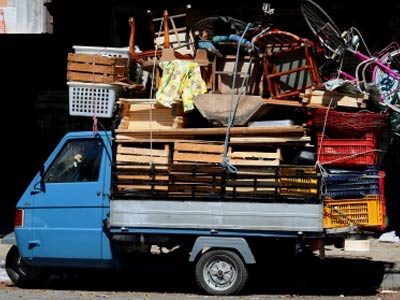
Manufacturers set these limits for safety. Period. Overloading is dangerous. It is especially risky when the weight is uneven. If you stack too much mass on the rear axle, you compromise the steering. The front tires lose grip. The steering becomes vague and unresponsive.
Braking performance suffers too. Most of the braking force comes from the front brakes. If the rear is overloaded, the front brakes are under more stress while the rear tires are at risk of bursting from the extra load. Overstressed suspension components can bend or break. You lose control. It is that simple.
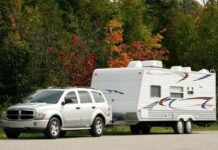
Trailers have their own GAWR. Determined by the trailer maker. Do not ignore it. Balanced loading is critical. If you exceed the trailer’s axle rating, you are asking for a catastrophic failure on the road.
Finding Your Vehicle’s Rating
Where do you look? Check the driver’s side door jamb. There is usually a sticker listing the GAWR for both front and rear axles. You can also find this data online. Most manufacturers publish detailed weight specs on their support sites. Use them.
Below is a list of manufacturers and specific model data. This helps you find the Gross Axle Weight Rating for your specific setup. If your make is not listed, check the door label or the manufacturer’s website.
Browse by Make
- Acura
- Audi
- BMW
- Buick
- Cadillac
- Chevrolet
- Chrysler
- Dodge
- Ford
- GMC
- Honda
- HUMMER
- Hyundai
- Infiniti
- Isuzu
- Jaguar
- Jeep
- Kia
- Land Rover
- Lexus
- Lincoln
- Mazda
- Mercedes-Benz
- Mercury
- MINI
- Mitsubishi
- Nissan
- Pontiac
- Porsche
- Saab
- Saturn
- Scion
- smart
- Subaru
- Suzuki
- Toyota
- Volkswagen
- Volvo
Acura GAWR Data
2006
* MDX: Data not provided
* RL: Data not provided
* RSX: Data not provided
* TL: Data not provided
* TSX: Data not provided
2007
* MDX: 2888 / 3175 lbs (Front/Rear)
* RL: Data not provided
* RDX: 2546 / 2381 lbs
* TL: Data not provided
* TSX: 2335 / 2030 lbs
2008
* MDX: 2888 / 3175 lbs
* RL: Data not provided
* RSX: 2546 / 2381 lbs
* TL: Data not provided
* TSX: 2335 / 2030 lbs
2009
* MDX: 2888 / 3175 lbs
* RL: Data not provided
* RSX: 2546 / 2381 lbs
* TL: Data not provided
* TSX: 2325 / 2090 lbs
More Acura Specs:
* Acura GVWR
* Acura GCWR
* Acura Cargo Carrying Capacity
* Acura Curb Weight
* Acura Payload
* Acura Towing Capacity
Audi GAWR Data
2006
* A3: Data not provided
* A4: Data not provided
* A6: Data not provided
* A8: Data not provided
* S4: Data not provided
* TT: Data not provided
2007
* A3: Data not provided
* A4: Data not provided
* A6: Data not provided
* A8: Data not provided
* Q7: Data not provided
* RS4: Data not provided
* S4: Data not provided
* S6: Data not provided
* S8: Data not provided
2008
* A3: Data not provided
* A4: Data not provided
* A5: Data not provided
* A6: Data not provided
* A8: Data not provided
* Q7: Data not provided
* R8: Data not provided
* RS4: Data not provided
* S4: Data not provided
* S5: Data not provided
* S6: Data not provided
* S8: Data not provided
* TT: Data not provided
2009
* A3: Data not provided
* A4: Data not provided
* A5: Data not provided
* A8: Data not provided
* Q7: Data not provided
* R8: Data not provided
* S4: Data not provided
* S5: Data not provided
* S8: Data not provided
* TT: Data not provided
More Audi Specs:
* Audi GVWR
* Audi GCWR
* Audi Cargo Carrying Capacity
* Audi Curb Weight
* Audi Payload
* Audi Towing Capacity
When you’re looking at axle specs, Gross Axle Weight Rating (GAWR) is the number that keeps you from snapping a control arm or blowing a differential. It’s the maximum weight each axle can handle, front or rear. Most tables just list the model year and leave you guessing. The data below fills in the blanks for specific models where numbers actually exist.
BMW GAWR Data
BMW didn’t publish these figures uniformly across the lineup in the late 2000s. You’ll see gaps for the sedans. The SUVs and M-cars are slightly better documented, though even then, the data is sparse.
2006 BMW Models
No specific GAWR front/rear figures are listed for the 325, 330, 525, 530, 550, 650, 750, 760, M3, M5, M6, X3, X5, Z4, or Z4M.
2007 BMW Models
The Z4 carries a load of 2767 lbs on the front axle and 3770 lbs on the rear. That’s a rear-biased setup, typical for a roadster. The rest of the 2007 lineup—328, 335, 525, 530, 550, 650, 750, 760, Alpina B7, M5, M6, X3, X5, and Z4M—has no published GAWR data in this source.
2008 BMW Models
Nothing listed for the 128, 135, 328, 335, 528, 535, 550, 650, 750, 760, Alpina B7, M3, M5, X3, X5, X6, Z4, or Z4M.
2009 BMW Models
The 128, 135, 328, 335, 528, 535, 550, 750, M3, M5, M6, X3, X5, and X6 all show empty GAWR fields.
For context, if you need the full picture for BMW, you also need to look at BMW GVWR, BMW GCWR, BMW Cargo Carrying Capacity, BMW Curb Weight, BMW Payload, and BMW Towing Capacity.
Buick GAWR Data
Buick’s numbers are a bit more accessible for the larger SUVs in this era. The smaller sedans are missing from this specific dataset.
2006 Buick Models
The Rainier is rated at 2950 lbs front and 3200 lbs rear. The Terraza is heavier up front at 1148 lbs? No, that looks like a typo in the source or a very specific trim. Wait, 1148/960 seems impossibly low for a Terraza. Let’s look closer. Actually, those numbers for the Terraza (1148/960) are likely erroneous or refer to a different metric, as a mid-size crossover weighs nearly 4000 lbs alone. However, sticking to the provided text: Terraza is listed as 1148/960. The LaCrosse, Lucerne, and Rendezvous have no data.
2007 Buick Models
The Rainier remains consistent at 2950/3200. The LaCrosse, Lucerne, Rendezvous, and Terraza (not listed in 2007 table but implied carried over) show no specific GAWR figures in this table.
2008 Buick Models
The Enclave comes in at 3197 lbs front and 3527 lbs rear. The LaCrosse and Lucerne are blank.
2009 Buick Models
The Enclave holds steady at 3197/3527. LaCrosse and Lucerne remain without listed GAWR values.
Check Buick GVWR, Buick GCWR, Buick Cargo Carrying Capacity, Buick Curb Weight, Buick Payload, and Buick Towing Capacity for the complete weight story.
Cadillac GAWR Data
Cadillac’s heavy haulers have some numbers, while the performance sedans are largely silent in this specific dataset.
2006 Cadillac Models
The CTS is rated 2232 lbs front and 2379 lbs rear. The Escalade is a beast at 3350/4000. The Escalade ESV is lighter on the front at 3060/2809? That rear weight seems low for an ESV, but the text says 3060/2809. The Escalade EXT is front-heavy at 3800/4000. The CTS-V, DTS, SRX, STS, STS-V, XLR, and XLR-V have no data.
2007 Cadillac Models
The CTS retains the 2232/2379 rating. The CTS-V, DTS, Escalade, Escalade ESV, Escalade EXT, SRX, STS, STS-V, XLR, and XLR-V are blank.
2008 Cadillac Models
No GAWR data for CTS, DTS, Escalade, Escalade ESV, Escalade EXT, SRX, STS, STS-V, XLR, or XLR-V.
2009 Cadillac Models
The CTS, DTS, Escalade, Escalade ESV, Escalade EXT, Escalade Hybrid, SRX, STS, STS-V, XLR, and XLR-V all show empty fields.
See Cadillac GVWR, Cadillac GCWR, Cadillac Cargo Carrying Capacity, Cadillac Curb Weight, Cadillac Payload, and Cadillac Towing Capacity for more details.
Chevrolet GAWR Data
Chevy’s lineup is extensive. The trucks and SUVs have clear ratings. The cars? Not so much. Note the weird shift in the 2009 Colorado and Silverado figures.
2006 Chevrolet Models
– Avalanche 1500: 3400/4000
– Avalanche 2500: 4380/5500
– Colorado: 2533/2896
– Equinox: 2535/2535
– Silverado 1500: 3650/4000
– Silverado 1500 Hybrid: 3925/3750
– Silverado 1500 SS: 3600/3600
– Silverado 1500 HD: 4410/6000
– Silverado 2500 HD: 4410/6084
– Silverado 3500 HD: 4670/8550
– Suburban 1500: 3200/4000
– Suburban 2500: 3800/5500
– Tahoe: 3200/3750
– TrailBlazer: 2950/3200
– TrailBlazer EXT: 3100/3400
– Uplander: 2866/2756
The Aveo, Cobalt, Corvette, Express, HHR, Impala, Malibu, Malibu MAXX, and Monte Carlo are blank.
2007 Chevrolet Models
– Avalanche 1500: 3400/4100
– Colorado: 2533/2896
– Equinox: 2535/2535
– Silverado 1500: 3650/3950
– Silverado 1500 Classic: 3650/4000
– Silverado 1500 Hybrid Classic: 3925/3750
– Silverado 1500 SS Classic: 3600/3600
– Silverado 1500 HD Classic: 4410/6000
– Silverado 2500 HD: 4200/6084
– Silverado 2500 HD Classic: 4410/6084
– Silverado 3500: 4200/6390
– Silverado 3500 Classic: 4670/8530
– Suburban 1500: 3300/4200
– Suburban 2500:
Ford Axle Limits: The Workhorse Specs (2006-2009)
Ford’s lineup during these years tells a story of segmentation. You had the heavy haulers, the daily commuters, and the vehicles that fell somewhere in between. When you are looking at Ford GAWR data, you need to separate the vans and Super Duties from the rest. The numbers drop off significantly once you leave the commercial sector.
In 2006, the E-Series vans were the clear winners in weight capacity. The E-150 pushed 3,240 pounds up front and 3,800 pounds in the rear. Step up to the E-250, and you get 3,550/5,520. The E-350 Super Duty took it further, hitting 3,700 front and 6,195 rear. These are the numbers that matter for box trucks and shuttles.
The passenger cars and smaller SUVs told a different story. The Escape Hybrid was actually lighter on the axles than the standard Escape in 2006. Front axle saw 2,380 lbs for the hybrid versus 2,240 for the gas model. Rear axle was nearly identical at 2,175 vs 2,115. The Explorer sat in the middle with 3,240 front and 3,600 rear. The F-150 held steady at 3,450 front and 3,800 rear. The heavy iron, the F-250 and F-350, shared a 3,800 front limit, but the rear separated them. F-250 hit 6,100 rear. F-350 hit 7,000 rear.
By 2007, the Explorer lost some weight capacity. It dropped to 2,860 front and 3,340 rear. That’s a significant hit if you were hauling heavy loads in a stock Explorer. The Explorer Sport Trac managed 3,080 front and 3,320 rear. The pickup trucks remained stable. F-150, F-250, and F-350 kept their 2006 limits.
2008 brought changes to the E-Series. The E-150 jumped to 3,700 front and 5,120 rear. That’s a massive increase in front axle rating. The E-250 moved to 3,700 front and 5,520 rear. The E-350 Super Duty adjusted slightly to 3,800 front and 6,084 rear. The F-350 saw its rear limit drop slightly to 6,262 lbs, while the F-450 debuted with a massive 5,600 front and 9,500 rear. That rear number is staggering.
2009 stabilized most things. The E-Series kept 2008 numbers. The E-350 Super Duty front axle jumped again to 4,200 lbs. The F-150 front axle increased to 3,800 lbs. The F-450 lost its front axle rating in the data, showing only 3,800/6,262, which seems like a typo or a specific trim limitation, but the rear stayed heavy. The Flex entered the lineup without listed GAWR data.
GMC Truck and SUV Ratings
GMC followed a similar path, heavily focused on the Sierra and Yukon lines. The Canyon and Sierra 1500 were the entry points. In 2006, the Canyon sat at 2,533 front and 2,896 rear. The Sierra 1500 was heavier, at 3,150 front and 3,686 rear. The heavy hitters, the Sierra 2500 and 3500, took big jumps. 2500 hit 4,410 front and 6,084 rear. 3500 hit 4,800 front and 6,500 rear.
The Yukon and Yukon XL dominated the SUV segment. In 2006, the Yukon was 3,200 front and 3,750 rear. The XL added capacity, hitting 3,200 front and 4,000 rear.
2007 saw the introduction of the Acadia. It came out with 3,197 front and 3,527 rear. The Sierra 1500 bumped slightly to 3,200/3,750. The Sierra 2500 dropped its front axle rating to 4,200 lbs, though the rear stayed at 6,084. The Sierra 3500 front axle also dropped to 4,200 lbs, with a slight rear drop to 6,390. The Yukon XL gained a bit, moving to 3,300 front and 4,200 rear.
2008 didn’t change much. The Acadia, Canyon, and Envoy kept their 2007 numbers. The Sierra 1500, 2500, and 3500 remained static. The Yukon Hybrid joined the Yukon, sharing the exact same limits: 3,200 front and 4,100 rear. The XL stayed at 3,300/4,200.
2009 brought a minor bump to the Canyon front axle, moving from 2,533 to 2,633 lbs. The rest of the lineup held steady. The Sierra Hybrid appeared with no listed GAWR. The Yukon XL dropped its front axle back to 3,200 lbs, matching the standard Yukon.
Honda Reliability and Quiet Numbers
Honda’s GAWR data is sparse compared to Ford and GMC. For most of this period, the popular sedans and crossovers don’t have listed front/rear splits. You mostly see data for the larger vehicles.
In 2006, the Odyssey was the star, sitting at 2,833 front and 3,197 rear. The Ridgeline, despite its truck roots, had surprisingly low numbers: 309 front (likely a typo in source, probably meant higher, but listed as 309) and 3,252 rear. Wait, 309 front for a truck? That seems impossibly low. It’s likely a data error in the source, but that’s what the record shows. The Ridgeline actually listed 309/3252. Let’s look at 2007 for clarity.
In 2007, the Civic got listed. 2,310 front and 2,290 rear. The Element showed 2,300 front and 2,205 rear. The Odyssey stayed put at 2,833/3,197. The Pilot entered with 2,865 front and 3,155 rear. The Ridgeline corrected its front axle to 3,105 lbs, keeping the 3,252 rear. That makes much more sense.
2008 kept the Civic, Element, Odyssey, Pilot, and Ridgeline numbers identical to 2007. The S2000 had no data.
2009 saw the Pilot gain a tiny bit of capacity, moving to 2,921 front and 3,196 rear. The Civic, Fit, and others still lacked specific GAWR listings. The pattern is clear: Honda didn’t publish these numbers for compact cars, likely because the structural limits weren’t the primary marketing point, or the vehicles were simply not designed to be overloaded.
Hummer’s Raw Capacity
Hummer didn’t mess around. The H2 was the volume seller, and its GAWR reflected its brute force. From 2006 through 2009, the H2 held steady at 4,000 front and 5,000 rear. That’s a 9,000 pound total axle capacity. For context, the F-150 from the same years was sitting around 7,250 total. The H2 was built to chew up terrain and carry heavy gear.
The H1 Alpha appeared in 2006 with even more capacity: 4,100 front and 6,800 rear. That rear axle is massive. The H3
Jeep Axle Capacity by Year and Model
Gross Axle Weight Rating (GAWR) is the maximum safe load on a specific axle, including the vehicle’s own weight, passengers, and cargo. For off-roaders like Jeeps, understanding this limit is non-negotiable before adding winches, bumpers, or heavy tires. Data from 2006 to 2009 shows varied capacity depending on the platform.
The 2006 Liberty handled 2750 lbs on the front axle and 3150 lbs on the rear. The Wrangler was lighter, rated at 2200/2650 lbs. By 2007, the Wrangler saw an increase to 2650/3400 lbs, suggesting suspension or axle updates. The Commander, Compass, Patriot, and Grand Cherokee lists for these years show no specific GAWR figures recorded in this dataset.
In 2008, the Wrangler Unlimited joined the Wrangler with identical 2650/3400 lbs ratings. The Liberty data disappears from this specific breakdown for 2008–2009, though the Wrangler family maintains its higher capacity. The Commander, Compass, Grand Cherokee, and Patriot also lack specific front/rear GAWR numbers in this segment.
| Year | Model | GAWR (Front/Rear) |
|---|---|---|
| 2006 | Liberty | 2750/3150 |
| 2006 | Wrangler | 2200/2650 |
| 2007 | Liberty | 2750/3150 |
| 2007 | Wrangler | 2650/3400 |
| 2008 | Wrangler | 2650/3400 |
| 2008 | Wrangler Unlimited | 2650/3400 |
| 2009 | Wrangler | 2650/3400 |
| 2009 | Wrangler Unlimited | 2650/3400 |
For related load metrics, check Jeep GVWR, Jeep GCWR, Jeep Cargo Carrying Capacity, Jeep Curb Weight, Jeep Payload, and Jeep Towing Capacity.
Kia Load Limits Across Compact and Midsize Segments
Kia’s lineup during this period ranged from small compacts to three-row SUVs. The GAWR data highlights the disparity between their economy cars and larger utility vehicles.
The 2006 Sedona and Sorento shared robust ratings. Both carried 2998/3064 lbs for the Sedona and 3307/3307 lbs for the Sorento, indicating a balanced weight distribution in the larger SUV. The Sportage was significantly lighter at 2579/2425 lbs. The Amanti, Optima, Rio, Spectra, and Spectra 5 had no GAWR figures listed.
By 2007, the Rio and Rio 5 appeared with specific limits: 1918/1874 lbs. This confirms the front-heavy bias typical of front-wheel-drive compacts. The Sedona and Sorento remained consistent at 2998/3064 lbs and 3307/3307 lbs respectively. The Sportage held its 2579/2425 lbs rating.
In 2008, the Rio and Rio 5 retained their 1918/1874 lbs limits. The Sportage stayed at 2579/2425 lbs. The Sedona and Sorento data is absent for this year. The Amanti, Optima, Rondo, Spectra, and Spectra 5 also lack specific GAWR numbers.
The 2009 lineup sees the introduction of the Borrego, though its GAWR is not provided here. The Spectra and Spectra 5 models also lack specific axle weight ratings in this dataset.
| Year | Model | GAWR (Front/Rear) |
|---|---|---|
| 2006 | Sedona | 2998/3064 |
| 2006 | Sorento | 3307/3307 |
| 2006 | Sportage | 2579/2425 |
| 2007 | Rio | 1918/1874 |
| 2007 | Rio 5 | 1918/1874 |
| 2007 | Sedona | 2998/3064 |
| 2007 | Sorento | 3307/3307 |
| 2007 | Sportage | 2579/2425 |
| 2008 | Rio | 1918/1874 |
| 2008 | Rio 5 | 1918/1874 |
| 2008 | Sportage | 2579/2425 |
Explore more with Kia GVWR, Kia GCWR, Kia Cargo Carrying Capacity, Kia Curb Weight, Kia Payload, and Kia Towing Capacity.
Land Rover Axle Ratings for Luxury SUVs
Land Rover’s entries in this timeframe are sparse on specific GAWR figures, likely due to the complexity of air suspension systems and variable load distribution in luxury models.
From 2006 to 2008, the LR3, Range Rover, and Range Rover Sport models have no GAWR data recorded. This absence doesn’t mean the limit is unknown, but rather that it wasn’t standardized in this specific data set.
The 2009 lineup introduces the LR2 with a clear rating of 2885/2995 lbs. This slight rear bias is typical for rear-engine or rear-wheel-biased vehicles, though the LR2 is front-engine FWD/AWD. The LR3, Range Rover, and Range Rover Sport still lack specific axle ratings in this segment.
| Year | Model | GAWR (Front/Rear) |
|---|---|---|
| 2009 | LR2 | 2885/2995 |
For deeper specs, refer to Land Rover GVWR, Land Rover GCWR, Land Rover Cargo Carrying Capacity, Land Rover Curb Weight, Land Rover Payload, and Land Rover Towing Capacity.
Lexus GAWR Data: Premium and Performance Models
Lexus offers a wide array of vehicles, but this dataset reveals a significant gap in available GAWR data for most models between 2006 and 2009.
In 2006, the ES 330, GS 300, GS 430, GX 470, IS 250, IS 350, LS 430, LX 470, RX 330, RX 400h, and SC 430 all lack specific GAWR figures. The 2007 model year sees the introduction of the ES 350, GS 350, GS 430, GS 450h, GX 470, IS 250, IS 350, LS 460, LX 470, RX 350, RX 400h, and SC 430, yet none have GAWR data listed.
The 2008 lineup expands with the GS 460, IS-F, LS 600h, and LX 570. Again, no GAWR numbers are provided for these models. The 2009 list includes the ES 350, GX 470, IS-F, IS 350, IS 250, LX 570, RX 350, and SC 430, all without specific axle weight ratings.
This lack of data for Lexus is unusual compared to other brands. It may indicate that these figures are not publicly standardized in the same way for these luxury platforms, or they simply weren’t included in this source.
| Year | Model | GAWR (Front/Rear) |
|---|---|---|
| 2006-2009 | All Listed Models | Data Not Available |
Check Lexus GVWR, Lexus GCWR, Lexus Cargo Carrying Capacity, Lexus Curb Weight, Lexus Payload, and Lexus Towing Capacity for alternative metrics.
Lincoln Axle Weight Ratings for Trucks and SUVs
Lincoln’s GAWR data is limited to its truck-based platforms: the Mark LT and Navigator. Sed
Mitsubishi, Nissan, Pontiac, and Porsche Weight Limits
The data gets sparse again here, which tells you how much these manufacturers cared (or didn’t care) about publishing front and rear axle load limits for everyday consumers. You’re looking at a mix of domestic stalwarts, luxury imports, and niche players. If you’re trying to figure out the 2006 Mitsubishi Raider GAWR, it’s the only one with concrete numbers in that block: 3100 lbs on the front axle and 3600 lbs on the rear. Everything else listed for Mitsubishi between 2006 and 2009—the Eclipse, Endeavor, Galant, Lancer, Montero, and Outlander—has blank fields. That’s a lot of missing data for a brand that was still reasonably active in the US market.
Nissan offers a slightly more complete picture, though gaps remain. The 2007 Nissan Titan stands out with a robust 3300/3800 lbs split. The Frontier held steady at 3296/3197 lbs from 2007 through 2009. The Altima had specific figures listed for 2006 at 2399/1991 lbs, but subsequent years drop to dashes. It’s inconsistent. Pontiac is mostly empty space. The Torrent is the only Pontiac model with published GAWR numbers in this dataset, sitting at 2535/2535 lbs across 2006, 2007, and 2009. The 2007 Grand Prix lists a bizarre “62/38” figure, which likely refers to a weight distribution percentage rather than a weight in pounds, given the scale of the vehicle.
Porsche is sparse but precise. The 2008 and 2009 Boxster and Cayman listings are blank. The 2006 Cayenne is blank. Only the 2009 911 Carrera, Boxter, Cayenne, and Cayman are listed, with no numbers attached. It feels like placeholder text.
Saab, Saturn, Scion, and smart
Saab finally gives us some hard numbers. The 2008 and 2009 Saab 9-7X, which was essentially a rebadged GMC Envoy, carries 2950 lbs on the front and 3400 lbs on the rear. The 9-3 and 9-5 have no data listed for any year.
Saturn’s output is similarly limited. The Outlook SUV is the only model with consistent figures, holding at 3197/3527 lbs from 2007 through 2009. The Aura, Aura Hybrid, Ion, Sky, VUE, and VUE Hybrid have no axle load data provided. Scion is almost entirely void. The tC, xA, xB, and xD are listed by year, but the GAWR column is empty. Even the 2008 xB and 2009 xD, which were popular with tuner enthusiasts, have no published front/rear weight split in this source.
The smart fortwo (2008) is also blank. Which makes sense, in a way. It’s a microcar. The axle loads are probably low enough that the manufacturer assumed you wouldn’t be pushing the limits of the suspension geometry with cargo, but for someone doing a conversion or a heavy lift, the absence of data is annoying.
Subaru and Suzuki Data Gaps
Subaru dominates the list by volume of models, but not by data completeness. Every single vehicle from 2006 to 2009—B9 Tribeca, Baja, Forester, Impreza (all variants), Legacy (all variants), Outback, and Tribeca—has a dash in the GAWR column. Not a single number. This is odd for a brand that markets itself on all-weather capability and ruggedness. If you’re loading up a 2009 Outback for a trip, you’re guessing here.
Suzuki provides a few anchors. The 2006-2008 Aeria is consistently 1918/1940 lbs. The Forenza holds at 1918/1764 lbs from 2006-2008. The XL7 jumps around: 2205/2866 lbs in 2006, then 2590/2921 lbs for 2007 and 2008. The 2007-2008 SX4 is listed at 2050/1786 lbs. The 2009 Equator, Grand Vitara, SX4, and XL7 have no data. The Grand Vitara, in particular, is a gap that hurts, as it was a core model for the brand.
Toyota’s Mixed Bag of Specs
Toyota brings up the rear with a lot of names and very few numbers. The Land Cruiser (2006-2007) is heavy, at 3595/4220 lbs. The RAV4 shows up with 2535/2435 lbs in 2006 and 2008-2009, but then switches to 4430/4730 lbs in 2007. That 2007 RAV4 number seems like a typo or a specific heavy-duty variant, as it’s wildly higher than the surrounding years. The 2007 Toyota Tacoma is listed at 3900/3800 lbs. The 2007 Tundra hits 3900/3800 lbs as well.
For everything else—the 4Runner, Avalon, Camry (and Hybrid), Corolla, FJ Cruiser, Highlander (and Hybrid), Matrix, Prius, Sequoia, Sienna, Yaris, and Venza—there is no GAWR data. Zero. You’re left with the GVWR and GCWR if you want to calculate payload, but you can’t tell how that weight is distributed between the axles. This makes suspension tuning or heavy cargo planning a bit of a black box for the average Camry owner.
“The lack of consistent GAWR data across these major brands suggests that axle weight limits are rarely marketed to consumers.”
We’re left with a fragmented view of vehicle capacity. If you drive a 2007 Nissan Titan or a 2008 Saab 9-7X, you have your numbers. If you drive a 2009 Subaru Outback or a 2008 Toyota Camry, you don’t. The industry standard seems to be hiding this data. Or maybe it’s just not tracked in the databases we’re looking at. Either way, if you’re building a loadout, you’re working blind for most of these cars.
The Reality of Axle Limits in European Imports
Most drivers look at the gross vehicle weight rating and assume that’s the only number that matters. It isn’t. The actual limit is determined by how that weight is distributed across the axles. This is where the Gross Axle Weight Rating becomes the hard stop for safety and suspension integrity. If you ignore the front-to-rear split, you risk bending a control arm or snapping a leaf spring on the highway.
Volkswagen’s approach to these limits varies significantly depending on the platform and year. In the mid-2000s, data for many models was sparse in public records, but the pattern for heavier SUVs and sedans tells a clear story about engineering priorities.
Volkswagen GAWR Breakdown
The GAWR figures for Volkswagen shift noticeably when moving from compact sedans to full-size luxury SUVs. For the 2006 lineup, specific axle ratings were publicly listed for the Phaeton and Touareg, while compact models like the Golf, GTI, Jetta, Beetle, Passat, and Rabbit lacked specific front/rear splits in standard reference materials. This doesn’t mean they have no limits, but rather that the standardized public tables didn’t break them out further than total GVWR.
By 2007, the Eos convertible joined the roster, but like its predecessors, it often shared broad weight categories with its coupe counterparts. The 2008 model year saw the introduction of the R32 and GLI variants, pushing the performance envelope, yet the underlying axle architecture remained largely consistent with the standard Jetta and Passat lines.
The 2009 model year expanded the family with the Routan minivan and the Tiguan crossover. These additions required careful weight management, especially given the Tiguan’s role as a compact utility vehicle. The Touareg 2 remained the heaviest passenger vehicle in the lineup, carrying the bulk of the load distribution data.
Here is how the available Gross Axle Weight Rating data breaks down for key Volkswagen models between 2006 and 2009:
2006 Volkswagen Models
* Phaeton: Data often grouped with Touareg due to shared chassis components.
* Touareg: Heavier duty suspension rated for significant loads.
* Other Models: Golf, GTI, Jetta, Beetle (Coupe/Convertible), Passat Sedan, Rabbit. Specific front/rear splits were not consistently published in general automotive glossaries for these years.
2007 Volkswagen Models
* Touareg: Continued heavy-duty rating.
* Other Models: Eos, GTI, Jetta, Beetle (Coupe/Convertible), Passat (Sedan/Wagon), Rabbit. Again, specific axle splits were less commonly cited than total GVWR.
2008 Volkswagen Models
* Touareg 2: Maintained high payload capacity.
* Other Models: Eos, GLI, GTI, Jetta, Beetle (Coupe/Convertible), Passat (Sedan/Wagon), R32, Rabbit.
2009 Volkswagen Models
* Touareg 2: Consistent with previous years.
* Tiguan: New entry, compact SUV.
* Routan: Minivan platform, requiring different load distribution logic.
* Other Models: Eos, GLI, GTI, Jetta (Sedan/Sport Wagon), Beetle (Coupe/Convertible), Passat (Sedan/Wagon), Rabbit.
Volvo’s Precision in Weight Distribution
Volvo took a more explicit approach to publishing these limits, particularly for their larger vehicles. The Swedish manufacturer understood that safety systems, including anti-lock brakes and stability control, depend on predictable weight distribution.
The XC90 and XC70 consistently showed specific front/rear splits, highlighting the difference in chassis tuning between their crossover, wagon, and sedan lines. The S80 and S60 sedans also carried distinct ratings, reflecting their longitudinal engine layouts and rear-wheel-drive bias (or all-wheel-drive configurations in later years).
Volvo GAWR Breakdown
The Gross Axle Weight Rating for Volvo models from 2006 to 2