


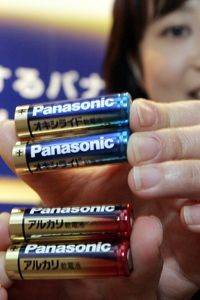
You probably associate AA batteries with remote controls, wall clocks, or the toys gathering dust under your coffee table. They’re ubiquitous. Tiny. Obvious. Inside that zinc casing, a chemical reaction is churning out electrons. Negative to positive. Current flows. Simple.
Electricity is changing how we move. Cars have been electric since the 19th century. Now, hybrids and full EVs are dominating the news cycle. Car companies are throwing billions at battery tech. But there’s a catch. The packs in those vehicles are massive. Heavy. Expensive. A hybrid battery might spit out 300 volts. That’s enough to push a car through city streets on pure electric power.
So here’s the question that sounds like a joke until you check the specs: Can you drive a real, sit-in-and-steer vehicle using nothing but standard household AA batteries?
The short answer is yes. You can.
The long answer is why nobody does it as a daily commute.
An AA cell outputs 1.5 volts. That’s it. To match the 300 volts of a hybrid pack, you’d need 200 cells in series just to hit the baseline. But voltage is only half the battle. You need current. You need capacity. You need to replace these tiny cells constantly. It’s impractical. It’s inefficient. It’s a logistical nightmare.
But impractical doesn’t mean impossible. And engineers hate impossible.
A team in Japan didn’t just build a go-kart out of Duracells. They built a machine that actually hit highway speeds. 75 miles per hour. That’s 120.7 kilometers per hour. Powered by AA batteries.
The Panasonic Oxyride Speed Challenge
This wasn’t a science fair project. This was a serious engineering exercise in energy density and power delivery. The team utilized Panasonic’s Oxyride technology, a specific type of alkaline battery designed for higher performance than standard store-brand cells. Oxyride batteries use iron oxide instead of manganese dioxide at the cathode, allowing for higher energy density and better discharge rates under heavy load.
Why does that matter?
Standard alkalines sag under high current. They heat up. They die. Oxyride cells hold their voltage longer when you’re demanding power from them. That’s the difference between a car that sputters to a stop after 200 meters and one that accelerates to 75 mph.
The challenge was scaling up. You can’t just wire 200 batteries together and call it a day. You need a management system. You need thermal regulation. You need a motor that can handle the torque curve of a low-voltage, high-current source.
The resulting vehicle defied the common assumption that household batteries are too weak for automotive applications. It proved that with the right chemistry and the right engineering, even the most basic power source can be pushed to extremes.
So, will you see AA-powered cars in your driveway next year? Probably not. The weight penalty alone would destroy range. The cost of swapping hundreds of cells after every charge cycle is absurd. But the proof of concept stands. The physics works. The electrons flow. And sometimes, the most ridiculous constraints lead to the most interesting engineering solutions.
The question isn’t really about practicality anymore. It’s about what happens when you stop asking if it can be done, and start asking how far you can push the limit.
How Panasonic Broke the Battery-Powered Land Speed Record
The jump from flight to land speed was a logical, albeit slightly cheeky, pivot for Panasonic. In 2006, the electronics giant had already made headlines by partnering with the Tokyo Institute of Technology to build a manned airplane powered by 160 AA batteries. It was a stunning feat of lightweight engineering. But when they tried to log it in the Guinness Book of World Records, they hit a wall. There was no category for “manned, battery-powered airplanes.”
The record book had a gap, and Panasonic saw an opportunity. By 2007, the target shifted. The goal was no longer the sky. It was the asphalt. Specifically, the dry-cell battery-powered land speed record.
This project, dubbed the Panasonic Oxyride Speed Challenge, wasn’t just about speed. It was about voltage. The team leaned heavily on Panasonic’s proprietary Oxyride batteries. These weren’t your standard alkalines. They pushed 1.7 volts compared to the typical 1.5 volts. That extra punch mattered when you were trying to move mass with chemistry alone.
Engineering a Bullet on Wheels
The resulting vehicle looked nothing like the sedans clogging up morning commute lanes. Built by Panasonic engineers and students from Osaka Sangyo University, the machine resembled a soapbox racer more than a car. It sat just 1 foot, 10 inches (56 centimeters) off the ground. Low. Aggressive. Aerodynamic.
Weight was the enemy. To combat it, the team stripped away everything non-essential. The body was a shell of plastic and carbon fiber. The result? A total weight of just 83 pounds (38 kilograms).
You need to picture the power source to appreciate the design. The car used 192 AA batteries. That’s nearly 200 of the same cells you’d find in a wall clock or a TV remote. Packing that much energy density into a package small enough to fit behind a driver’s back required precision engineering. The battery pack was mounted directly behind the pilot, Takashi Sudo.
Sudo didn’t sit upright. He reclined flat on his back, tucked inside the carbon fiber fuselage. The crew sealed the body over him before every run. It was a cockpit for one. A pressurized tube for one.
Hitting 75.8 MPH on Alkaline Power
So, what happens when you strap 192 AA batteries to a 38-kilogram carbon fiber bullet? You get a Guinness World Record.
The team needed to hit 65 miles per hour (104.6 kilometers per hour) to qualify for the record attempt. They didn’t just meet that benchmark. They crushed it.
The average speed across the run was 65.5 miles per hour (105.95 kilometers per hour). But the top speed? 75.8 miles per hour (122 kilometers per hour).
There was a catch, of course. Physics doesn’t let you cheat forever. Those tiny batteries drained their juice after just three-quarters of a mile (1.2 kilometers). The run was short. Brutal. Effective. But it was enough. In August 2007, the Panasonic Oxyride Speed Challenge officially took the title for the fastest car powered by dry cell batteries.
The Reality of AA-Powered Driving
It’s easy to look at a car hitting 75.8 mph on AA batteries and think about the future of commuting. Don’t bother. You won’t be driving a Panasonic Oxyride to work. The range is too short. The capacity is too low. The safety standards are nonexistent.
But the experiment proved a fundamental point. You can power a vehicle with dry-cell batteries. You just need 192 of them. You need a vehicle that weighs less than a motorcycle. You need an aerodynamic profile that mimics a torpedo. And you need to accept that your “highway speed” is actually a sprint.
Panasonic didn’t invent the electric car. They just proved that with enough voltage, enough carbon fiber, and a dash of stubbornness, you can break records that have nothing to do with practical transportation. It was a flash of brilliance. A record. A moment in time.
The batteries are dead now. The car is likely in a museum or a storage unit somewhere. But the idea remains. Power isn’t just about watts. It’s about where you put them.


