


Finding a way to turn wheel rotation into usable energy isn’t exactly new. Goodyear started poking around this problem years ago. The American tire maker looked at thermolectric and piezoelectric components. The idea was simple. Turn heat and movement into electricity. Charge the batteries in electric or hybrid cars.
Sumitomo wants the same result. They just took a different path.
Static Friction In The Sidewall
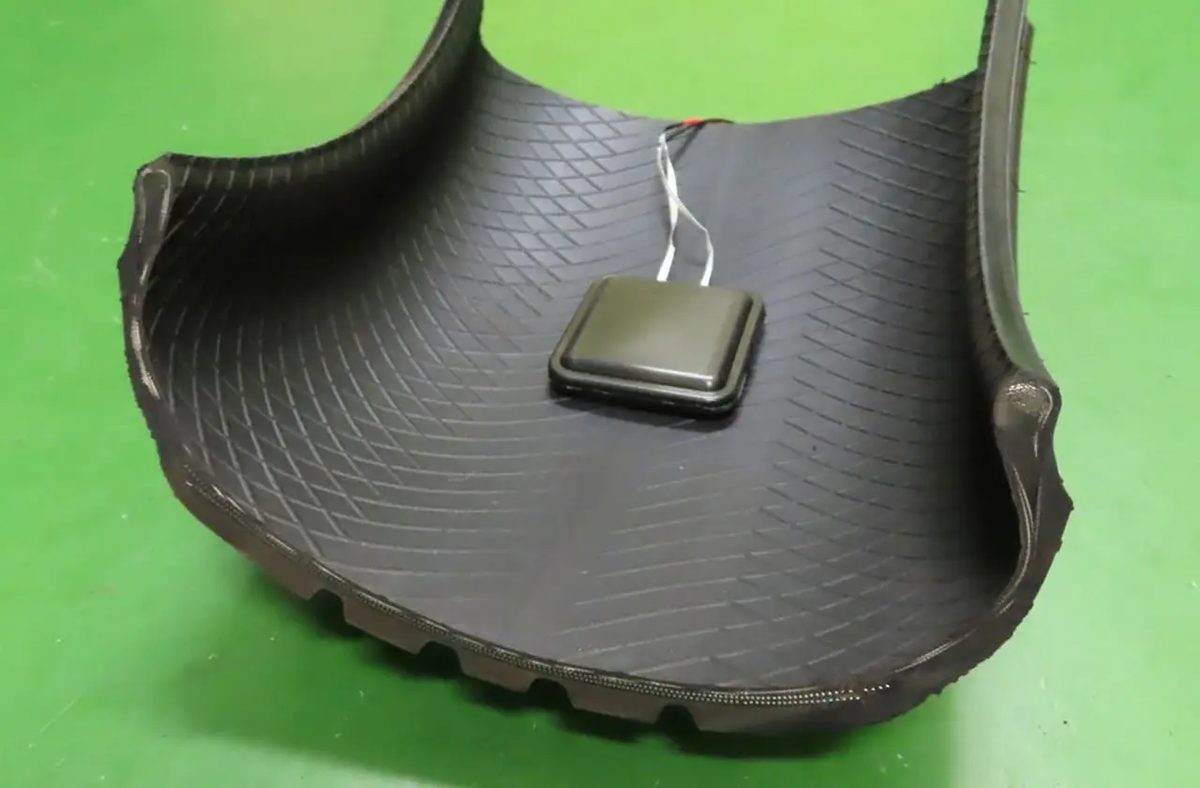
Sumitomo partnered with Kansai University in Japan. The goal was to exploit static electricity. This charge comes from friction. Specifically, the friction caused by the tire casing deforming as it moves.
The device looks like a small box. You insert it inside a standard tire. Inside that box are two layers of rubber. Each layer has an electrode. There is also a negatively charged film touching a positively charged film.
Roll the tire. The films rub against each other. This generates static electricity. You can then recover that energy.
“The system could power tire pressure sensors and other low-energy car equipment.”
Researchers say this setup could power TPMS sensors. Maybe other low-energy electrical components too. They didn’t release data on charging capacity. The box is small. The energy produced isn’t likely huge.
Could you put several devices in one tire? Wire them in series? That might actually add up.
The Goodyear BH03 Concept
This brings us back to Goodyear. They showed off their own concept at the Geneva Motor Show. It’s called the BH03. It’s still just a concept. But it aims to do something similar.
The tire combines thermolectric and piezoelectric elements. The thermolectric part uses a specific “ultra black” rubber texture. This absorbs heat. The heat comes from the sun when the car is parked.
The piezoelectric part is woven into the carcass. It reacts to rolling. It reacts to deformation.
Goodyear didn’t give precise performance numbers. They just claimed it could extend the range of an electric vehicle. Energy recovery is a huge focus for manufacturers right now.
On paper, the Goodyear idea looks seductive. Sumitomo’s friction method offers a different angle. One relies on heat and pressure. The other on static charge from movement.
Which approach actually delivers power? We won’t know until someone builds it. And tests it. For now, both are just concepts waiting for real-world validation.
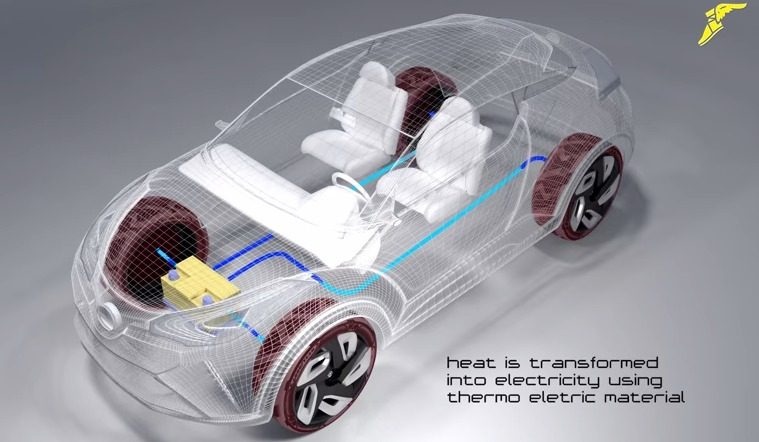

Goodyear’s wheel-rim energy harvesting
The engineering questions don’t stop at the tire itself. You have to look at the conversion system. And the power delivery to the battery. The concept implies a specific rim design. Something that bridges the gap between the rubber and the energy recovery module. We don’t know if electricity generation scales with vehicle speed. Goodyear isn’t saying. There is no timeline for a product launch. None at all.
It brings to mind another ambitious project. Audi is working on something similar. Their R&D department is exploring suspension-based power generation. Think of it as a kinetic energy recovery system. But instead of braking, they are harvesting heat.
Capturing heat from suspension friction
The logic is simple. Suspension components get hot. Audi claims the temperature spikes between 100 and 125 °C. That’s enough thermal energy to do something useful. The German automaker developed a damper. It includes a generator synced with the mechanical movement of the part.
“Audi claims the suspension temperature spikes between 100 and 125 °C.”
The idea is to capture that waste heat. Convert the mechanical motion into electricity. It’s an efficient way to recycle energy that would otherwise dissipate into the air.
No roadmap exists. Audi isn’t sharing a release date. The technology remains in the labs. Just like Goodyear’s wheel-rim solution. Both concepts show where the industry is heading. Toward harvesting every possible joule of energy. Even from the things that shake and heat up.


