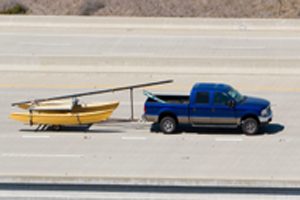
Towing capacity isn’t a suggestion. It’s the hard ceiling set by the manufacturer on the weight your drivetrain, chassis, and suspension can handle without breaking. You see a number in the owner’s manual. You stick to it. Ignore it at your peril.
Some aftermarket hitches boast higher limits. That’s misleading. Those hitches are universal. They fit a Ford F-150 and a Honda Civic equally well. The hitch doesn’t dictate the limit. The car does. Exceeding that limit fries transmissions. It warps frames. It turns a weekend trip into a tow truck invoice.
“Never exceed your vehicle’s towing capacity because doing so can affect your vehicle’s handling, stopping ability, or possibly even damage the drivetrain.”
The chart below breaks down maximum towing capacity by year, make, and model for the 2006 to 2009 model years. Check your payload. If you’re hauling gear, passengers, or fuel, subtract that weight from your total towing allowance. Passenger weight over 150 lbs counts. Optional equipment counts. Everything counts.
Here is the data for the luxury brands and American muscle, starting with the precision engineering of Acura, Audi, and BMW, followed by the volume haulers from Buick, Cadillac, and Chevrolet.
Acura Towing Capacity
Acura kept things modest during this era. Only the MDX really pulled its weight. The rest of the lineup was for light duty only.
| Year | Model | Max Towing Capacity (lbs) |
|---|---|---|
| 2006 | MDX | 3,500 |
| RL | 1,000 | |
| RSX | 1,500 | |
| TL | 1,000 | |
| TSX | N/A | |
| 2007 | MDX | 5,000 |
| RL | 1,000 | |
| RDX | 1,500 | |
| TL | 1,000 | |
| TSX | 1,000 | |
| 2008 | MDX | 5,000 |
| RL | 1,000 | |
| RSX | 1,500 | |
| TL | 1,000 | |
| TSX | 1,000 | |
| 2009 | MDX | 5,000 |
| RL | 1,000 | |
| RSX | 1,500 | |
| TSX | 1,000 |
Related Specs: Acura GVWR, Acura GAWR, Acura GCWR, Acura Cargo Carrying Capacity, Acura Curb Weight, Acura Payload.
Audi Towing Capacity
Audi was conservative. For most sedans, towing wasn’t really in the cards. The Q7 was the exception. It carried the load while the A4 and A6 stayed parked.
| Year | Model | Max Towing Capacity (lbs) |
|---|---|---|
| 2006 | A3 | N/A |
| A4 | N/A | |
| A6 | N/A | |
| A8 | N/A | |
| S4 | N/A | |
| TT | N/A | |
| 2007 | A3 | N/A |
| A4 | N/A | |
| A6 | N/A | |
| A8 | N/A | |
| Q7 | 5,500 | |
| RS4 | N/A | |
| S4 | N/A | |
| S6 | N/A | |
| S8 | N/A | |
| 2008 | A3 | N/A |
| A4 | N/A | |
| A5 | N/A | |
| A6 | N/A | |
| A8 | N/A | |
| Q7 | 5,500 | |
| R8 | N/A | |
| RS4 | N/A | |
| S4 | N/A | |
| S5 | N/A | |
| S6 | N/A | |
| S8 | N/A | |
| TT | N/A | |
| 2009 | A3 | N/A |
| A4 | N/A | |
| A5 | N/A | |
| A8 | N/A | |
| Q7 | 5,500 | |
| R8 | N/A | |
| S4 | N/A | |
| S5 | N/A | |
| S8 | N/A | |
| TT | N/A |
Related Specs: Audi GVWR, Audi GAWR, Audi GCWR, Audi Cargo Carrying Capacity, Audi Curb Weight, Audi Payload.
BMW Towing Capacity
BMW’s SUVs did the heavy lifting here. The sedans and coupes? Mostly no-go zones. The X5 and X6 could move some serious weight, provided you didn’t overload them.
| Year | Model | Max Towing Capacity (lbs) |
|---|---|---|
| 2006 | 325 | N/A |
| 330 | N/A | |
| 525 | N/A | |
| 530 | N/A | |
| 550 | N/A | |
| 650 | N/A | |
| 750 | N/A | |
| 760 | N/A | |
| M3 | N/A | |
| M5 | N/A | |
| M6 | N/A | |
| X3 | 3,500 | |
| X5 | 6,000 | |
| Z4 | N/A | |
| Z4M | N/A | |
| 2007 | 328 | N/A |
| 335 | N/A | |
| 525 | N/A | |
| 530 | N/A | |
| 550 | N/A | |
| 650 | N/A | |
| 750 | N/A | |
| 760 | N/A | |
| Alpina B7 | N/A | |
| M5 | N/A | |
| M6 | N/A | |
| X3 | 3,500 | |
| X5 | 6,000 | |
| Z4 | N/A | |
| Z4M | N/A | |
| 2008 | 128 | N/A |
| 135 | N/A | |
| 328 | N/A | |
| 335 | N/A | |
| 528 | N/A | |
| 535 | N/A | |
| 550 | N/A | |
| 650 | N/A | |
| 750 | N/A | |
| 760 | N/A | |
| Alpina B7 | N/A | |
| M3 | N/A | |
| M5 | N/A | |
| X3 | 3,500 | |
| X5 | 6,000 | |
| X6 | 6,000 | |
| Z4 | N/A | |
| Z4M | N/A | |
| 2009 | 128 | N/A |
| 135 | N/A | |
| 328 | N/A | |
| 335 | N/A | |
| 528 | N/A | |
| 535 | N/A | |
| 550 | N/A | |
| 750 | N/A | |
| M3 | N/A | |
| M5 | N/A | |
| M6 | N/A | |
| X3 | 3,500 | |
| X5 | 6,000 | |
| X6 | 6,000 |
Related Specs: BMW GVWR, BMW GAWR, BMW GCWR, BMW Cargo Carrying Capacity, BMW Curb Weight, BMW Payload.
Buick Towing Capacity
Buick had a few workhorses in the Rainier and Rendezvous. The LaCrosse and Lucerne were luxury cruisers, not tow rigs. The Enclave arrived in 2008 with a middling 2,000 lb limit.
| Year | Model | Max Towing Capacity (lbs) |
|---|---|---|
| 2006 | LaCrosse | 1,000 |
| Lucerne | 1,000 | |
| Rainier | 5,700 | |
| Rendezvous | 3,500 | |
| Terraza |
Chrysler and Dodge: The Heavy Lifters
Chrysler’s lineup during these years was a study in contrasts. You had the sedans, mostly capped at a modest 1,000 lbs towing capacity. The 2006-2009 Chrysler 300 and Sebring couldn’t pull much beyond that. The 300C did slightly better at 2,000 lbs, but honestly, you weren’t buying a 300C to tow a boat. The PT Cruiser saw a dip from 3,500 lbs in 2006 to just 1,000 lbs by 2007 and 2009. The Town & Country minivan hovered around 1,700 lbs initially, then jumped to 3,600 lbs in 2008 and 2009.
Dodge, however, brought the heat. If you needed to move heavy gear, the Ram trucks were the answer. The 2009 Dodge Ram 3500 maxed out at 12,300 lbs. That’s serious muscle. The 2500 series sat comfortably around 9,300 lbs in 2009, up from 9,050 lbs in 2006. The Ram 1500 saw a significant jump too, hitting 3,800 lbs in 2009, a solid upgrade from the 2,900 lbs it managed in 2006 and 2007.
Mid-size trucks like the Dakota struggled with consistency. It dropped from 3,300 lbs in 2006 to 3,150 lbs in 2008, holding steady there. The Durango stayed reliable in the 3,750-3,850 lbs range. Interesting note: the Sprinter Van 3500 doubled its capacity from 5,000 lbs in 2007 to 7,500 lbs in 2008-2009. The Aspen SUV was a niche option, holding firm at 8,950 lbs from 2007 to 2009, with a hybrid version limited to 6,000 lbs in 2009.
Ford: The Workhorse Lineup
Ford’s strategy was volume and versatility. The F-Series dominated the heavy towing category. The 2009 Ford F-150 cracked 8,700 lbs, a massive leap from the 6,400 lbs it started with in 2006. The Super Duty F-250 and F-350 were beasts, peaking at 10,600 lbs in 2007-2008 before the F-350 hit 10,700 lbs in 2009. The heavy-hitting F-450 saw a weird drop from 16,000 lbs in 2008 to 10,700 lbs in 2009. Did they downsize the rating, or just change the testing protocol? Either way, it’s a stat worth noting.
Passenger vehicles were more limited. The Explorer held steady at 3,500 lbs from 2007 onward. The Expedition maxed out at 9,200 lbs, consistent across 2007-2009. The Escape was a tiny 1,500 lbs, with the Hybrid version dropping to 1,000 lbs. The Ranger saw a precipitous fall from 6,000 lbs in 2006 to a mere 2,460 lbs by 2007-2009. That’s a 60% cut. Why? Emissions, probably. But the loss of capability is glaring.
GMC: The Silhouette of Chevy
GMC shared platforms with Chevrolet but often tweaked the limits. The Sierra 2500HD maxed out at 10,500 lbs in 2009, while the Sierra 3500HD held at 10,100 lbs across 2007-2009. The Yukon Hybrid was capped at 6,200 lbs in 2008-2009, while the non-hybrid Yukon climbed to 4,800 lbs in 2009. The Acadia was a modest 2,000 lbs tow vehicle, same as the Canyon pickups which sat around 2,400 lbs in the later years. The Savana vans were heavy-duty haulers, with the 2500 and 3500 models maintaining 6,300 lbs and 6,200 lbs respectively throughout the period.
Honda and Hummer: Niche Capabilities
Honda kept towing conservative. The Ridgeline was the king of the hill at 5,000 lbs in 2006 and 2008. The Pilot and Odyssey stayed at 3,500 lbs once they appeared in the data (2008-2009 for the Pilot). Smaller cars like the Civic and Accord were limited to 1,000-1,500 lbs, with the 2009 Civic dropping to 1,000 lbs.
Hummer was all about brute force, regardless of efficiency. The H2 started at 6,500 lbs in 2006, rose to 6,600 lbs in 2007, and then jumped to 8,200 lbs for 2008-2009. The H3T, the pickup variant of the H3, added 4,400 lbs to the mix in 2009, while the standard H3 stayed stuck at 3,000 lbs.
Hyundai: Entering the Fray
Hyundai’s presence was sparse in this dataset. The Santa Fe was the most capable, hitting 2,700 lbs in 2006 before dropping to 1,650 lbs in 2007-2008. The Elantra and Tucson were light-duty tow vehicles, sitting at 750-1,500 lbs. The Entourage minivan managed 1,000 lbs. It wasn’t until later that Hyundai would ramp up its towing numbers significantly.
Hyundai Towing Capacity
Year
Model **
Max Towing Capacity (lbs)**
2006
Accent
Azera
1000
Elantra
1500
Santa Fe
2700
Sonata
1000
Tiburon
Tucson
1000
2007
Accent
Azera
1000
Elantra
750
Entourage
1000
Santa Fe
1650
Sonata
1000
Tiburon
Tucson
1000
Veracruz
2008
Accent
Azera
1000
Elantra
750
Entourage
1000
Santa Fe
1650
Hyundai
Hyundai’s lineup for this era offers a modest range when it comes to hauling. The Hyundai Tucson stands out as the only model with a rated capacity, hitting 1,000 pounds across the board for 2006. It’s light-duty territory. The Sonata, a staple in the family sedan market, also caps out at 1,000 lbs in 2009. The rest of the roster—the Accent, Azera, Veracruz, Tiburon, and early Genesis —shows no towing capability listed. If you’re looking to pull anything heavier than a small jet ski, you’re likely out of luck with these specific configurations.
Infiniti
Infiniti takes a different approach, offering serious muscle in the SUV department while keeping the sedans strictly light-duty. The FX35 and FX45 consistently deliver 3,500 lbs of towing power from 2006 through 2009. The big daddy here is the QX56, a full-size luxury SUV that can haul a hefty 9,000 lbs. That’s a number that matters if you’re towing a mid-sized travel trailer. The sedans tell a different story. The G35, M35, and M45 are limited to a paltry 1,000 lbs. By 2008 and 2009, Infiniti shifted gears; the G and M series dropped their towing ratings entirely, likely due to chassis changes or the introduction of the V8-powered FX50, which matched the FX35/45 at 3,500 lbs.
Isuzu
Isuzu’s presence in the US market was tightening during these years, but the numbers remain clear for the models that stuck around. The Ascender is the workhorse here, rated for 5,300 lbs consistently from 2006 to 2008. The compact trucks tell a story of gradual improvement. The i-280 started at 1,700 lbs in 2006, moved to 2,100 lbs for the i-290 in 2007, and settled at 2,200 lbs in 2008. The larger i-350 handled 4,000 lbs in its first year, but the subsequent i-370 saw a significant jump, reaching 5,500 lbs by 2008. That’s a 37.5% increase in towing capacity in just two model years.
Jaguar
Jaguar’s British engineering during this period didn’t prioritize heavy hauling. Looking through the S-Type, X-Type, XJ8, XJR, XK, and XF models from 2006 to 2009, the towing capacity is consistently blank. These vehicles were built for performance, comfort, and style, not for pulling trailers. If you see a Jag towing something, it’s probably being done at its own risk or via a specialized aftermarket setup not reflected in factory specs.
Jeep
Jeep’s towing numbers depend heavily on what you’re pulling and which platform you choose. The Grand Cherokee and Commander are the bread and butter here, rated for 3,500 lbs across all years from 2006 to 2009. The Liberty offers a bit more versatility; it starts at 3,500 lbs in 2006 and 2007, but drops to 2,000 lbs for the 2008 and 2009 models, possibly due to the unibody redesign. The entry-level SUVs—the Compass, Patriot, and Wrangler (both standard and Unlimited)—are firmly in the light-duty bracket, capped at 1,000 lbs. That’s enough for a small utility trailer or a couple of motorcycles, but not much else.
Kia
Kia’s towing capabilities expanded rapidly during this period, reflecting the brand’s push into larger vehicles. The Sportage has been a steady 1,500 lbs since 2006. The Optima sedan sits comfortably at 2,000 lbs from 2006 through 2008. The real shifts happen with the larger crossovers. The Sorento emerges as a capable hauler, rated for 5,000 lbs in both 2007 and 2008. The Sedona minivan peaks at 3,500 lbs in 2007 before dropping off the radar in later years. By 2009, the new Borrego enters the fray with a solid 5,000-lb rating, while the smaller Spectra and Rio models show no towing capacity at all.
Land Rover
Land Rover dominates the heavy-duty category in this dataset. The LR3 and Range Rover are towing monsters, consistently rated for 7,700 lbs from 2006 onward. The Range Rover Sport matches this, slightly edging it out in 2007, 2008, and 2009 with a precise rating of 7,716 lbs. This is serious capability. The entry-level LR2 is less capable, starting with a rating of 3,500 lbs in 2009, but for those towing large boats or horse trailers, the full-size Range Rovers provide the necessary margin of safety.
Lexus
Lexus offers a tiered approach to towing, with capacity tied directly to vehicle size and drivetrain. The heavy hitters are the off-road capable GX 470 and LX 570. The GX 470 maintains a steady 6,500 lbs from 2006 to 2009. The newer LX 570, introduced in 2008, boosts that figure to 8,500 lbs. The LS 430 sedan offers a modest 2,000 lbs. The mid-size RX series is surprisingly varied; the RX 330 and early RX 350 (2007) handle 3,500 lbs, but by 2008, the RX 350 and hybrid RX 400h drop to 2,000 lbs. The ES and IS sedans, along with the SC coupe, show no towing capacity, reinforcing the brand’s focus on luxury over utility in those segments.
Lincoln
Lincoln’s towing numbers are straightforward, centered around the truck-based Navigator and Mark LT. The Mark LT, a pickup truck based on the Navigator, is the clear winner, capable of hauling 8,900 lbs consistently from 2006 to 2009. The Navigator SUV itself handles 6,000 lbs across the same period. Smaller sedans like the Town Car are limited to 2,000 lbs. The newer MKS sedan, introduced in 2009, offers a minimal 1,000 lbs. The MKX crossover holds steady at 2,000 lbs.
Mazda
Mazda’s towing capacity varies by engine size and platform. The compact Tribute is rated for 1,500 lbs in non-hybrid versions, while the Tribute Hybrid bumps that to 2,000 lbs. The mid-size CX-7 and CX-9 both handle 2,000 lbs. The pickup trucks tell the most interesting story. The B4000 is the strongest, rated for 3,140 lbs in 2006, 2008, and 2009. The B3000 drops from 2,500 lbs in 2006 to 2,480 lbs in 2007, then disappears. The base B2300 hovers around 1,580 to 1,600 lbs. Smaller cars like the Mazda3, Mazda5, and Mazda6 show no towing capacity, sticking to their role as daily drivers.
Mercedes-Benz
Mercedes-Benz saw a significant jump in towing capability between 2006 and 2007, likely due to updates in chassis reinforcement and transmission cooling. In 2006, the ML350 and ML500 were limited to 2,000 lbs. By 2007, the entire ML lineup (ML320, ML350, ML500, ML63 AMG ) jumped to 7,200 lbs. The GL-Class SUVs and the G-Class (G500, G55) are even more robust, ranging from 7,000 to 7,500 lbs. The sedans and coupes (C-Class, E-Class, S-Class, CLK, SL) show no towing capacity, maintaining their luxury performance focus.
More Specs
For those digging deeper into vehicle limitations, the following specifications provide context beyond simple towing numbers:
- Hyundai GVWR
- Hyundai GAWR
- Hyundai GC
Mercedes-Benz Towing Specs
The German engineering approach to towing is less about brute force and more about calculated load management. Look at the ML series. The ML320, ML550, and even the high-performance ML63 AMG all share a flat 7200-pound max towing capacity. It’s consistent. You don’t get a bonus for the V8. The R-Class drops significantly to 3500 pounds, likely due to its unibody construction and focus on passenger comfort over off-road grunt.
The S-Class, SL-Class, and SLK-Class show dashes. That means no official towing rating. Why? Probably because the chassis and rear suspension aren’t designed for the stress of a trailer hitch. Stick to the SUVs if you need to haul.
For the full breakdown on weight distribution, check the Mercedes-Benz GVWR, Mercedes-Benz GAWR, Mercedes-Benz GCWR, Mercedes-Benz Cargo Carrying Capacity, Mercedes-Benz Curb Weight, and Mercury Payload data.
Mercury Towing Specs
Mercury was playing in the same sandbox as Ford for much of this era, and the numbers prove it. The Grand Marquis, a body-on-frame sedan, tops out at 1500 pounds. Not much. But look at the Mountaineer and the Monterey. Both hit 3500 pounds. That’s the sweet spot for small travel trailers or boat loads.
The Mariner and Mariner Hybrid are capped at 1500 and 1000 pounds respectively. The hybrid system? It struggles under the sustained load of towing, hence the lower limit. The Montego and the base Sable are also limited to 1000 pounds.
If you’re looking for the mechanical limits, refer to Mercury GVWR, Mercury GAWR, Mercury GCWR, Mercury Cargo Carrying Capacity, Mercury Curb Weight, and Mercury Payload.
MINI Towing Specs
Here’s the reality check. MINI didn’t tow anything from 2006 to 2009. The Cooper Convertible, Cooper Hardtop, Cooper Clubman, and the sportier John Cooper Works variants all have dashes across the board. Zero pounds.
These cars are built for cornering, not carrying. The rear suspension geometry and chassis rigidity just aren’t there. Don’t try it.
Check MINI GVWR, MINI GAWR, MINI GCWR, MINI Cargo Carrying Capacity, MINI Curb Weight, and MINI Payload for weight stats.
Mitsubishi Towing Specs
Mitsubishi’s lineup here is a mix of capable SUVs and weak sedans. The Raider, which is basically a rebadged Dodge Dakota, is the hero. It handles 4050 pounds in 2006, then settles at 4000 pounds for 2007 and 2008. The 2009 model drops off the towing chart entirely.
The Endeavor is inconsistent. It started at 3500 pounds in 2006, dropped to 2000 in 2007, then rebounded to 3500 in 2008. The Outlander is a modest 1500 pounds, rising to 2000 pounds in 2007 before returning to 1500. The Eclipse, Galant, and Lancer have no towing capacity. They are not built for it.
For weight data, see Mitsubishi GAWR, Mitsubishi GCWR, Mitsubishi Cargo Carrying Capacity, Mitsubishi Curb Weight, Mitsubishi Payload, and Mitsubishi Towing Capacity.
Nissan Towing Specs
Nissan had some heavy hitters in 2006. The Titan and Armada both rated at 6500 pounds. The Frontier followed at 6300, and the Pathfinder at 6000. These are real workhorses. The Xterra was lighter at 5000 pounds.
The crossovers and sedans? Not so much. The Murano and Quest were capped at 3500. The Altima, Maxima, Sentra, and later the Rogue and Versa were limited to 1000 pounds. The hybrid Altima didn’t improve that number. The 350Z and GT-R? No towing.
Look at Nissan GVWR, Nissan GAWR, Nissan GCWR, Nissan Cargo Carrying Capacity, Nissan Curb Weight, and Nissan Payload.
Pontiac Towing Specs
Pontiac’s final years were a mix of GM platforms. The G6, GTO, and Grand Prix were all limited to 1000 pounds. The G8, a larger sedan based on the Holden Commodore, doubled that to 2000 pounds.
The SUVs were where the muscle was. The Torrent and Montana SV6 both hit 3500 pounds. The Vibe, sharing a platform with the Toyota Matrix, started at 1500 pounds but dropped to 1000 in 2009. The Solstice? No towing capacity.
See Pontiac GVWR, Pontiac GAWR, Pontiac GCWR, Pontiac Cargo Carrying Capacity, Pontiac Curb Weight, and Pontiac Payload.
Porsche Towing Specs
Porsche did one thing right in this era: the Cayenne. Whether it was 2006, 2008, or 2009, the Cayenne could tow 7716 pounds. It’s a specific number, and it’s high for a luxury brand. The Cayenne’s body-on-frame heritage (or heavy unibody reinforcement) and air suspension made it the only option.
The 911, Boxster, and Cayman all have dashes. Do not tow with a rear-engine sports car.
Check Porsche GVWR, Porsche GAWR, Porsche GCWR, Porsche Cargo Carrying Capacity, Porsche Curb Weight, and Porsche Payload.
Saab Towing Specs
Saab was small, but they had heavy toys. The 9-7X, a rebadged GMT360 truck (same as the Tahoe/Suburban), rated 5500 pounds. The 9-5 sedan could manage 3500 pounds, which is impressive for a compact executive car. The 9-3 and the 9-2X (a Subaru Impreza badge) were both limited to 2000 pounds.
Look at Saab GVWR, Saab GAWR, Saab GCWR, Saab Cargo Carrying Capacity, Saab Curb Weight, and Saab Payload.
Saturn Towing Specs
Saturn struggled with consistency. The Relay, a minivan based on the Honda Odyssey, handled 3500 pounds. The Outlook, another Odyssey-based vehicle, was limited to 2000 pounds.
The VUE and VUE Hybrid sat at 1500 pounds. The Ion and Aura were small sedans/coupes capped at 1000 pounds. The Sky? No towing capacity.
Review Saturn GVWR, Saturn GAWR, Saturn GCWR, Saturn Cargo Carrying Capacity, Saturn Curb Weight, and Saturn Payload.
Scion Towing Specs
Scion didn’t tow. None of the tC, xA, xB, or xD models from 2006 to 2009 had a towing rating. They were small, lightweight, and designed for urban drift, not hauling.
Check Scion GVWR, Scion GAWR, Scion GCWR, Scion Cargo Carrying Capacity, Scion Curb Weight, and Scion Payload.
smart Towing Specs
The smart fortwo, introduced in 2008, has no towing capacity. It’s a two-seater microcar. The idea is almost laughable.
See smart GVWR, smart GAWR, smart GCWR, smart Cargo Carrying Capacity, smart Curb Weight, and smart Payload.
Subaru Towing Specs
Subaru’s symmetrical AWD system gave them an edge in stability, but the numbers are moderate. The B9 Tribeca was the king at 3500 pounds in 2006 and 2007. The Legacy and Outback wagons both rated 2700 pounds. The Forester was 2400 pounds. The Baja truck was 2400 pounds. The Impreza wagons and Outback Sports were capped at 2000 pounds.
By 2008, the Tribeca dropped to 2700 pounds. The Forester lost its rating entirely in 2009. The WRX STI never had one.
Look at Subaru GVWR, Subaru GAWR, Subaru GCWR, Subaru Cargo Carrying Capacity, Subaru Curb Weight, and Subaru Payload.
Suzuki Towing Specs
Suzuki Towing Limits: The Small Carrier
Suzuki’s lineup during this era was… eclectic. If you were looking to tow anything substantial, your options were sparse. The Grand Vitara was the workhorse, rated for 3,000 lbs in 2006 and 2007. It held that number through 2008. Then 2009 happened. The data goes blank for the Grand Vitara and the entire XL7 lineup. You can’t tow with them? Or the data is just missing? The XL7 bumped up to 3,500 lbs in ’07 and ’08 before vanishing from the charts in ’09.
For the rest of the Suzuki roster, forget it. The Aerio? Nothing. The Forenza, Reno, and Verona were limited to a modest 1,000 lbs. That’s enough for a small jet ski or a few bicycles, but don’t try to pull a travel trailer with a Forenza. The SX4 never had a rated towing capacity listed in these specs.
If you’re digging into Suzuki towing capacity, stick to the Grand Vitara or the older XL7 models. The rest are strictly passenger haulers.
Toyota’s Heavy Lifting: Land Cruiser and Tundra
Toyota didn’t play games in ’06. The Land Cruiser was a brute at 6,500 lbs. The Tundra? 6,800 lbs. The Sequoia matched the Land Cruiser. If you needed to pull a heavy boat or a large camper, these were your go-to trucks and SUVs.
By 2009, that Land Cruiser had evolved. Its max towing capacity jumped to 9,935 lbs. That’s nearly 3,500 lbs more than its 2006 self. The Tundra, oddly, stayed flat at 4,800 lbs for 2007 and 2008, but the Land Cruiser’s upgrade makes it the king of the hill for late-2000s towing.
The mid-size options offer variety. The Tacoma and Sienna both held steady at 3,500 lbs from 2006 through 2009. Not bad for a mid-size truck and a minivan. The 4Runner was a reliable 5,000 lbs throughout the four years.
Hybrids introduced some interesting shifts. The Highlander Hybrid started at 2,000 lbs in 2006, jumped to 3,500 lbs in 2007, and stayed there. The Highlander (non-hybrid) was 1,500 lbs in ’06 and ’07, then bumped to 2,000 lbs for ’08 and ’09. So if you’re comparing Toyota Highlander towing capacity vs Highlander Hybrid, the hybrid actually pulls harder in the later years.
Don’t bother with the Prius, Camry, or Avalon if you need to tow. The Prius has no rating. The Camry and Avalon are limited to 1,000 lbs. The Corolla and Matrix sit comfortably at 1,500 lbs. The Yaris? Nothing.
Volkswagen: The Touareg Exception
Volkswagen’s US lineup in the mid-to-late 2000s was heavily skewed toward passenger cars. The Golf, GTI, Jetta, Rabbit, Passat, and Beetle? Zero towing capacity. Not even a sticker on the door. These are not tow vehicles.
The Touareg was the exception. It carried a robust 7,716 lbs rating for 2006 and 2007. In 2008, the Touareg 2 appeared, but the data drops. By 2009, the Touareg 2 was back on the chart, still at 7,716 lbs. That’s a serious number for a unibody SUV.
Newer entrants in 2009 offered lighter options. The Routan, a minivan co-developed with Chrysler, rated for 2,000 lbs. The Tiguan, a compact crossover, took it up to 2,200 lbs. So if you’re looking for Volkswagen Tiguan towing capacity versus the older Touareg, you’re choosing between convenience and raw strength.
The Phaeton? Nothing listed. The R32? Nothing. Stick to the Touareg if you need to pull a horse trailer.
Volvo: The Non-Towable Era
Here is where it gets weird. Volvo’s lineup from 2006 to 2009 is almost entirely silent on towing.
The S60 in 2006 had a rating.