Skoda isn’t trying to be niche anymore.
The Volkswagen Group brand wants to dominate Europe. And it’s telling us exactly how it plans to do that.
Look at the Vision O concept from the Munich Auto Show. That isn’t just a pretty model for photographers to trip over. It’s a roadmap. The rumors are loud, and they repeat themselves with good reason: that concept becomes the next Octavia.
We need to talk about why that matters. The current fourth-generation Octavia has been on the market since 2020. It’s about to get a third facelift. That sounds efficient. It also sounds like it’s hanging by a thread. When this new car drops, the Superb wagon could be left in the dust sooner than management likes to admit.
Here is what we know about the potential next-gen Octavia before the official reveal.
Design Evolution or Identity Crisis?
The styling uses Skoda’s new ‘Modern Solid’ language.
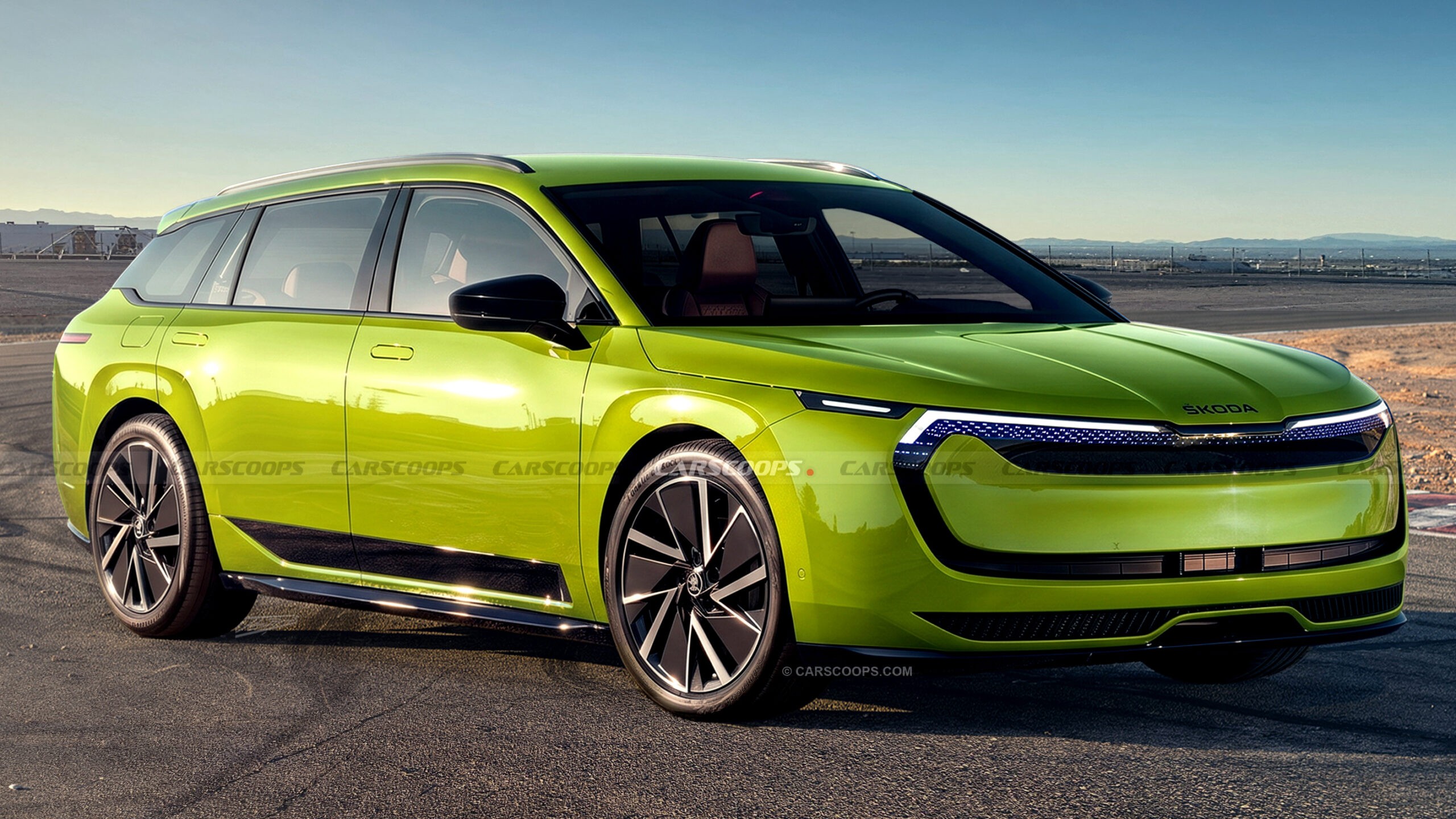
Don’t worry, the silhouette remains recognizable. You get that long-roof estate shape. But the front end has lost the traditional grille. Instead, we get a smooth, aerodynamic fascia that feels vaguely Audi-ish—specifically reminiscent of the China-exclusive models from Audi’s ID family.
The Octavia keeps its practical roots but adds a lower roofline and stronger shoulder lines to look significantly faster on paper.
The bonnet is sculpted. The wheel arches are pronounced. It stands wider, flatter. Lower. It doesn’t look like a taxi driver’s companion anymore; it looks like it’s trying to break a wind tunnel record.
At the rear, Skoda isn’t shy about copying its own concept. The tailgate features illuminated ‘SKODA’ lettering flanked by T-shaped taillights. It’s cohesive. It’s consistent. Whether it’s bold or derivative depends on your patience level.
Inside: Apple-ism and Physical Buttons (Thank God)
The interior previews what production reality might look like.
If you walk into this cabin, you’re walking into a digital cockpit that doesn’t feel entirely alien. There is a pillar-to-pillar display running across the dash. Yes, it echoes BMW’s Panoramic Vision setup. No, I didn’t realize BMW was inventing widescreen dreads for cars last week either, but there it is.
Next to that digital sprawl is a large floating central touchscreen. The rest of the aesthetic is minimal. It’s polite. It borrows heavily from the minimalist playbook seen at Polestar.
But here is the save: physical buttons remain.
For the climate control? Buttons. For drive functions? Buttons. You can keep your hands off the screen to adjust fan speed while you’re weaving through traffic. Please keep this feature.
We expect:
– AI-enhanced voice controls
– Over-the-air update capabilities
– Advanced navigation
– Level 2+ driver assistance systems
– That classic Skoda umbrella (still hidden in the door)
Storage remains a priority. It’s in the DNA. If there is a place for a pen, a Skoda finds it.
Voltage Matters: Electric vs. EREV
This is the part where the Octavia becomes dangerous to rivals.
Powered by VW’s new Scalable Systems Platform (SP or SSP—industry shorthand varies), this move is the biggest shift in the Octavia lineage. We aren’t just tweaking an old chassis anymore.
Two paths are on the table: pure electric (BEV) and range-extended hybrid (EREVERREV).
If you want pure electricity, expect an 800-volt electrical architecture. Why do we care? Faster charging. Much faster charging.
Speculation points to battery capacity in the 80–100 kWh range.
The range figures are startling for a family estate.
– WLTP ranges exceeding 435 miles. That’s roughly 700 kilometers.
– Single motor. Or dual motor.
Power output depends on what you’re buying. Expect around 200 horsepower for the base. But look at the potential vRS models. We could be seeing over 400 horsepower (298 kW).
What about the EREV?
A small petrol engine acts strictly as a generator. It charges the battery. The wheels are powered by electric motors. It bridges the gap between “range anxiety” and “I actually want to go on holiday.” Feasible combined range: 620 miles. That’s 1000 km. That’s coast-to-coast without a plug in many places in the US or long hauls across the UK/EU without stress.
The Competition is Brutal
Let’s be real about who stands in this wagon’s way.
The field is split between aging stalwarts and hungry newcomers, mostly from China. The Octavia faces:
1. VW ID.7 Tourer – Its direct cousin, if not sibling.
2. Peugeot E-308 SW – Trying hard to make design pay dividends.
3. Opel Astra Sport Tourer – The established European choice.
4. BYD Seal 06 DM-i – Direct assault from the battery giant.
5. NIO ET5 – Premium EV competition.
6. Mazda 6e – A wildcard entry into the EV wagon space.
Skoda sits in a strange position here. They have heritage. They have space. But can they sell you on “modern solid” design against the BYD Seal, which looks like it was dreamed up in the year 2050?
When Do We Get One?
Look late next year for the reveal. Or maybe early 2038. (Okay, early 2025 or early 2026 seems more plausible). The station wagon body style, the Combi, arrives first. The hatchback follows.
Volkswagen is reportedly killing off half its car models by 2030. If there is any model immune to that axe, it’s the Octavia. It’s their volume engine. Without it, Skoda is just a badge on a Polo with more legs.
Is the electric transition saving the brand? Or is this just the death of the traditional car wrapped in good leather? The next few months will tell.
What do you want? A plug-in hybrid to bridge the gap, or all-electric and nothing else?
Drop it in the comments. The future is waiting. And it has T-shaped taillights.