Timing matters in the car business.
You can build the fastest machine on Earth, but if you release it when wallets are closed, it doesn’t matter. We spent a week driving new electric cars. We looked at value, tech, and how much fun they are to drive. The winner wasn’t a rocket ship. It was the most accessible car on the list.
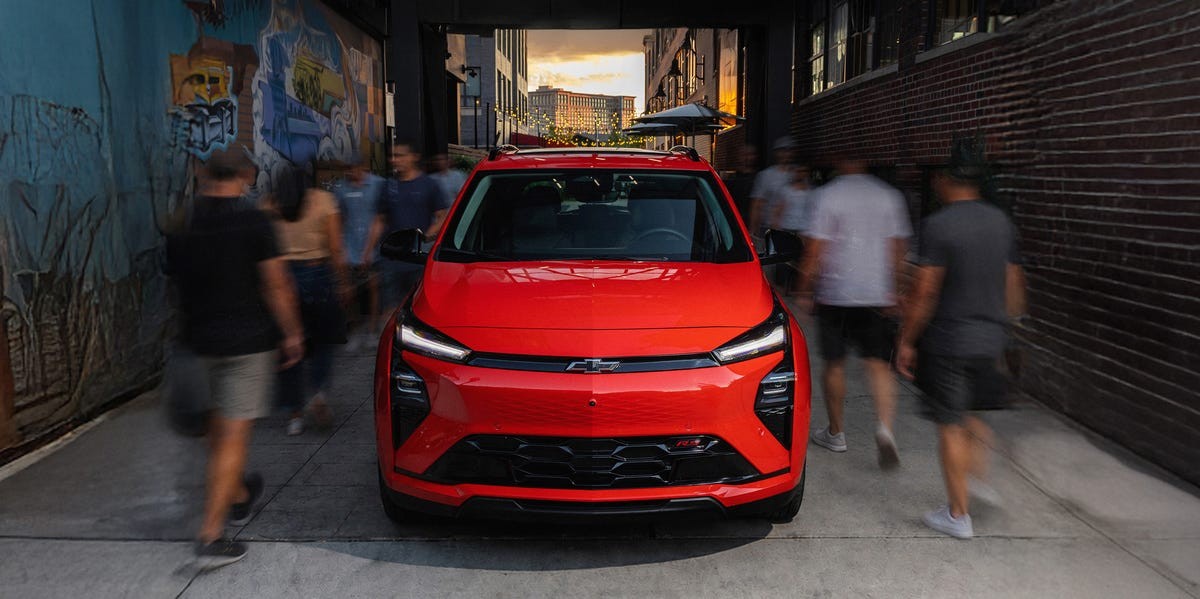
The Chevrolet Bolt takes the title of EV of the Year for 2026. Why? Because it’s affordable. And right now, that is rare.
How does the 2025 Chevrolet Bolt price compare to old EVs?
Affordability is a relative term. But the math is hard to ignore. The average new car sits near $50,000. The new 2025 Chevy Bolt (labeled for the 2025 model year in many contexts, though the text references 2027 specs/timing nuances) starts at $28,995.
Let that sink in.
Under thirty grand. For a new car.
This isn’t new territory for the Bolt. The outgoing 2023 models started around $27,500 before production stopped. If you adjust for inflation, this new version actually undercuts the old one by more than a thousand dollars. Even better? It beats the price of the discontinued Bolt EUV, which shares the same bones.
Chevy didn’t just lower the sticker. They upgraded the experience.
Where did the extra room go in the new EV design?
The new Bolt wears the skin of the larger Bolt EUV.
It uses a 105.3-inch wheelbase. That is 2.9 inches more than the old, stubbier Bolt. Why does that matter? Ride quality. And legroom.
It’s a small car. A subcompact. Yet, the rear bench feels generous. I have friends who stand over six feet tall. They sat in the outboard seats—next to the doors, with the middle passenger squeezing by—and they fit. With the front seats pushed all the way forward. That’s impressive geometry for a vehicle this size.
The interior is spacious. Versatile. But the space doesn’t win the award alone.
What EV charging improvements should you look for in 2025?
Battery chemistry is the unsung hero here.
Chevy switched from nickel-manganese-cobalt to lithium-iron-phosphate (LFP) batteries. This simple change does two things: it lowers the cost and it speeds up the charge.
Huge.
Peak charge speed hits 150 kW. That is nearly three times faster than the old model. We tested it. We watched the battery climb from 10% to 90%.
It took 38 minutes.
That is not lightning fast compared to $100k luxury sedans, but for a battery pack sized at 65 kWh, it is highly competent. Range is decent too. The test car got 230 miles in real-world 75 mph testing.
Compare that to the EUV. This gets 40 miles more range. The old Bolt? Just 10 miles less. Both previous models were significantly slower to charge. The new Bolt fixes the range anxiety of its ancestors.
Is the budget EV of 2024-2026 actually fun to drive?
People assume cheap electric cars feel like appliances.
They are often wrong.
The top-trim Bolt RS weighs 3,793 pounds. Heavy? Sure. But it is 500 pounds lighter than a Nissan Leaf. The Chevy hides its mass.
The steering is light. Responsive. The center of gravity is low, thanks to the floor-mounted batteries. It feels communicative. It reminds me of the old Honda Accords—the ones that won Car and Driver’s 10Best awards a dozen times. An appliance-like car does not have to be dull.
It is not fast. Not really.
The motor makes 210 horsepower and 169 pound-feet of torque. In today’s EV market, where even hybrids punch harder, these numbers look soft. But torque curve matters less than ratio here. Chevy installed a short final drive (11.59:1 ).
Result? Reasonable oomph.
It hits 60 mph in 6.7 seconds. Acceptable. Overtaking at highway speeds feels safe. A 30-50 mph roll-on takes 2.5 seconds. A 50-70 mph pass takes 3.6 seconds.
The Michelin e-Primacy tires struggled on our skid pad, only managing 0.82 g of lateral force. Low. But the tires lose grip progressively. No sudden snap. You can push it.
It’s more fun to drive a slow car faster than a fast car slowly.
That adage holds up. The Bolt feels lively.
Which features define the modern affordable electric vehicle?
Driving can be tedious. The Bolt helps with Super Cruise.
This is the hands-free system on mapped highways. If you spend at least $35,655, you get it. It is excellent. Almost as good as Tesla’s FSD. Maybe not quite there. But very close.
But you do not need to buy the loaded version to enjoy the Bolt.
The base interior is easy to use. Too easy? Sometimes hard plastics look cheap. But utility beats soft touch materials any day.
Chevy kept the knobs. Physical buttons for climate control. Gear selection. Wipers.
No swiping menus for heat.
This matters. Your eyes stay on the road. The climate control system now uses a heat pump instead of resistive heaters. Efficient. Good for winter range.
The infotainment screen is responsive. Intuitive layout. Menu structures make sense.
We still want Apple CarPlay and Android Auto. GM said no. We miss them.
Regenerative braking has also changed. The steering-wheel-mounted regen paddle is gone. Instead, you get three modes via steering wheel buttons or gear shifts.
- Off: Feels like a gas car. Coasts when you let go.
- Normal: Moderate regen.
- High: One-pedal driving mode. Aggressive. Most people will find this “High” setting too intense for daily commuting.
The final point?
The new Bolt democratizes electric powertrains. It brings core comforts and technology under $30k.
America does not need another $90k performance sedan. We need cars people can buy. Cars they can live in. The 2025 Bolt does exactly that.
It fits the moment.