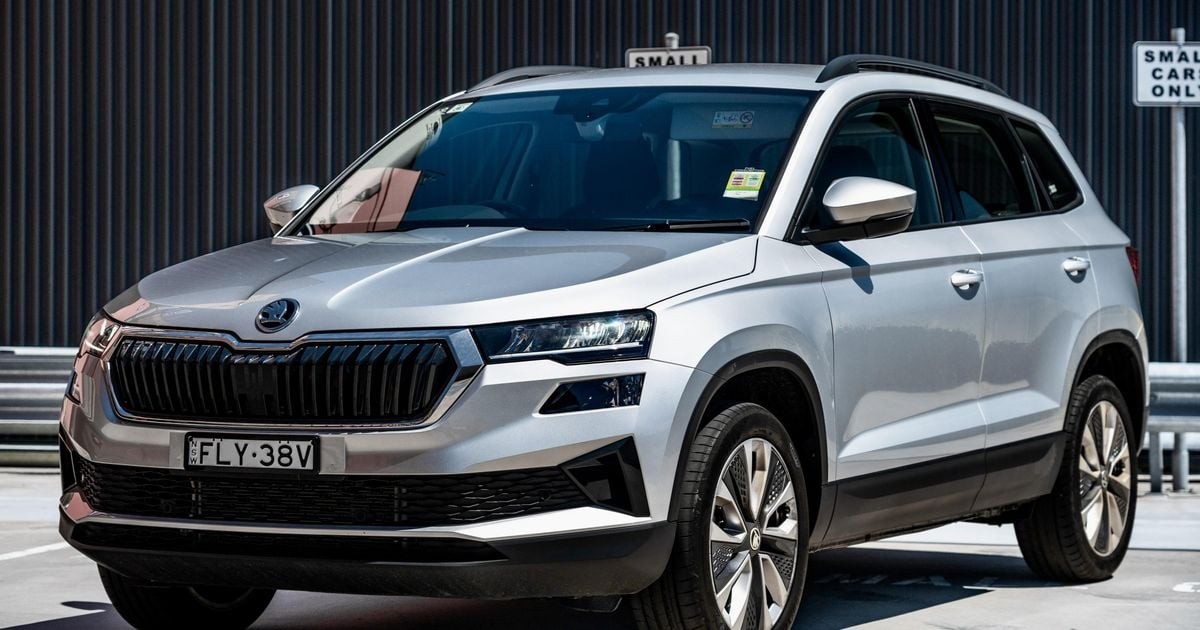
Skoda doesn’t move units in Australia. Not really. The Karoq sits in that weird space of “mid-size SUV” that no one agrees on.
With fewer than 15 deliveries per month, it is ghost-town quiet in the showroom. Fewer people buy a Karoq than an electric Mini or that niche Chinese SUV, the Deepal. It even loses to Volvo’s tiny EV box. That is odd. It shares DNA with the VW T-Roc. The T-Roc sells fine.
So why is the Karoq struggling?
It looks old. It lacks hybrids. It feels dated next to competitors who treat interiors like iPhone screens.
The car is technically first-generation. It launched in 2017. The 2026 model looks like a 2019 model that got a new paint job. No secret tech here. Just the old bones.
Maybe that is the point. In an age where cars are basically laptops on tires, maybe you want buttons.
Pricey for What It Is
$40,999 drive-away is the price for the Select. That makes it the cheapest new Karoq.
Look at the competition.
- Nissan Qashqai starts at $45,640.
- Toyota Corolla Cross starts at $37,440.
- Kia Seltos is leaving the scene. Its base model was $31,250.
- VW T-Roc starts at $38,990.
For roughly four grand more than a Kia, you get Skoda brand loyalty. Or lack thereof. The price tag stings because there is no hybrid option. No electrified drive train to soften the blow of a small petrol engine.
Just pure fossil fuels.
The Cabin: Drab But Functional
Step inside.
It feels like 2016. The dashboard is hard plastic. It looks… beige.
There are physical buttons for climate control. Three big dials. You can adjust the heat without taking your eyes off the road or hunting through sub-menus. This is a radical concept these days.
“Physical climate controls are far preferable.”
VW went all touchscreen sliders for newer cars. I hate it. My hands sweat. The Skoda stays simple.
The screen is tiny. An 8-inch infotainment unit sits in the center console. It looks like it was ripped out of a different, smaller car. But it works. Wireless Apple CarPlay. Android Auto. It does the job. The touch buttons flanking it are responsive. The screen is small, but you don’t need a billboard for GPS.
The instrument cluster behind the wheel is digital now. 8.25 inches. Basic layouts. It doesn’t try to wow you with animations.
The steering wheel is leather-wrapped. Perforated. It actually feels nice in the hand. Better than most things in the cabin. No cruise control buttons on the rim though. There is a separate stalk for it. On the left. It feels archaic. It works.
Seats and Space
Front seats are cloth. Comfortable. Nothing fancy. You move them by hand. No motor whining in the background.
Rear passengers? You better be short.
At 173 cm tall, I fit in my own driving seat’s rear space. Barely. My taller colleagues? No chance. Knee room is non-existent for giants.
Headroom is acceptable. The bench is soft enough for short trips. It is cloth up back. It matches the front but feels cheaper in comparison.
Amenities? Don’t hold your breath.
* Air vents.
* A 12-volt socket.
* An armrest with a pass-through hole to the boot.
* ISOFIX points.
No heated rear seats in the base model.
The Boot: Skoda’s Secret Weapon
The trunk is the highlight.
Skoda loves a gimmick. Here is one.
The floor is extremely low. Like, ground-level low. You just drop bags in.
Capacity? 521 liters.
Corolla Cross offers 425 liters.
The Skoda wins. Hands down.
The backs of the rear seats fold down. They do not lie flat though. There is a big step. So carrying long lumber? No. But for grocery bags or luggage. It is massive.
You get:
– Tie-down points.
– Hooks in the sides.
– A built-in umbrella for rain days (clever, but useless if it rains hard).
– A space-saver spare tire. No jack included in the price of optimism.
The tailgate is manual. You lift it. With your arms.
Under the Hood
1.4-liter turbo-four.
Old tech.
* Power: 110 kW.
* Torque: 250 Nm.
* Drive: Front-wheel drive.
* Gears: Eight-speed auto.
It is adequate.
Driving around Melbourne city traffic? It feels lazy. You mash the throttle, then the turbo kicks in after a half-second. Power surges forward.
Highway overtaking requires planning. It isn’t quick. But it pulls hard once the turbo spins.
Fuel use was higher than rated. Gravel roads hurt. But mostly? I didn’t push it hard enough. The economy is decent if you drive normally.
Driving It
Boring is the word.
That might be what you want.
No fancy modes. No drift button. Just drive.
The 8-speed transmission is smooth. Way better than VW’s dual-clutches at stop-lights. It does not lurch.
Handling is firm. The suspension is stiffer than rivals. This helps. Cornering stays flat. No body roll drama. It handles potholes with confidence, if a bit of noise.
Steering? Light. Direct.
Parking? Easy.
It is short. The turning circle is tight. You see out the windows well.
The reversing camera exists. But the resolution is… 2017 quality. Pixelated. Fuzzy.
Parking sensors help. Front and rear.
Safety features only intervene if needed.
No chime every 10 seconds. The car ignores you until it doesn’t. Lane-keeping assist can be toggled off easily. A relief for people who just want to drive without the nanny bot nagging them.
Trimming Levels
You buy the Select if you are cheap. Or traditional.
Higher grades get:
* 19-inch wheels.
* Heated front seats.
* Power folding mirrors.
* A bigger screen (9.2 inch).
* Sunroof.
* All-wheel drive.
* Adaptive suspension.
The Sportline trims get Matrix LEDs and dynamic indicators. Look at this car while turning! It’s fun for two seconds.
The 130 Years edition exists for people who love badges. Leather interior. Panoramic glass roof if you add it for another two grand.
Safety
Adequate.
Adaptive cruise control without lane-centering. So you still steer. But you can let go of the brake pedal in traffic. Sometimes. It reacts a bit slow.
All the standard autonomous driving bits are there.
Lane departure. Blind spot monitoring. Autonomous emergency braking.
Does it win awards? Probably not. But it doesn’t scream at you for drifting into a lane marking.
The Verdict
The Skoda Karoq is not cool.
It is not efficient. The engine is small by modern EV standards.
But it works.
You pay 40k. You get a box with wheels. Physical knobs. A giant boot.
It feels real. Tangible. Mechanical.
Why do people buy Toyotas? Why buy VWs?
Skoda sells practicality without the software layer. No OTA updates. No screen freeze. No “please wait while system restarts” errors.
If that appeals to you. Maybe look here.
But check your back pockets. They don’t make the car bigger.