The Suzuki e-Vitara is a new entry into the increasingly crowded electric crossover market, aiming to offer genuine off-road capability alongside everyday practicality. While it stands out with its distinct design and competitive pricing, particularly with Suzuki’s own discount, the e-Vitara falls short in key areas like range and charging performance when compared to its rivals. Despite some shortcomings in cabin quality, it remains a tempting option for buyers seeking an affordable, versatile electric vehicle.
A Simplified Approach to Electric Mobility
Suzuki’s approach to its first electric car is straightforward. The e-Vitara avoids complex sub-branding and offers a clear range of options: two battery sizes, two trim levels, and front- or four-wheel drive configurations. It shares dimensions with the existing hybrid Vitara, ensuring both models remain available. This simplicity reflects a joint venture with Toyota – the nearly identical Urban Cruiser will launch six months later, though Suzuki led development this time.
Performance and Driving Experience: Off-Road Focus
The e-Vitara prioritizes capability over outright speed. It won’t deliver the instant acceleration of some competitors, but it excels in off-road scenarios, thanks to its AllGrip four-wheel-drive system. The driving experience is comfortable and capable, though not particularly engaging.
Two battery capacities are available: 49kWh and 61kWh, paired with electric motors offering 142bhp or 172bhp. All-wheel-drive models boast 181bhp and higher torque. While performance figures appear strong, real-world acceleration feels more subdued. The car offers Eco, Normal, and Sport driving modes, but the overall experience is more about functionality than excitement.
Range and Charging: A Weak Point
The e-Vitara’s range and charging speeds are average at best. Suzuki quotes 213 miles for the 49kWh battery and 264 miles for the 61kWh version, but independent tests reveal lower real-world figures, particularly in colder weather. Charging times are also slower than many competitors, with DC fast charging peaking at 60kW in real-world use, despite a claimed 150kW capability.
Interior and Technology: Functional but Basic
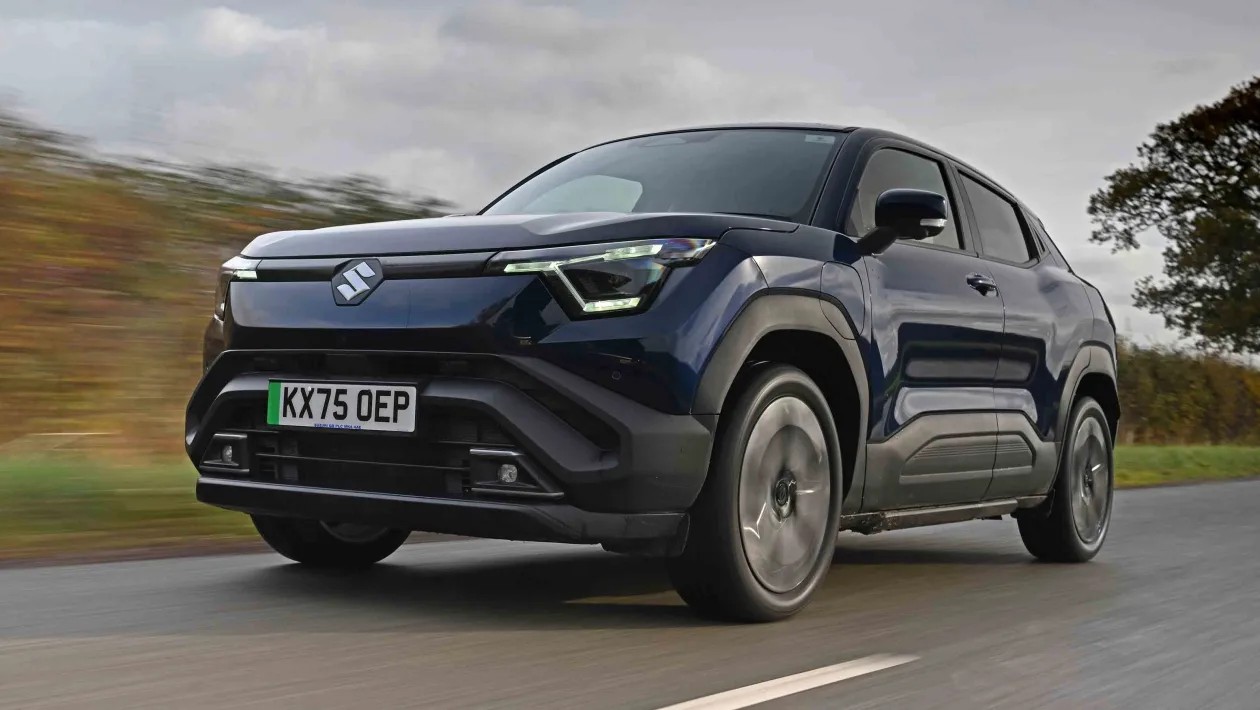
The e-Vitara’s interior is practical but lacks the refinement of some rivals. The exterior design is distinctive, with chunky plastic cladding and squared-off edges. Inside, the materials are average, with hard plastics in some areas. The infotainment system is slow and cumbersome, relying on multiple screen presses for basic functions.
The cabin offers decent storage and a comfortable layout, but the overall impression is one of budget-conscious design. A digital driver display and a 10.1-inch touchscreen are standard, but the infotainment system lags behind modern standards in terms of speed and usability.
Practicality and Running Costs: A Mixed Bag
The e-Vitara offers adequate boot space and sliding rear seats for added versatility. Insurance costs are reasonable, but residual values are predicted to be lower than some competitors.
The car’s depreciation is a potential downside for owners, but the low BiK rating makes it attractive for business users. Annual vehicle excise duty applies, as EVs are no longer exempt. The batteries, sourced from BYD, contribute to competitive pricing, though the overall package doesn’t match the efficiency of rivals like the Ford Puma Gen-E.
The Suzuki e-Vitara presents a viable, if unremarkable, option for buyers prioritizing off-road capability and affordability over cutting-edge range or charging speeds. While it may not set any records, its simplicity and competitive pricing make it a worthy contender in the growing electric crossover segment.