Car manufacturers go to extraordinary lengths to keep their latest creations under wraps before official reveals. This elaborate game of cat and mouse with the ever-watchful eyes of automotive journalists has become an intriguing story in itself, evolving from basic masking tape disguises to sophisticated camouflage techniques we see today.
The goal is clear: avoid leaks about design details and keep future models secret until launch day. This often involves using “test mules”— vehicles disguised to resemble existing models while hiding a new car’s true form underneath. While test mules typically use parts from the same automaker, Porsche took a rather unorthodox approach back in the early 1970s.
In an effort to conceal its first front-engined sports car, the 924, Porsche decided to borrow bodies from entirely unrelated companies. Instead of relying on existing models within Volkswagen Group (Porsche’s parent company at the time), they acquired not one but two donor cars: a BMW 2002 and a first-generation Opel Manta. These unsuspecting everyday vehicles became makeshift camouflage for what was internally known as “EA425.”
This strategy makes perfect sense when you consider that the 924 was groundbreaking for Porsche – it departed from their established rear-engined layout, leaving no previous models to discreetly borrow silhouettes from.
While unconventional, this approach worked well: the resulting test mules effectively fooled onlookers who assumed they were simply spotting updated versions of familiar cars.
The 924 itself debuted in 1976 as the successor to the 914, built by Audi at their Neckarsulm factory. This came about after Volkswagen scrapped its own plan for a front-engined sports car based on the Golf platform, deciding instead to focus on the Scirocco.
The early 924 showcased a curious mix of parts from across the Volkswagen Group: its engine (a water-cooled 2.0-liter four-cylinder) was sourced from the Audi 100, and it wasn’t until 1986 that the higher-performance 924S received a true Porsche engine – the 2.5-liter inline-four found in the 944.
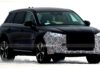
Porsche’s resourceful use of pre-existing BMW and Opel bodies for their ground-breaking front-engined sports car demonstrates how deeply ingrained this culture of secrecy is within the automotive industry. The practice persists even today, with manufacturers employing increasingly clever tricks to outsmart watchful photographers. Just recently, Ferrari was spotted testing its first electric vehicle under the guise of a Maserati Levante, complete with fake exhausts that were comically misplaced.
The game continues – test mules are still modified to resemble SUVs by adding faux body panels, and classic car styling cues are sometimes replicated on modern prototypes using stickers, further blurring the line between what we see and reality.
This tradition of automotive secrecy has deep roots, dating back to the 1950s. Early pioneers like German automotive journalists Heinz-Ulrich Wieselmann and Werner Oswald published revealing images in Auto, Motor und Sport—a move that understandably angered automakers. Since then, they’ve honed their strategies for keeping secrets under wraps, turning the world of car development into a thrilling, high-stakes game of hide and seek.