The automotive industry is undergoing a profound digital transformation. As manufacturers pivot toward electric powertrains and autonomous driving, the traditional cockpit is being redesigned. While much of the debate focuses on the death of the manual gearbox or the internal combustion engine, a quieter shift is occurring behind the steering wheel: the disappearance of physical, analogue dashboard dials in favor of massive digital screens.
The Digital Takeover
In modern vehicle design, screens offer undeniable advantages. They are versatile, capable of displaying navigation, media, and complex telemetry through software updates. However, this transition is driven as much by cost-efficiency as it is by technological progress.
The shift is evident in how even established brands are moving away from tactile interfaces:
– Cost Management: Integrating physical dials requires complex mechanical engineering and high-quality materials. For many manufacturers, a single digital cluster is significantly cheaper to produce and more scalable across different models.
– The Loss of Character: Historically, a dashboard was a defining element of a car’s identity. The tactile feel and aesthetic design of gauges from legendary makers like Jaeger, Smiths, or VDO provided a sense of soul and craftsmanship that a flat glass screen struggles to replicate.
The “Smartwatch Effect” in Automotive Design
To understand where the dashboard is heading, one can look at the evolution of the watch industry. When smartwatches first emerged, they revolutionized how we interact with data, offering unparalleled convenience. Yet, despite the utility of an Apple Watch, the prestige of a mechanical Rolex remains unchallenged.
A similar pattern is emerging in the high-end automotive sector. While mass-market vehicles move toward “all-screen” interfaces to save costs, ultra-luxury manufacturers are beginning to treat analogue instrumentation as a premium differentiator.
Analogue as the Ultimate Luxury
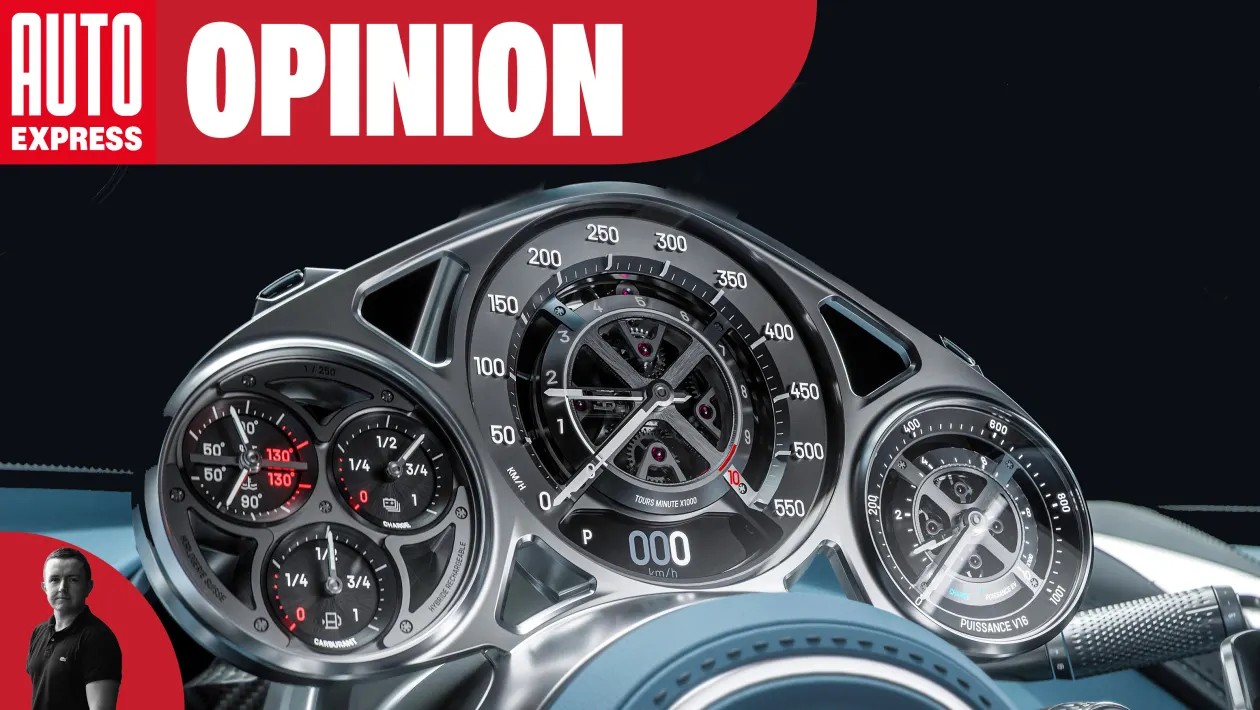
The Bugatti Tourbillon serves as a landmark example of this trend. Rather than opting for a digital cockpit, Bugatti has leaned into expertly crafted, mechanical gauges. This approach raises a compelling possibility: as digital screens become the standard for the masses, physical dials will become the hallmark of the elite.
There are several reasons why analogue may reclaim its status in the luxury segment:
1. Timelessness vs. Obsolescence: A digital screen is subject to software lag, pixel degradation, and rapid technological obsolescence. An expertly machined mechanical gauge remains beautiful and functional for decades.
2. Tactile Engagement: High-end consumers often seek a sensory connection to their machines. The sweep of a physical needle offers a level of elegance and “mechanical honesty” that a digital animation cannot match.
3. Exclusivity: In an era where every car looks like a rolling smartphone, a dashboard defined by intricate clockwork and fine metalwork becomes a rare, highly desirable commodity.
Conclusion
While the era of the analogue dial in affordable, everyday cars is likely drawing to a close, the technology is not dying; it is evolving. As digital displays become the ubiquitous norm, the physical gauge is poised to transition from a functional necessity to a prestigious symbol of craftsmanship and enduring luxury.