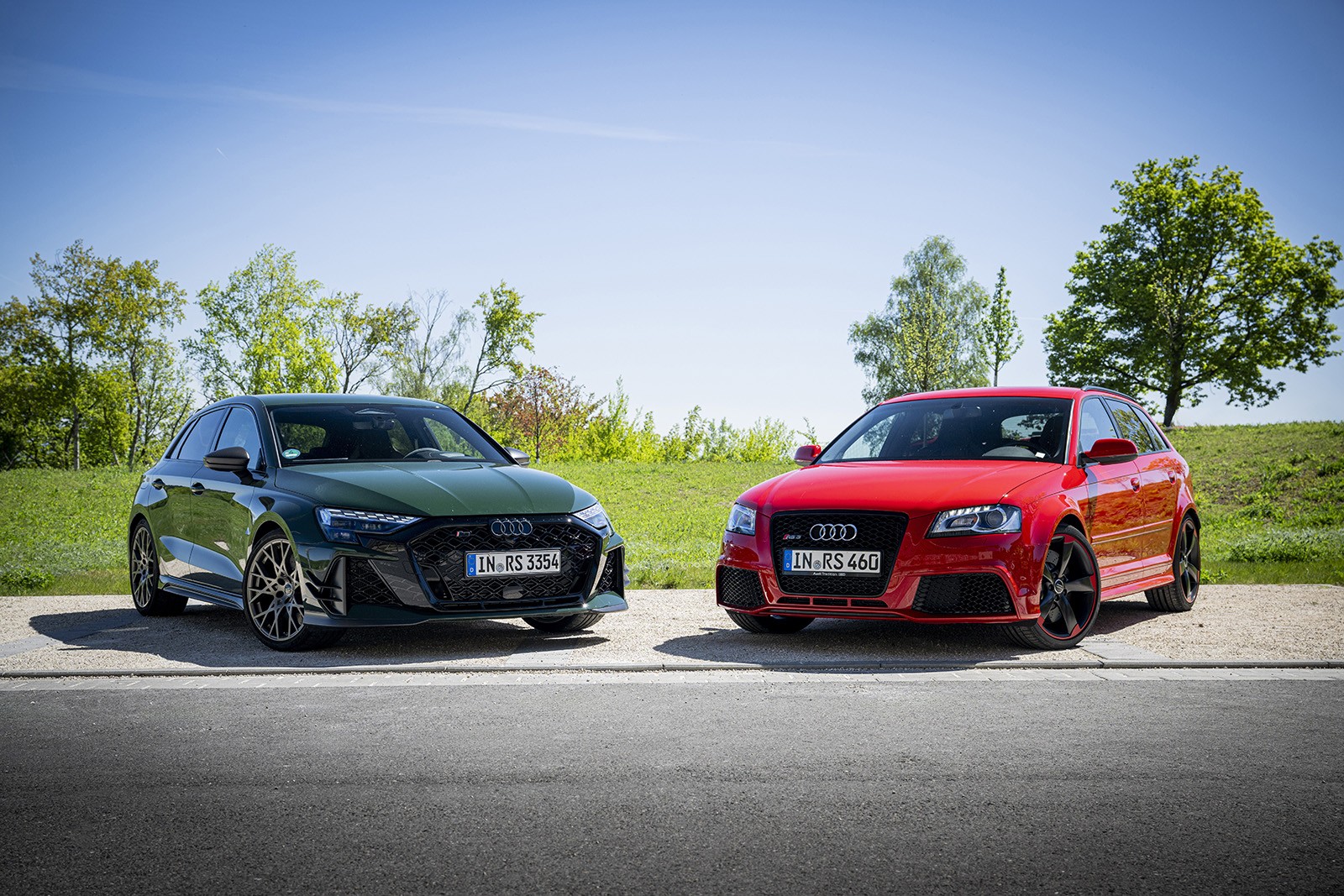
The automotive market is witnessing a widening chasm between enthusiast classics and modern performance machines. Nowhere is this more evident than in the comparison between the original Audi RS3 and the new RS3 Competition Limited. While both cars share the same DNA—a legendary five-cylinder engine housed in a premium German hatchback—the price gap is staggering.
With the new Competition Limited priced at £93,000 and a well-maintained Mk1 RS3 available for roughly £11,000 to £13,000, buyers are faced with an £80,000 dilemma: does modern engineering justify a price tag that rivals supercars?
The New Standard: RS3 Competition Limited
The Competition Limited is a rarity, with only 750 units produced globally and a mere 11 allocated to the UK. Audi has positioned this model as a hardcore, track-focused evolution of the standard RS3, justifying its £30,000 premium through several high-end technical upgrades:
- Advanced Chassis: The car features manually adjustable coilovers for precise handling tuning.
- Enhanced Braking: Ceramic brakes have been fitted to the front to handle extreme thermal loads.
- Weight Reduction: Audi removed 4kg of sound deadening to sharpen the auditory experience, specifically to highlight the wastegate’s “flutter.”
- Bespoke Aesthetics: The interior is elevated by unique gold seats.
On the road, the performance is undeniable. The car is characterized by razor-sharp turn-in and exceptional body control. Thanks to a sophisticated torque splitter, the handling feels more dynamic and rear-wheel-drive biased than its predecessors. While the seven-speed dual-clutch gearbox can occasionally hesitate at low speeds, it remains devastatingly fast and incredibly planted during aggressive driving.
The Heritage Experience: The Mk1 RS3
Stepping back into the Mk1 RS3 offers a different, more visceral kind of thrill, though it comes with the “character” typical of older performance cars.
Compared to the new model, the Mk1 feels significantly more demanding to drive. The steering lacks nuance, and the chassis is famously stiff—a trait that helped build Audi’s reputation for build quality but can be punishing on uneven surfaces. The gearbox, while capable, lacks the seamless multi-cog downshifts of the modern dual-clutch system.
However, the Mk1 possesses qualities that modern regulations often stifle:
* Pure Engine Note: Unburdened by the stringent emissions standards of today, the five-cylinder engine offers a raw, offbeat sound that is difficult to replicate.
* Mechanical Feel: Despite producing 80bhp less than the new model, the engine feels immensely muscular and connected.
* Tactile Quality: The cabin remains a benchmark for functional simplicity, featuring a “bank-vault” door click that modern, more complex interiors often lack.
Performance vs. Soul: The Verdict
The comparison highlights a broader trend in the automotive industry: the transition from mechanical raw power to technological perfection.
The new RS3 Competition Limited is objectively superior in every measurable metric—it is faster, more precise, and more capable in corners. It represents the pinnacle of what a high-performance hatchback can be through engineering. Conversely, the Mk1 RS3 offers a more sensory, unrefined experience that appeals to those who value the “soul” of an engine over the perfection of a chassis.
The £80,000 premium buys you a masterclass in modern physics and precision, but it may cost you the raw, uninhibited character that made the original so iconic.
In summary, while the new RS3 is a technological marvel that dominates the road, the massive price gap means buyers must decide if they want a precision instrument or a piece of mechanical history.