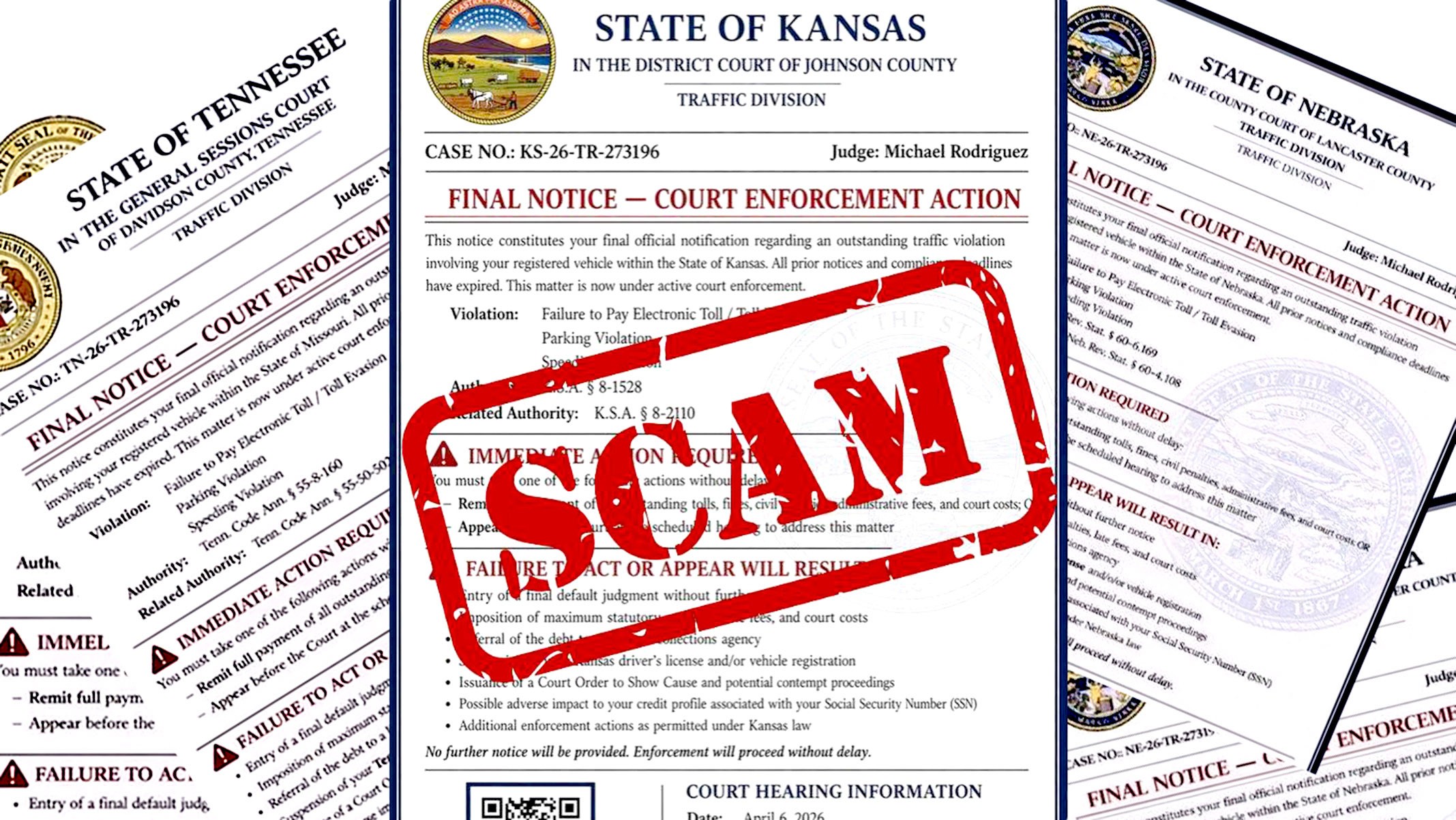
Scammers are evolving. Moving beyond simple fake toll alerts or bogus parking warnings, a more sophisticated fraud is sweeping across the United States. This new wave of deception arrives in the form of highly convincing, official-looking “Final Notice – Court Enforcement Action” messages designed to exploit fear and legal anxiety.
The Anatomy of the Scam
Unlike previous iterations of text-based scams, these fraudulent messages are often delivered as image attachments. By sending an image rather than plain text, scammers can replicate the visual branding of legitimate government entities, making the fraud much harder to spot at a glance.
The messages typically include:
– Fake Case Numbers: To add a veneer of administrative legitimacy.
– Judicial Names: Using the names of real or fabricated judges to intimidate recipients.
– Legal Jargon: Using authoritative language to create a sense of gravity.
– QR Codes: Providing a “convenient” way to pay outstanding balances via a malicious link.
In one documented instance in Nebraska, a message claiming to be from the Lancaster County Court warned users of “toll evasion” and “parking violations.” To pressure victims into acting without thinking, the scam threatened severe consequences, such as suspended driver’s licenses and damaged credit scores.
Why This Tactic Works
This scam relies on a psychological tactic known as weaponized urgency. By presenting the message as a “Final Notice,” scammers trigger a fight-or-flight response. Most people, upon seeing a threat to their legal standing or driving privileges, will prioritize resolving the issue quickly rather than verifying its authenticity.
The timing of these messages is also telling. Law enforcement in Johnson City, Kansas, noted that these messages often arrive on Sundays or holidays —times when people are more likely to be distracted and less likely to be able to call a local courthouse to verify the claim.
How to Protect Yourself
Law enforcement agencies and Attorneys General from Washington to California are issuing a unified warning: Do not engage with the message.
To stay safe, follow these essential steps:
- Do Not Click or Scan: Never click links or scan QR codes provided in unsolicited text messages or emails.
- Do Not Reply: Responding to the message confirms to the scammer that your phone number is active, leading to more targeted attacks.
- Verify Independently: If you are concerned about an actual outstanding fine, do not use the contact information provided in the text. Instead, manually look up the official website of your local court or county clerk and contact them directly.
- Pause and Assess: As California Attorney General Rob Bonta advises, if a message demands immediate payment or personal information, treat it as a red flag.
“Scammers will weaponize urgency and make you feel like you are in the wrong and need to act immediately.” — Rob Bonta, California Attorney General
Conclusion
The shift toward using judicial names and QR codes marks a more aggressive phase in digital fraud. By staying skeptical of unsolicited legal threats and verifying all claims through official, independent channels, drivers can avoid falling victim to these sophisticated digital traps.