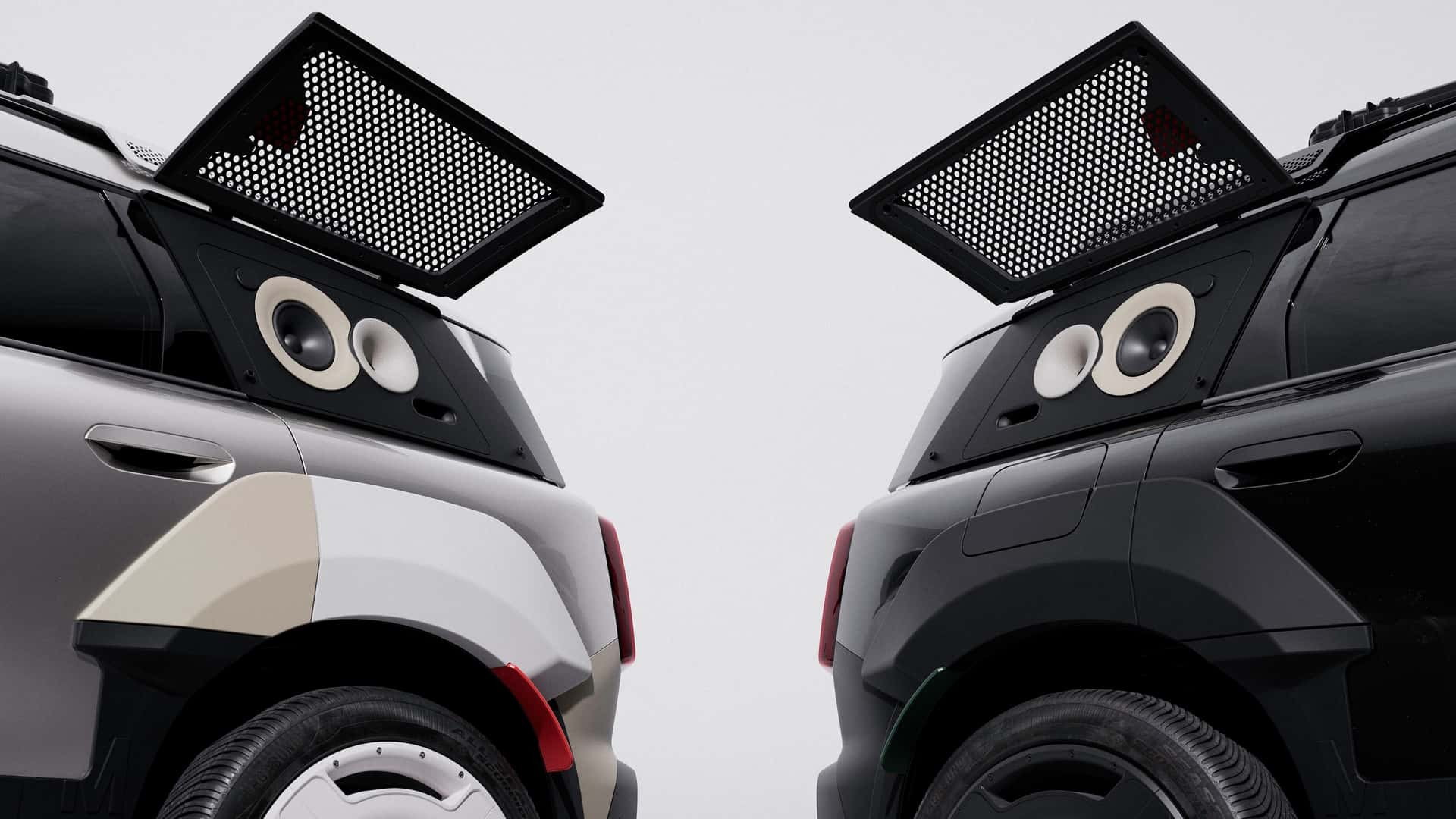
In a unique collaboration between Mini and the Austrian design studio Vagabund, two custom-built Countryman concept cars have been unveiled. These vehicles are not just stylistic exercises; they are high-concept machines designed to celebrate the “festival lifestyle,” blending automotive design with an obsession for high-fidelity, externalized sound.
A Retro Aesthetic Meets Modern Customization
The design language of these two one-off models draws heavily from a specific era of automotive subculture. By integrating external audio components, the cars serve as a modern homage to the 1990s car audio contest scene, where enthusiasts would build vehicles specifically to showcase massive, high-performance sound systems.
To complement the rugged, festival-ready theme, the technical specifications were modified to give the Countrymen a more commanding presence:
– Increased Ride Height: The vehicles sit higher than a standard Countryman to accommodate their unique styling.
– Custom Wheel Setup: Each car features 20-inch wheels fitted with sharp, 3D-printed aero covers.
– Monochrome Livery: The cars utilize a minimalist, single-color aesthetic accented by custom badging and prominent Vagabund lettering.
The Ultimate Mobile Soundstage
The most striking feature of these concepts is the integration of the audio system directly into the vehicle’s exterior. Rather than hiding the speakers behind door panels, Mini and Vagabund have made them a central part of the car’s architecture.
Audio Configuration
Each Mini is equipped with a sophisticated multi-layered system:
– Body-Mounted Audio: Tweeters and mid-range speakers are embedded directly into the bodywork.
– Subwoofer Integration: The rear tailgate houses the subwoofers, providing the low-end “thump” necessary for a full acoustic range.
– Synchronized Sound: While each car functions as an individual soundstage, they are designed to work in tandem, allowing two vehicles to create a massive, immersive audio environment.
Why This Matters: The Trend of “Experience-Driven” Design
While these are strictly one-off custom models and not production versions, they represent a growing trend in the automotive industry: the shift from designing mere transportation to designing lifestyle experiences.
In a market where electric vehicles and autonomous driving are making the “driving experience” more passive, manufacturers are looking for ways to inject personality and social utility into their brands. By leaning into niche subcultures—like the festival scene or retro audio enthusiasts—Mini is reinforcing its identity as a brand that prioritizes fun, individuality, and community over pure utility.
These concepts serve as a bold reminder that cars can be more than tools for commuting; they can be social hubs and expressions of personal passion.
Conclusion
The Mini and Vagabund Countryman concepts are a highly specialized celebration of sound and festival culture. While unlikely to reach showroom floors, they successfully push the boundaries of how a vehicle can interact with its environment and its community.