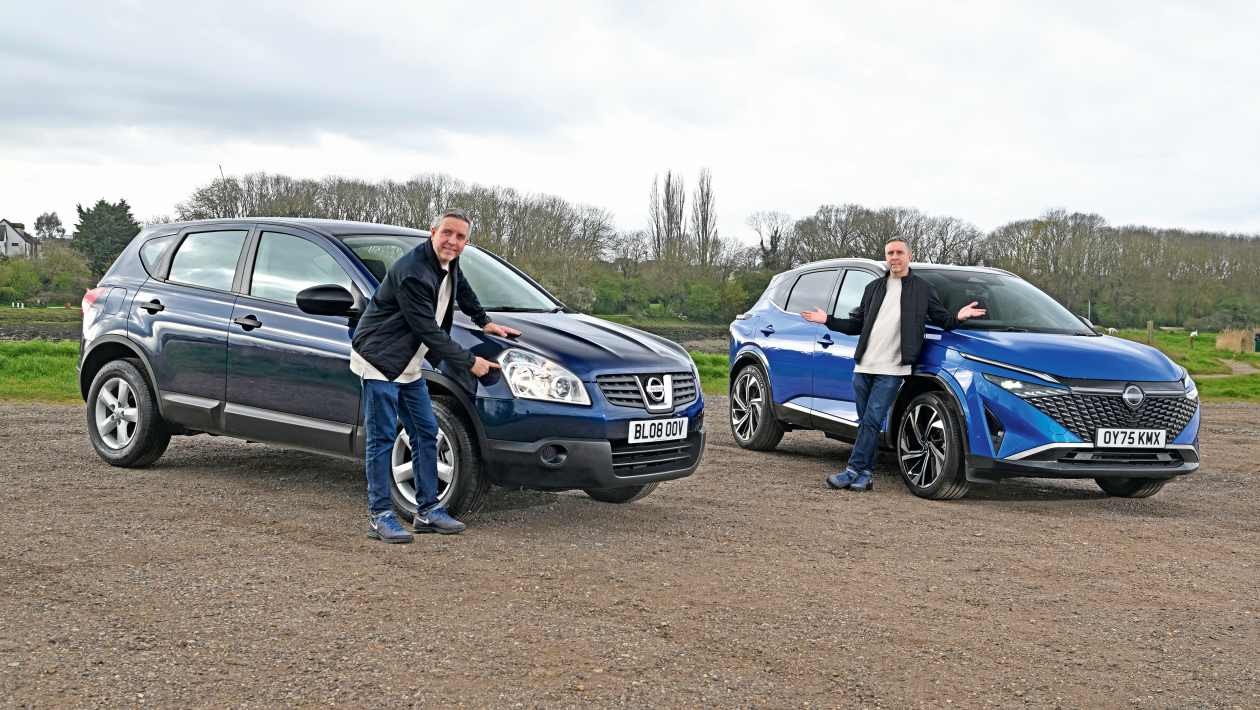
The Nissan Qashqai has long been a cornerstone of the UK automotive market. Since its debut in 2007, it has helped define the crossover segment, blending the practicality of an SUV with the driving dynamics of a hatchback. After 11,405 miles of testing the latest Mk3 e-Power Tekna+, it is clear that while the car’s DNA remains intact, its technology and efficiency have undergone a radical transformation.
From Breakthrough to Benchmark: Comparing the Mk1 and Mk3
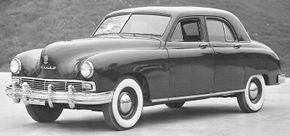
To understand how far the Qashqai has come, one must look back at the original Mk1. At the time, the Qashqai was a “game-changer,” offering a higher ride height and better visibility than traditional hatchbacks without the bulk of a true off-roader.
Comparing the two generations reveals a massive leap in engineering:
- Powertrain & Performance: The original Mk1 relied on modest petrol and diesel engines (such as a 113bhp 1.6-litre unit). In contrast, the new e-Power hybrid delivers a much punchier 202bhp. This translates to a 0-62mph sprint in just 7.9 seconds, compared to the 12 seconds of the original.
- Environmental Impact: The shift toward electrification is evident in the emissions. The new e-Power system produces just 103g/km of CO2, a significant improvement over the 159g/km seen in older models.
- Interior Sophistication: While the Mk1 was functional but heavy on plastics, the Mk3 Tekna+ offers a premium experience with quilted upholstery, 64-color ambient lighting, and high-end materials like synthetic suede.
The e-Power Advantage: A Bridge to Full Electric
The standout feature of the current model is the e-Power system. Unlike a traditional hybrid where the electric motor and petrol engine both drive the wheels, Nissan’s system uses a three-cylinder petrol engine solely as a generator to charge a battery. This battery then powers an electric motor that drives the wheels.
For the driver, this results in EV-like smoothness —quiet, linear acceleration without the “hunting” sensation of traditional gearboxes. It serves as an ideal “stepping stone” for families who want the benefits of electric driving (smoothness and instant torque) without the range anxiety or charging infrastructure hurdles of a fully electric vehicle (BEV).
Practicality for the Modern Family
Despite the technological upgrades, the Qashqai remains a highly functional tool. For those using their vehicle as a mobile workstation—such as photographers—the practicalities hold up:
– Storage: A 504-litre boot provides ample room for gear, supplemented by dual-level floor storage.
– Ergonomics: Unlike many modern rivals that hide everything behind touchscreens, Nissan has retained physical dials and knobs for essential functions like volume and temperature, allowing for safer, distraction-free driving.
– Comfort: The Tekna+ trim includes premium features like heated seats with massage functions, making long journeys more manageable.
Real-World Reliability and Maintenance
No long-term test is complete without the inevitable “hiccups.” During our testing, two distinct issues arose:
1. Battery Drain: A 12-volt battery failure occurred during a period of stationary idling. While attributed to human error (leaving electronics on while parked), it highlights the importance of monitoring battery health in modern, sensor-heavy vehicles.
2. Tyre Vulnerability: A puncture in a sidewall—a common occurrence on low-profile tires found on modern alloys—resulted in a replacement cost of approximately £250.
Verdict
The Nissan Qashqai has successfully transitioned from a niche crossover to a sophisticated, high-tech family SUV. The e-Power system provides a seamless driving experience that justifies its place in a crowded market, offering a perfect balance of efficiency, power, and everyday usability.
Summary: The Qashqai e-Power remains a top-tier choice for families, offering a premium, EV-like driving experience with the practical reliability of a traditional hybrid.