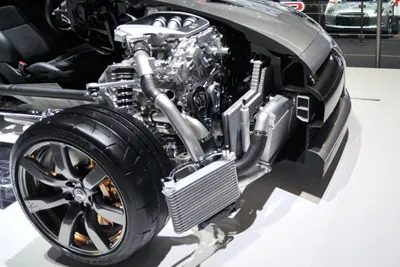
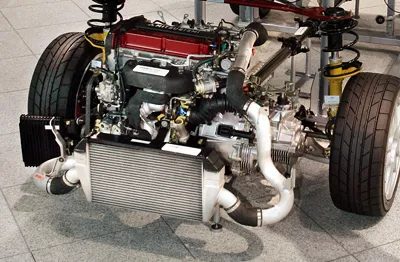
Mitsubishi Motors recently showcased a cutaway model of its world rally champion, the Lancer Evolution IX. It is a striking display of engineering precision. The exposed engine bay reveals every bolt and housing. But one part stands out with its distinctive shape. It looks remarkably like a seashell.
What part of a turbo system is often referred to as a snail?
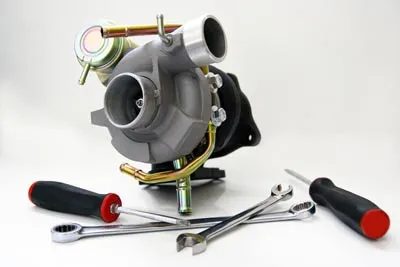
The answer lies in the compressor housing of the turbocharger. Specifically, the scroll-shaped casing that surrounds the compressor wheel earns the nickname “snail” due to its spiral design. This geometry is not just for looks. It efficiently guides pressurized air into the engine’s intake manifold.
While the Mitsubishi Lancer Evolution IX is a legend in its own right, the debate often turns to the Nissan GT-R. The GT-R uses a sophisticated twin-turbo system. Both setups rely on forced induction to boost power. However, the visual cue of the snail-shaped compressor housing remains a common thread in high-performance Japanese engineering.
The term “snail” specifically describes the scroll-shaped compressor housing found on many turbochargers.
Understanding this terminology helps enthusiasts identify components during maintenance or modification. The compressor wheel inside spins at incredible speeds. The housing around it directs that airflow. Without this “snail” shape, efficiency would drop significantly.
Mitsubishi’s choice to display the Lancer Evolution IX in cutaway form highlights these internal mechanics. It allows fans to see past the exterior lines. They can observe how the turbocharger integrates with the rest of the powertrain. The twin-turbo layout of the Nissan GT-R achieves similar results through a different architectural approach. Both methods prove that forced induction remains a key strategy in automotive performance.
The nickname sticks because it is easy to visualize. You see the spiral. You remember the name. It is a small detail with a big impact on how the engine breathes.
The geometry inside a turbocharger isn’t just pretty engineering. It is a carefully balanced fight against entropy.
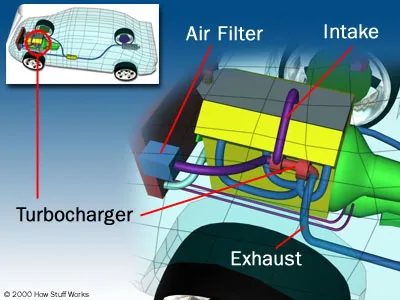
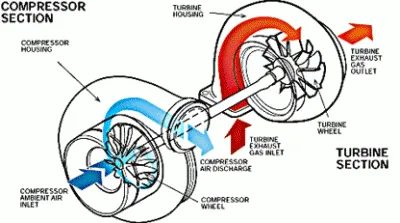
Look at the diagram. You see the housing, the turbine wheel, the compressor wheel. They spin on a single shaft. Air enters the turbine side from the exhaust. Heat energy spins that wheel. That same shaft drives the compressor on the intake side. Cold air gets sucked in. The compressor blades spin it into a tight space. Pressure rises. Density increases.
This isn’t magic. It’s thermodynamics with a deadline.
Weight savings matter here. Add a supercharger? You’re bolting on gears, belts, and a heavy block to the front of the engine. Power goes to the accessory drive. You lose horsepower to move the supercharger. The turbo uses waste energy. Exhaust gases would leave the tailpipe anyway. You capture some of that flow. You redirect it. The engine makes more power for free. Mostly.
There is a lag. Always lag. The turbo needs backpressure to spin up. When you punch the throttle, there’s a fraction of a second before the boost hits. Modern cars use variable geometry turbines (VGT) or electric assist to reduce that gap. But the physics remains. Mass needs to move. Pressure needs to build.
Watch the airflow.
Exhaust gas spins the turbine. Shaft connects to compressor. Compressor pushes air into the intake manifold. Intercooler cools that air. Cooler air is denser. More oxygen means you can burn more fuel. More fuel means more power. The cycle repeats.
It’s simple. Until it isn’t.
Turbochargers force more air into the combustion chamber. More air means you can burn more fuel. The result is significantly higher horsepower from a smaller displacement.
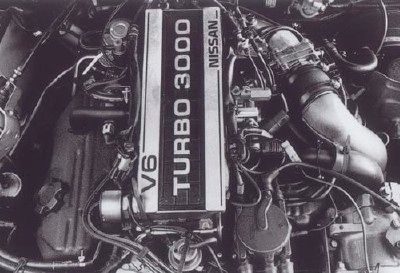
Look at the Nissan 300ZX Turbo in the next image. It isn’t just using one compressor. This engine uses two turbochargers for its V-6 configuration.
See another legendary forced-induction setup in the following picture.
More Turbos, More Problems
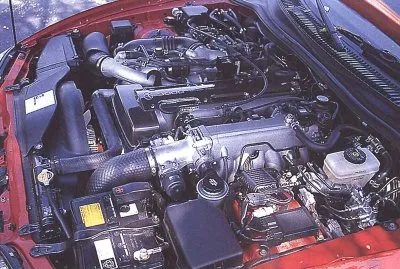
The Toyota Supra’s 2JZ-GTE inline-six engine is legendary, but it only ran two turbos. That setup worked for drifting and drag strips, but it wasn’t the only way to force air into an engine. Look at the next image.
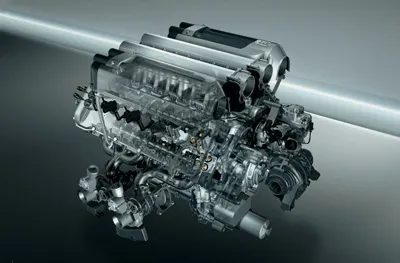
The Bugatti Veyron doesn’t play nice. It has four turbochargers. Four.
That W16 engine pushes out 1,001 horsepower. It’s a monster. A lot of people wonder how you get that much power without adding forced induction. What if your car didn’t come with a turbo?
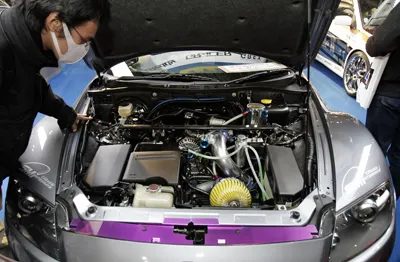
Swapping to a forced-induction setup isn’t a one-size-fits-all scenario, but the range of compatible platforms is wider than most gearheads assume. Take the Mazda RX-8 rotary coupe for instance. Its unique twin-rotor engine requires a custom approach. Standard off-the-shelf kits don’t just drop in. You’re looking at bespoke piping, custom manifold fabrication, and significant tuning to manage the combustion dynamics of a rotary. It’s not for the faint of heart.
But that’s not the only option. If you’re running a conventional internal combustion engine, the landscape changes. You can find universal kits or model-specific bolt-ons for everything from a Honda Civic Si to a Ford Mustang. The goal is always the same: force more air into the cylinders. More air means you can burn more fuel. More fuel means more power. Simple physics.
However, the devil is in the details. A turbocharger is essentially an exhaust-driven compressor. It recycles waste energy that would otherwise escape through the tailpipe. But it also adds heat. And pressure. And complexity. If you don’t upgrade your cooling system, your engine will melt. If you don’t reinforce the internals, the pistons will explode. This isn’t just about bolting on a shiny canister and calling it a day.
“Forced induction turns a commuter car into a rocket ship, but it also turns a reliable engine into a ticking time bomb if done wrong.”
Before you start browsing eBay or Amazon, you need to understand the mechanics. A turbocharger compresses the intake air, increasing its density. This allows the engine control unit (ECU) to inject more fuel without running lean. The result is a significant jump in horsepower and torque. But there’s a catch. Lag.
Turbo lag is the delay between pressing the accelerator and the boost hitting. Smaller turbos spool faster but hit a power ceiling. Larger turbos make more peak power but take forever to wake up. It’s a trade-off. Most aftermarket kits offer a middle ground. Or you can go sequential. Or twin-turbo. But that’s getting ahead of ourselves.
For the average enthusiast, a single turbo kit is the sweet spot. It’s affordable. It’s reliable. And it’s fun. But you need to check your local laws. In some jurisdictions, modifying emissions equipment is illegal. The Environmental Protection Agency (EPA) has strict guidelines. California is particularly aggressive. If you’re in the Golden State, you’d better have a CARB Executive Order number for every part. No exceptions.
The RX-8 example highlights a niche market. Rotary engines have a low thermal efficiency compared to piston engines. They’re prone to carbon buildup. Adding boost exacerbates these issues unless you’re meticulous about maintenance. Fuel quality matters. Octane rating matters. Spark timing matters. One mistake and you’ll be replacing a warped rotor housing.
For piston engines, the process is more standardized. You’ll need a turbocharger, an oil feed line, an oil drain line, an intercooler, a blow-off valve, and a custom tune. The intercooler is non-negotiable. Hot air is less dense. You need to cool that compressed air before it hits the intake manifold. Air-to-air intercoolers are common for street cars. Air-to-water