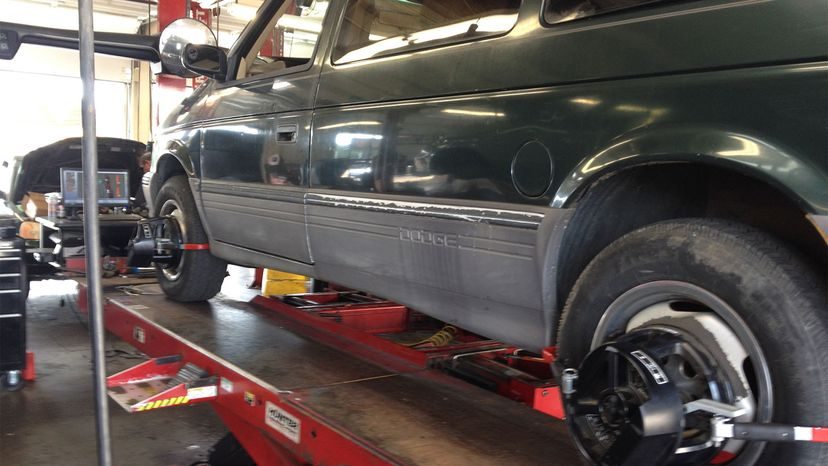
Your tires are dying faster than they should. That’s usually the first clue. When your wheel alignment is off, you’re essentially dragging your car sideways. The angles aren’t parallel. They aren’t perpendicular to the ground. And the result is uneven tread wear, vague steering, and a vehicle that wants to swim in the left lane.
Fixing this isn’t always about buying expensive equipment. Sometimes, it’s about understanding the geometry of your front suspension. Specifically, the caster, camber, and toe.
Understanding the Geometry
Most modern cars are front-wheel drive. This means the front wheels do the heavy lifting. If those angles are wrong, you feel it immediately. You might notice pulling to one side. Or maybe the steering wheel sits crooked when you’re driving straight.
Let’s break down the three main adjustments.
Caster is the forward or backward tilt of the steering axis. View it from the side of the car. If the axis tilts backward, that’s positive caster. It helps with straight-line stability.
Camber is the tilt of the wheel when you look at it from the front or back. Positive camber means the top of the wheel leans out. Negative camber means it leans in. Most performance cars run slight negative camber for cornering grip. Stock sedans usually aim for zero.
Toe is the most common culprit for uneven tire wear. It’s how much the front of your wheels point inward or outward when viewed from above. Toe-in means the fronts are closer together than the rears. Toe-out means they’re further apart.
Front-wheel-drive cars often suffer from toe issues. These cause the car to pull or the steering to feel loose. All-wheel-drive SUVs are a different beast. They require front and rear alignment simultaneously. That’s a job for a shop with a four-post lift and computerized targets. Don’t mess with AWD alignment at home unless you have a garage full of pros.
The DIY Front-End Alignment Process
You can do a basic front-end alignment yourself. It requires tools. It requires patience. And it requires a flat surface.
Here is the process for a standard front-wheel-drive vehicle.
- Lift the car. Use jack stands. Raise both front wheels. The car needs to be stable. Do not trust the hydraulic jack alone.
- Power on the electronics. Turn the key to the “accessory” position. Do not start the engine. You need the steering wheel to move freely.
- Inspect the toe. Look at one wheel from the front. Is it pointing inward toward the center of the car? Or is it pointing outward?
- Pointing inward: The outer tie rod needs tightening.
- Pointing outward: The outer tie rod needs loosening.
- Adjust the tie rod. Locate the nut connecting the outer and inner tie rods. Loosen it carefully. This gives you the slack needed to turn the rod.
- To turn the wheel inward, turn the outer tie rod counterclockwise (loosen).
- To turn the wheel outward, turn the outer tie rod clockwise (tighten).
- Verify and repeat. Turn the steering wheel straight. Check the angle. If it’s correct, move to the other side. Repeat the process.
Once both sides are set, take the car for a test drive. Drive on a straight, flat road. Let go of the steering wheel for a second (safely). Does the car pull? If it does, your alignment is still off.
Why This Matters
The main difference between a front-end alignment and a full wheel alignment is scope. Front-end alignment focuses only on the two front wheels. A full wheel alignment addresses all four wheels. For front-wheel-drive cars, the front alignment often solves the pulling issue. But for all-wheel-drive systems, ignoring the rear angles can lead to driveline binding. That’s expensive.
Signs You Need an Alignment
You don’t need a computer to tell you your alignment is bad. Your car screams for help.
- Pulling: The car drifts left or right without input.
- Crooked Wheel: You drive straight, but the steering wheel is tilted.
- Vibration: Poor alignment can cause shaking at highway speeds. This is sometimes called “bubbling.” It’s not just bad tires. It’s geometry.
- Tire Wear: Check the edges of your tires. If one side is more worn than the other, you’re dragging.
Cost and Professional Help
If you don’t have the tools or the confidence, pay a pro. A front-end alignment typically costs between $50 and $75. Prices vary by location. Some shops use manual methods. Others use computerized setups. The computer is more precise. It measures camber and caster accurately. Your DIY method only adjusts toe.
Can you check alignment at home? Not really. You can spot obvious issues like pulling or tire wear. But true alignment requires measuring angles while the vehicle is in motion or under load. A static visual check is rarely enough.
“A poor alignment can cause shaking and excessive vibration in your car, especially when you speed up on a freeway.”
If you’re driving an AWD SUV, skip the DIY route. The complexity of synchronizing front and rear angles is too high. Stick to the front-end DIY for your sedan or coupe. For everything else, trust the technician with the lift.
The goal isn’t perfection. It’s straight driving. It’s maximizing tire life. It’s stopping the slow death of your rubber. Get the toe right. Keep the caster and camber where the factory intended. And drive on.