


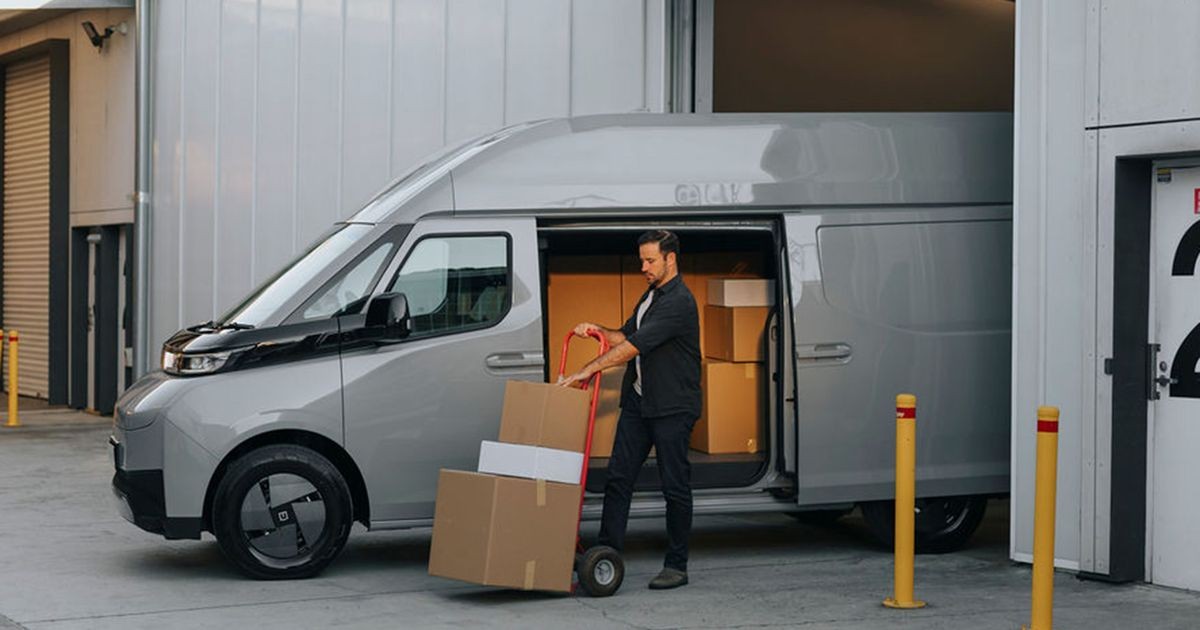
The Farizon SuperVan just got a lot more competitive in the Australian commercial EV space.
Farizon has dropped prices across its entire SuperVan lineup. At the same time, a new top-spec version arrived with a bigger battery and more cargo space.
The SuperVan launched in 2025. It was one of Geely-owned Farizon’s first real attempts to crack the Australian market. The goal? To challenge heavyweights like the Ford E-Transit Custom and the LDV eDeliver 7 right away.
But this isn’t just about competing. It’s about spanning segments. The smaller SuperVan V7E sits under $50,000. The massive H9E truck sits above. The SuperVan fills the gap. Now, that gap has a new anchor point.
The new SuperVan SLWB HR pricing and specs
Meet the SuperVan SLWB HR.
That stands for Super-Long Wheelbase, High Roof. It is the new flagship.
Farizon has priced it from $77,490 before on-road costs.
Why does that matter? Look at the Ford E-Transit. It starts at $89,990. Farizon undercuts it by over $12,000 while matching the maximum cargo capacity. That’s not just a price cut. That’s a strategy.
The physical difference is stark.
- Wheelbase: 3850mm (up from 3600mm on the LWB).
- Load length: 3695mm inside.
- Width: 1795mm.
- Height: 1960mm.
- Volume: 13.0 cubic metres.
Access is through standard rear barn doors. Simple. Effective.
Compare that to the existing LWB HR variant. It offers 11.22 cubic meters. The entry-level SWB LR? Just 6.95 cubic meters. This new model bridges the gap between a standard delivery van and a rigid truck.
Range, battery, and performance details
What powers this beast?
A 106kWh nickel manganese钴 (NMC) battery pack.
This is the largest battery in the Farizon SuperVan lineup. Farizon claims a WLTP range of 398km.
Does every variant get this upgrade? No.
The rest of the fleet sticks with an 83kWh pack. Here is where they stand:
- SWB LR: 376km WLTP range.
- LWB LR: 355km WLTP range.
- LWB HR: 319km WLTP range.
Powertrain remains unchanged across the board. A single 170kW electric motor sends 336Nm of torque to the front wheels. No rear-wheel drive options. No complex all-wheel-drive systems. Just front-drive simplicity.
How much cheaper is the Farizon SuperVan now?
Farizon slashed prices on the older variants to stay relevant. The goal seems clear: volume.
The entry-level SV SWB LR dropped by $8,500. It now starts at $62,990 before on-road costs.
That places it right in the crosshairs of the LDV eDeliver 7 ($61,042 drive-away). It’s close. Too close for comfort if you’re not getting enough value.
The mid-range SV LWB LR also received an $8,500 cut, landing at $64,990 before on-road costs.
So, is it worth it?
Standard equipment now includes:
* 16-inch steel wheels (with plastic covers, obviously).
* Leatherette upholstery.
* A 7.0-inch digital driver display.
* A 12.3-inch central infotainment touchscreen.
* A reversing camera.
Nothing fancy. But functional.
Safety ratings and sales context
Farizon didn’t skimp on the testing.
The SuperVan holds an ANCAP platinum collision avoidance rating. It scored 84 per cent in safety assessments. That puts it on par with many passenger cars, if not better than some competitors.
Sales figures back up the demand for this kind of value.
In the first half of 2023, Farizon moved 170 vehicles in Australia. The SuperVan alone accounted for 117 of those deliveries. It is, undeniably, the brand’s best-seller.
The market is shifting. Commercial buyers are looking at total cost of ownership. They are looking at upfront price. Farizon is giving them a reason to switch from diesel. Or at least, from a more expensive EV.
The Ford E-Transit still has brand loyalty on its side. But at nearly $90k, it’s asking for a serious justification. Farizon isn’t.
You get more space. More range. Less cash out the door.
It’s a bold move for a newcomer. Whether it forces the incumbents to blink remains to be


