The 1994 Ford Mustang arrived carrying the weight of decades of fan expectation. This is a car built on nostalgia that promises to be a direct descendant of the original. Marketing campaigns leaned heavily into this heritage. Featuring a sleek new body design and iconic 65 badging, the ad simply declares, “It is what it was.”
It almost wasn’t.
The threat to the Mustang’s survival is real. Ford seriously considered replacing its rear-wheel-drive muscle car with the Probe. The Probe is a front-wheel drive small car based on Mazda architecture. It was efficient. It’s modern. It was also a non-starter for the brand’s core identity. When Ford proposed this idea, there was immediate opposition. Mustang fans have made it clear they want a pony car, not a Japanese replacement.
At the end of the 1980s, the demand for traditional pony cars began to decline. Dearborn executives began to question the need for a new Mustang. The old models were selling adequately. Meanwhile, Ford has more lucrative opportunities elsewhere. The Explorer SUV represents a huge profit center. Why rush to develop a niche when the market is shrinking? The plan stalled. The project was postponed for two years.
Then, the competitive landscape shifted. General Motors has announced plans to phase out the front-wheel drive Chevrolet Camaro and Pontiac Firebird. Instead, GM switched to a new rear-wheel drive concept in 1993. Detroit’s corporate pride wouldn’t allow it to pass up the rear-wheel drive department. The message is clear. Ford needed a response. In early 1989, the new Mustang program officially began.
SN95 Development strategy
This generation, codenamed SN95, was different from the start. Ford simplified its operations. The “team concept” has become the industry standard. The project team has a small and independent structure and works across departmental boundaries.
The management team is closely committed. Mike Zevalkink manages the entire project. John Coletti is responsible for business strategy. Bud Magaldi leads the design. Emeline King is responsible for the interior design. Kurt Achenbach manages engineering operations. John Bicanich handled powertrain. All report directly to Will Boddie, head of small and midsize cars.
In other words, the goal was a new but traditional Mustang.
Before starting development, a consumer clinic was organized. Ford calls these events, named after the car brand, “gallop polls”. This time, feedback from existing owners was given exceptional weight. The wishes were the same. Buyers want a modern style with an authentic feel. They want a V-8 engine that is affordable and easy to fix. Rear wheel drive is not negotiable. The base price must be more affordable. There must be enough choices.
The budget for this ambitious project was astonishingly low. The total costs were 700 million dollars. Only 200 million dollars had been set aside for design and engineering work. Remember, Ford spent $3 billion on the 1986 Taurus, an industry record. That car changed the industry. The Bronco team had to use some of the cash to create an innovative logo.

Budget constraints meant Ford couldn’t afford a clean-sheet platform for the 1994 Mustang. It was the last holdout in the Fox-body lineage, sitting awkwardly next to newer, more modern architectures Ford had developed elsewhere. For a fleeting moment, there were rumors that the car might just be a shrunken ’89 Thunderbird from the MN12 platform. But that idea died before it got cold. The timeline was even tighter. Ford gave its designers just 36 months to turn the corner.
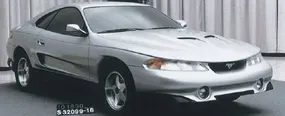
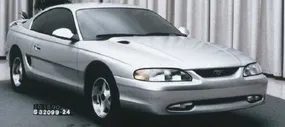
With no new skeleton and very little time, the styling process boiled down to a brutal internal competition. Three distinct mockups went head-to-head for the final ’94 look. They got nicknamed after pop culture icons to keep things simple. One was dubbed “Bruce Jenner,” another “Rambo.” And then there was the winner. The design that survived the axe—and eventually the showroom floor—was called “Arnold Schwarzenegger.”
It wasn’t just about aesthetics. It was about survival. The winning design had to look fresh without requiring a massive investment in new tooling. It had to justify the Mustang’s existence in a market that was shifting toward crossovers and smaller, more efficient vehicles.
The Anatomy of the ’94 Mustang Design
The “Arnold” design won because it struck a specific balance. It kept the essence of the Fox body but stretched it just enough to look modern. The hood was longer. The roofline flowed back more aggressively. The rear was wider and more planted. It looked like a car that belonged in the mid-90s, not the late-80s.
The other two designs had fatal flaws. The “Bruce Jenner” concept was seen as too conservative. It didn’t move the needle. The “Rambo” mockup was too aggressive, too angular. It felt disconnected from the Mustang’s heritage. The “Arnold” version was the sweet spot. It was muscular but refined. It appealed to the long-time fans while not alienating new buyers.
“The winning design wasn’t the flashiest, but it was the most cohesive. It respected the past while signaling a future.”
Why the ’94 Mustang Matters Today
The 1994 Mustang is often overlooked. People talk about the SN-95 generation as a whole, but the ’94 model is where the transformation really clicked. It saved the Mustang from obsolescence. It proved that Ford could update an old platform without making it look cheap.
This update kept the pony car alive during a critical period. Sales remained strong. The brand identity remained intact. Without this specific design choice, the Mustang might have looked dated for another decade. Or worse, it might have been discontinued entirely. Ford took a calculated risk. They bet on a design that was familiar yet evolved. That bet paid off.
Looking at the Legacy
The story of the Mustang is long. It spans decades of engineering, marketing, and cultural shifts. From the original 1964 launch to the New Edge styling of the late 90s, every iteration has left a mark. The Fox-body years, particularly the 1987-1993 period, were about refinement. They kept the car relevant. Then came the 1994 redesign. It was a pivotal moment. It bridged the gap between

The SN95 Mustang’s Near-Death by Too-Clean Design
The 1994 Ford Mustang project had two enemies from the start. a tight budget and a ticking clock. The pressure on design teams goes beyond building a new car. This is an attempt to restore a brand image that has strayed far from its roots. Project design manager Bud Magaldi doesn’t mince words when talking about early concepts. They were rejected because they were “too smooth, too trim, too nice, too friendly.” In the world of muscle cars, nice doesn’t get you anywhere.
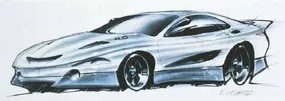
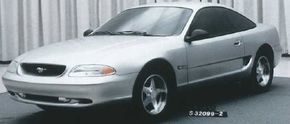
By the fall of 1990, the team had to present three final proposals to executives. These are not just sketches. They are serious competitors for the SN95 platform. All three cars share a common DNA, deliberately paying homage to the past while trying to cope with ’90s aerodynamics. They all featured the iconic galloping horse in the grille. They all had simulated side scoops positioned ahead of the rear wheels. All of these used the iconic three-element taillights. All of these follow the classic long bonnet and short deck proportions of a pony car.
However, under the retro brand, people’s bodies are completely different. Ford adopted a “smooth” design style that prioritized aerodynamics and a muscular, slightly wedge-like stance. These three propositions are variations on this theme and are characterized by how hard they pushed the aggression.
One concept, known internally as “Bruce Jenner,” is the gentlest of them all. The design is described as “trim” and “sporty”, creating a refined and sporty impression. However, according to the reviewer, it lacks teeth. The score was low because the feel was still too soft and lacked the Mustang grunt customers expect.
At the other end is “Rambo”. It’s a radical, exaggerated interpretation that fits the muscle car aesthetic perfectly. It was wide, low and scary. Most people, including board members, thought this was going too far. It looks mean, almost grotesque.
これにより中間点が残ります。 「アーノルド・シュワルツェネッガー」と名付けられたこのコンセプトはまさに的中している。 ジェンナーほど落ち着いていないし、ランボーほど派手でもない。 筋肉質ですが均整が取れています。 モダンですが歴史を尊重しています。 チームは、製品化に入る前にわずかな調整のみを加えて、優勝したデザインを改良しました。 その結果、止まっていても速く見える車が誕生しました。これは、ほとんど道を見失いかけていたブランドにとって必要な修正です。

SN95 的妥协
福特 SN95 野马的设计团队很早就面临着二元选择。 与之前的 1979 年野马一样,决赛入围者被描绘为notchback 轿跑车。 考虑到该品牌的传统,这款敞篷车是不容妥协的。 但掀背车呢? 到达时就已经死了。
尽管掀背车的销量历史悠久,但工程师和营销人员还是否决了掀背车的提议。 福特的官方解释引用了结构完整性。 较大的后部开口使刚性成为工程师的噩梦。 据报道,在不增加过高的重量或成本的情况下实现可接受的扭转刚度太困难了。
但真正的原因更简单。 美国人已经继续前进。
到 20 世纪 90 年代中期,掀背车已成为一种小众市场。 大众想要传统的行李箱。 因此,SN95 做出了妥协,确定了其轮廓。
Slantback Soul in a Notchback Body
The last coupe retained the traditional decklid. But the outline of the roof tells a different story. It has a slantback design that softens the abruptness of standard notchback.
This silhouette is reminiscent of the 1965-66 semi-fastback 2+2 model. This is not a full fastback. It’s not a square. This is the halfway point. It’s a compromise to hide the lack of a hatchback behind a layer of retro styling.
SN95 doesn’t just replace the Fox body. It redefined the look of the Mustang for the new decade, balancing technical constraints with consumer preferences.
The result is a car that looks faster than it actually is. The rearward-sloping roofline creates visual length. It draws the eye back. This makes the pony car feel more aggressive than its actual size.
Ford got its way. There are no hatchbacks. No rigidity nightmares. Just a coupe that sold.

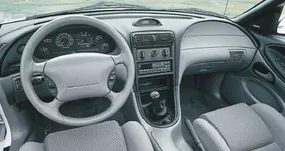
The interior team had a tough balance to strike. They needed that classic Mustang soul while juggling three decades of government safety mandates. Dual airbags. Anti-intrusion door beams. It wasn’t just about aesthetics anymore. The result was a traditional cockpit layout but with a heavily sculpted new “twin-cowl” instrument panel. It flowed smoothly into the doors. A faint homage to the early models, yes, but built for a new era of crash safety.
While the ’94 exterior styling was taking shape, the engineers were facing a harder job. They had to develop the rest of the car and make it all fit within the new, tighter exterior envelope. The old Fox platform was gone. This was a clean sheet start for the chassis, code-named SN-95.
The SN-95 Platform: A Ground-Up Redesign
The 1994 Mustang didn’t just get a new skin. It got a new backbone. Ford engineers needed to create a structure that could handle the demands of modern driving while keeping the car light enough to feel agile. The previous generation had served its time, but by the early ’90s, it was showing its age. The SN-95 wasn’t a restyle. It was a complete re-engineering of the Mustang’s foundation.
The goal was simple: improve handling, increase rigidity, and accommodate the new safety features without ballooning the price or the weight. The result was a unibody construction that was stiffer than its predecessor. This stiffness translated directly to the driving experience. Less flex meant more precise steering feedback. More stability at high speeds. It felt planted.
Suspension and Handling: Finding the Balance
One of the biggest criticisms of the Fox-body Mustang was its handling. It was capable, sure, but it leaned into corners like a boat. The 1994 model aimed to fix that. Engineers redesigned the suspension geometry from the ground up. The front suspension used a MacPherson strut setup, which was standard for the time but refined for better camber control. The rear moved to a solid axle with semi-trailing arms and a Panhard rod. This was a departure from the four-link setup of the Fox generation.
Why the change? The solid axle was simpler, lighter, and cheaper to produce. But it required careful tuning to eliminate the unwanted body roll and poor camber gain that plagued older Mustangs. The engineers spent months dialing in the bushings, springs, and anti-roll bars. The result was a ride that was still comfortable for daily driving but significantly sharper in the corners. It wasn’t as track-ready as a European sports car, but it was a massive improvement over the previous generation.
“The SN-95 chassis was designed to be a blank canvas. We wanted the car to feel alive, connected, and responsive.”
The steering system also saw updates. Power steering was standard, but the ratio was tuned for quicker response. The rack-and-pinion setup was mounted directly to the frame rails, reducing deflection. Drivers noticed the difference immediately. The steering felt more direct. Less vague. More communication from the road.
Braking and Power Delivery
With better handling came the need for better stopping power. The 1994 Mustang
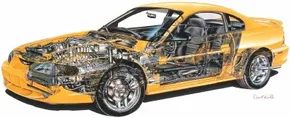

While the design team is building the hood of the 1994 Ford Mustang, the real engineering war is going on behind the scenes. The goal was simple in theory, but demanding in practice. The idea is to create a platform that doesn’t bend like a cheap folding chair, yet doesn’t weigh a ton.
The results are shocking.
Compared to the previous notchback body era (although technically a monocoque, the SN95 represented a significant advance from the earlier Fox platform), the SN95 Coupe had a 56% increase in bending stiffness. This is the car’s ability to resist twisting in the horizontal plane. Torsional stiffness (resistance to lateral twisting) increased by 44%.
For convertibles, the numbers are even crazier.
Normally, removing the roof would turn the car into a jellyfish, so the convertible’s engineers did something extraordinary. The bending stiffness is 76% higher and the torsional stiffness 150% higher.
How do you achieve this without a significant weight penalty? The curb weights increased by only about 200 pounds compared to the 1993 model.
Fox-4 platform design
The team doesn’t just guess. It relies on computer modeling, of course, but it’s also based on decades of experience and lots of trial and error. This causes a series of changes under the skin that eliminate squeaks and rattles and improve crash safety.
Specific strengthening measures include the following.
- Closed-section roof rails: Replacing open sections to prevent roof sagging and warping.
- ** Reinforced body rails:** Directly strengthens the spine.
- Inverted U-beam: A sturdy structural link that connects the B-pillars and secures the shape of the cab.
- 12 more reinforcements: Scattered strategic gussets and braces.
We added a cross member to the convertible between the rear wheelhouses. The underbody X-brace is bolted to prevent twisting and swaying. The GT Coupe’s diagonal brace runs from the firewall to the front strut tower.
The change is so fundamental that Ford no longer refers to it as the “Fox” platform. They renamed it “Fox-4”. The “-4” stands for 1994, which is the model year subject to this major improvement.
Project manager Will Boddie spoke openly about the scope of the work. “This is not an old platform,” he said. Of the 1,850 parts, 1,330 were redesigned or significantly changed.
Ford created a full-size cross-sectional model for skeptical journalists to prove that this wasn’t just marketing fluff. The new parts are painted in a different color than the previous white parts. Visual evidence is hard to ignore.
The Suspension Paradox
Here is the catch.
虽然福特忙于重塑底盘刚性,但转向和悬架几何形状自 1979 年以来几乎保持不变。相同的控制臂。 弹簧刚度相同。 相同的阻尼器。
这是一种保守的处理方法。 是的,底盘更硬了,但是汽车与路面对话的方式已经十五年没有进化了。
要了解这种坚硬的底盘如何与老化的悬架和新的发动机选项相互作用,您需要查看机械装置。
1994 Ford Mustang suspension and engine
The 1994 model featured a new DOHC V8, but the suspension layout remained the same as its predecessor. The base model still has recirculating ball steering, while the GT model has rack and pinion steering.
The engine lineup starts with a 4.0-liter Cologne V-6 that produces 145 horsepower. Smooth and reliable, but lacks excitement. The heart of the car, however, is the new 5.0-liter SOHC V-8. It replaced the old pushrod 302 and produced 215 horsepower. This is cleaner, more efficient and slightly faster.
The GT models still have the 5.0 liter engine, but now have fuel injection and a new cam design. The handling? It feels more nimble than before, mainly due to less body flexibility. But the basic mechanics still date from the late 1970s.
This is a car that is at the turning point of its era. A modern, solid body wraps around a suspension that hasn’t been improved in ten years.
If you want to trace how this stagnation eventually led to the “New Edge” revolution, or how the Fox platform first spawned the legend of the pony car, there’s an even deeper archive to explore. The Mustang story is about more than shiny new steel. it’s about the fight
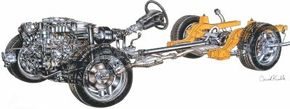

The 1994 Ford Mustang SN95 did not reinvent tires under the chassis. Ford retained the basic suspension architecture used on the Fox platform since 1979, including the Quadra-Shock rear setup. But my body stiffened. This stiffness means engineers can soften the springs and dampers without sacrificing control. The result is an amazingly compliant driving experience for everyday drivers who don’t want their teeth rattling over every pothole.
几何和轨道宽度调整
这些变化不仅仅是为了舒适。 福特移动了前横梁并加长了下控制臂。 这一调整改进了运动几何形状,并将轴距延长了 0.75 英寸,达到 100.3 英寸。 更好的几何形状意味着轮胎在急转弯时可以保持平坦在路面上。
通过将前主销后倾角从 1.5 度增加到 4 度,方向稳定性得到了提升。 更大的后倾角有助于汽车走得更直,并在转弯后使方向盘自动居中。
为了进一步稳定赛车,福特加宽了两端的赛道。 差异是显而易见的。 基本型号的前轮距增加了 3.7 英寸。 GT 车宽增加了 1.9 英寸。 额外的宽度稍微降低了重心,并在横向负载期间提供更多的抓地力。
减轻重量仍然是首要任务。 防倾杆从实心结构改为管状结构。 这减少了非簧载质量,同时允许更大的直径以保持刚度。 基本型号的前杠为 27 毫米,后杠为 21 毫米。 GT 需要更强的车身侧倾阻力,因此采用了 30 毫米前部和 24 毫米后部单元。
外部尺寸和空气动力学
总体足迹有所增长。 SN95 的尺寸为 181.5 英寸长、71.8 英寸宽、52.9 英寸高。 这些数字只是很小的增量,但在每一寸机舱空间都存在争议的细分市场中,它们很重要。
造型不仅仅是为了展示。 挡风玻璃角度变为 60 度,比前几代更陡。 这一变化提高了空气动力效率。 福特报告基本车型的风阻系数为 0.34,GT 的风阻系数为 0.36。 这些数字看似不大,但它们可以转化为现实世界中高速公路的燃油效率并降低高速行驶时的风噪声。
Railway vehicle and tire accessories
In the mid-1990s, the move to bigger wheels began, and the Mustang followed suit. The base model drops the LX badge but maintains a similar footprint. It rides on 15-inch steel wheels and 6.5-inch-wide 205/65R15 Eagle GA touring tires. If you want style, you can pay for extra 15-inch, 7.5-inch-wide, three-spoke alloy wheels.
GT is available direct from the factory at a better price. Standard equipment includes 16-inch, 7.5-inch-wide five-spoke alloy wheels. These are equipped with P255/55R16 High Speed Z class all-round tires. Wide tires and large diameter wheels improve acceleration and handling response. For those who want a little more presence, 17-inch 5-spoke aluminum wheels are also available.
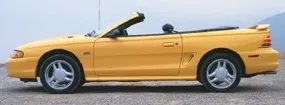

Stopping power, the rest of the package finally caught up. Full disc brakes became standard, removing the stigma of the previous generation of drum brakes. The front rotor is vented and has a diameter of 10.9 inches. The solid rear rotors is 10.5 inches. This is a huge upgrade in terms of mass and heat dissipation.
The hardware under the pedals has also changed. Ford installed a larger brake booster for a more stable feel. The brake pads have been replaced with an asbestos-free composition, which is essential for health and performance. If you need extra anti-lock insurance, the optional Bosch Anti-lock Braking System (ABS) joins your list of options. This is more than just decoration. This is a functional design for heavier and faster cars.
1994 Ford Mustang engine
Under the hood, there are welcome improvements to the powertrain for the base model. The outdated four-cylinder engine that ruined the Mustang’s reputation is finally gone. It was replaced by a 3.8 liter V6 engine.
This isn’t a new engine designed from the ground up for the little Mustang. This is the OHV (overhead valve) V6 engine seen in the 1986 Mustang. However, don’t mistake familiarity for stagnation. This engine includes a series of improvements developed for the Taurus and other new Dearborn platforms.
As a result, the massive leap in output. The horsepower has increased to 145 horsepower. This is 38% more than the old four-cylinder engine. The torque increase was even more significant, increasing to 215 lb-ft, a 59% expansion.
The 3.8-liter V6 engine isn’t new, but it’s been significantly updated to produce 38% more horsepower and 59% more torque than the previous model.
Why is this important? This is because the SN-95 platform is heavier. It was difficult to move the heavy car body with the old 4-cylinder engine. The new V6 provided the necessary thrust and made the car feel like a Mustang again. It wasn’t exotic. It’s not as flashy as the V8. However, it was competent. For the first time in many years, this engine alone is enough to prove the Mustang’s worth.
The torque curve is flat. Pull was available lower in the RPM range. This is a feature of the V6. This isn’t about screaming power at high revs. usable acceleration is what counts. The 3.8-liter V6 became the best-selling model. This made cars more affordable and easier to drive.
Some purists scoffed. They wanted to the Coyote before its time. They wanted an SVT Cobra. But the basic model must be sold. The 3.8L V6 engine did just that. It bridged the gap between the old Fox platform and the new generation platform. This was a temporary and necessary measure.
Power surge, price increase
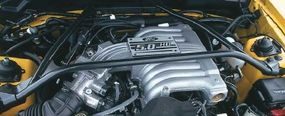
Under the hood, the old 5.0-liter V-8 engine is more than just polished. It has been physically modified to fit the new, lower hood profile. The solution? A low-profile intake manifold that didn’t sacrifice muscle. Aluminum pistons replace heavier iron ones, and Ford uses the latest EEC-V electronic engine controller The result? A solid ten-horsepower jump brings the GT to 215 horsepower. Torque increases to 285 lb-ft. This is exactly the same torque as the 1993 Ford Mustang Cobra.
Both engines (yes, the base four-cylinder remains in the lineup) have either a five-speed manual transmission or an optional four-speed automatic transmission. This wasn’t just any box; The new AOD-E uses electronic gear control for more precise shifting.
Despite the mechanical upgrades, the 1994 Mustang suffered a significant price increase. Critics weren’t buying it. They felt that, despite its sticker shock, the car felt too similar to the previous year and lacked true evolution. Below is the information about the changes that happened in the wallet.
1994 Ford Mustang Price
The markup was real. The mechanical adjustments are subtle, but the cost to drive one off the lot jumped noticeably. Here’s where the money went for the 1994 model year.
- Base model (4-cylinder): Prices started higher than the previous year, reflecting the move to electronic components and refined manufacturing standards.
- GT Coupe: The premium for the V-8 power bump was steep. Buyers paid for the extra 10 horsepower and upgraded EEC-V controller, but many felt the performance increase over the 1993 model wasn’t worth the price.
- Convertible: The drop-top version saw similar increases, with the optional AOD-E automatic transmission adding to the already increased base price.
Critics point out that the extra money gets better electronics and slightly lighter pistons. The soul of the car remains the same. Is it worth it? It depends on whether you value new hood clearance and electronic precision over a simpler and cheaper ride.
The Mustang Legacy Continues
If you want to dig deeper into the pony car lineage, the story doesn’t end with 1994.
- Origin story: How the Ford Mustang Works from the introduction in the early 1960s to today – tells an American legend.
The most popular sports car.
Fox Body Era: The 1987 redesign breathed new life into the Fox generation, which continued into the early 90s.
For a complete schedule, see 1987-1993 Ford Mustang.
* New Edge Revolution: In 1999, Ford renewed the pony car with an radical styling and more power.
Check out the 1999-2004 Ford Mustang and for the fastest, most roadable versions yet.
* Ford Muscle Cars: In the golden age of muscle, Ford’s performance models were top contenders. Profiles, photos and specifications of these tough machines are available for those who want

The price of modernization
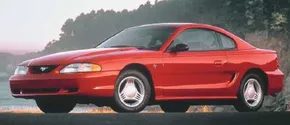
The 1994 Ford Mustang wasn’t just a refresh. It was a major modernization that mirrored updates Ford had already introduced to its family sedans. But after years of silence and speculation, some critics didn’t believe it. They argued that calling this “all-new” was an exaggeration.
Ford had a defense.
First they pointed out the hardware. Many parts were new. Many have been modified. It wasn’t an blank slate, but it wasn’t an old car either. Will Boddie, who oversaw the project, put it in blunt terms. A thorough redesign would have raised prices. Not everyone could afford this jump.
“When we talked to Mustang owners, they kept saying, ‘What can you do to keep it affordable and give us value?'” We listened to them.
Boddie’s argument made sense. But did it hold up to the window sticker?
Some buyers probably experienced sticker shock anyway. The math didn’t lie.
The price of the entry-level coupe rose from $10,810 to $13,365. This is a significant increase. But the extra money got more than just metal and plastic. The base model finally got a bigger engine. The brakes were much better. Two airbags were standard. A tilt steering wheel and four-way power driver’s seat, which previously cost extra, were now included. It was a fair trade for safety and convenience.
The GT coupe told a similar story.
It started at $17,280, up from $15,850 last year. The price went up again. But the spec sheet became heavier. You get the same upgrades as the base model, plus bigger wheels and tires. Fog lights came standard. Likewise the rear spoiler. Sports seats were included. The steering wheel was covered in leather. It felt like the GT had finally catching up to its performance heritage.
Convertibles were a tricky segment.
The basic convertible seemed like a reasonable value. The price barely moved and was $20,160. But the GT version of the convertible cost $21,970. It’s a reasonable premium for an open-top experience, but still required a bigger wallet.
Ford walked a tightrope. They wanted to modernize without upsetting the core customer. They managed to add value. But they also managed to raise the barrier to entry. The 1994 Mustang was a better car. It just cost more to prove it.

The ‘94 model year marked a specific, if minor, manufacturing milestone. For the first time since 1973, Ford didn’t outsource the convertible tops. They built them in-house, right next to the coupes on the assembly line. The power top still came with a glass rear window as standard, and a defogger was included to keep things clear.
There was also talk of a nod to history. Ford announced a liftoff hardtop, heavily inspired by the 1963 Mustang II show car and the Corvette’s removable roof style. The logic was sound: it looked like the coupe’s fixed steel roof, but it was removable. The reality? It was heavy. At 80 pounds, it wasn’t exactly one-person friendly. It was bulky and awkward.
Production glitches held things up, delaying the option until the 1995 model year. By then, the novelty had worn off. Buyers apparently lost interest in a hardtop that was too much hassle to use. The option was quietly canceled after just 499 installations. A nice idea, poorly executed at the wrong time.
Why Experts Doubted the ’94 Mustang
The complaints from auto experts were blunt. The lineup lacked horsepower. It lacked real innovation. The styling was familiar, the chassis was aging, and the performance figures didn’t excite reviewers.
Why did this matter? Because the Fox-body platform was showing its age. While it had been refined since its 1979 debut, the gap between the Mustang and its competitors was widening. Enthusiasts wanted more power. They wanted sharper handling. The ‘94 Mustang offered neither.
The Legacy Context
To understand why the ‘94 Mustang felt like a transitional year, you have to look at the timeline. The Fox generation got a significant restyle in 1987, with refinements continuing into the early nineties. This was the end of an era for that specific body style. Ford was preparing for a shift, but the ‘94 model sat awkwardly between the old and the new.
The pony car lineage was evolving. The original legend started in the early 1960s, defining the segment. The Fox body kept it alive through the ‘80s and early ‘90s. Then came the “New Edge” styling for 1999, which brought more power and sharper lines. The ‘94 Mustang was the bridge, but it was a shaky one.
What Reviewers Said
Critics pointed out the lack of engine options that could truly compete. The V6 was adequate for commuting but boring. The V8, while reliable, felt understressed compared to rivals like the Camaro Z28. The handling was stable but numb.
“It was a competent car, but it failed to ignite passion.”
Reviewers noted that Ford seemed to be waiting for the next generation. They were polishing a platform that was due for retirement. The result was a car that satisfied the masses who just wanted a cheap, reliable sports car, but alienated the enthusiasts who craved engagement.
The liftoff hardtop failure highlighted this disconnect. Ford tried to add value where it wasn’t needed, while ignoring the core performance gaps. Buyers didn’t
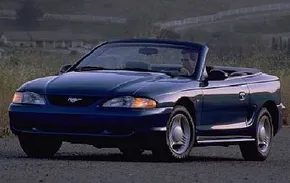

The 1994 Ford Mustang launch was supposed to be a home run. Instead, it landed with a confused thud. Car enthusiasts and journalists alike struggled to reconcile the Mustang’s significant mechanical upgrades with its stagnant output on the dyno. The headline numbers told a grim tale for performance purists: the GT’s V-8 produced 215 horsepower, leaving it a staggering 60 horsepower behind the newly sharpened 275-horsepower Chevrolet Camaro Z28 and Firebird Trans Am.
It felt like an insult. The competition was fresh, aggressive, and fast. The Mustang felt like it was coasting on past glory.
Performance Reality Check
Critics pounced on the power deficit. But when you actually put the key in the ignition, the narrative shifted slightly. Car and Driver acknowledged the confusion. They noted that while the raw power might challenge the loyalty of hardline Mustang fans, the car offered something else: structural integrity and stopping power.
The chassis improvements were real. The braking was sharper. The body structure was more rigid. These are the boring stats that don’t make magazine covers, but they make the car drive better.
The proof was in the quarter-mile. Car and Driver’s five-speed V-8 coupe hit 0-60 mph in a brisk 6.1 seconds. It ran the standing quarter-mile in 14.9 seconds at 93 mph. Consider that this engine was already well into its third decade of production. It was old. It was tired. And yet, it still delivered tremendous performance for the dollar.
The automatic version wasn’t left in the dust either. Consumer Guide timed the slushbox at 7.4 seconds to 60 mph. Not a slouch by any measure. But numbers on a page rarely capture the full picture of a car’s character.
The Philosophy of “Finesse”
Road & Track didn’t mince words about the power gap. “A 60-horsepower shortfall is a lot of horsepower,” they wrote. It was a blunt factual statement. You can’t argue with a spreadsheet.
Ford’s response wasn’t an apology. It was a pivot. The company argued that the Mustang wasn’t designed to win a drag race against GM’s latest muscle cars. The priority wasn’t straight-ahead thrust. It was overall finesse.
This distinction matters. The Camaro and Trans Am were built for the strip. They were blunt instruments of acceleration. The Mustang, even in its weakest numerical hour, was trying to be a daily driver that could also handle a canyon road. It valued balance over brute force.
Was that a fair trade-off? For some, absolutely not. The 60-horsepower gap is a chasm, not a step. But for others, the improved handling and braking made the Mustang a more complete package, even if it lost the strip. Ford bet that buyers wanted a car they could live with, not just a car that could scare them. The market would decide if that gamble paid off.
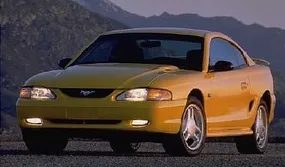

The Low Bar for Redemption
The inner reality is harsh. A few team members admitted that the primary brief was not to reinvent the wheel, but to appease the 6.1 million loyal fans who had bought the Mustang since day one. Our mission is to fulfill the demands of this broad and deeply rooted fan base. Of course, this means a strong demand for the new model, but it also shows that the engineers have not set a very high threshold. Their goal is to please loyal customers, not necessarily upset the auto industry.
Motor Trend captured this sentiment with brutal honesty. “Mustang fans haven’t had a new platform in a long time,” they state. “They’ll accept almost anything as long as the chrome horse is involved.”
A Surprising Triumph
他们自然而然地接受了。 他们满怀热情地这样做了。 为什么不呢? 他们基本上帮助设计了它。 经过多年的等待,owner and machine之间的联系已经修复。 当尘埃落定后,《Motor Trend》编辑们对竞争格局进行了调查,并将 1994 款福特野马评为“年度汽车”。
理由很简单。 他们写道:“野马再次成为一款令人垂涎的汽车……从行业和买家的角度来看,我们权衡了技术进步、价值和性能,以确定 94 年最出色的汽车。福特野马就是这样的汽车。”
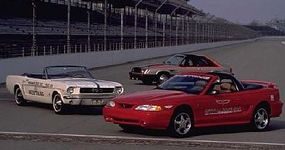

モーター・トレンド・カー・オブ・ザ・イヤー賞は、フォードにとって単なるトロフィーではありません。 マスタングの 30 周年記念式典に火をつけたのはその火花でした。 祝賀行事は 1994 年 4 月 17 日の日曜日に始まり、国中でパーティーが開催されました。
マスタング・クラブ・オブ・アメリカとの提携により、シャーロット・モーター・スピードウェイで大規模なイベントが開催されます。 群衆は多かった。 内野には車が並んでいた。 アメリカ大統領も同様です。
ビル・クリントン大統領は、自身の1967年製コンバーチブル・マスタングに乗って到着した。 これは日常的に使用される実用車であり、新品のショーカーではありません。 彼の存在は、1990 年代半ばまでにポニー カーがアメリカ文化にいかに深く組み込まれていたかを強調しました。
全国集会
お祝いは東海岸だけに限定されません。 6 日間にわたるマスタング アクロス アメリカ ラリーには 200 台の車が集まりました。 車両は遠く離れたカリフォルニア州サクラメントからやって来た。
一方、ロサンゼルスでは、「ファビュラス・フォードス・フォーエバー」ショーが別のグループの目的地となった。 「インターナショナル マスタング ラウンドアップ」では、16 台の車が大西洋を横断します。 参加者はヨーロッパ 3 か国から集まり、当時のマスタングの世界的な影響力を証明しました。
领航车声望
フォードは1964年にインスピレーションを得た。他们成功地推动了野马成为印第安纳波利斯500的官方领航车。这是一个战略举措,以强化这款车的赛车血统。
为了实现这一目标,他们请来了发动机制造专家ジャック・ローシュ。他为メモリアルデー周末准备了三辆特别的眼镜蛇敞篷车。这些车是为了让高知名度的车手在赛道上使用。
福特首席执行官アレックス・トロートマン亲自驾驶其中一辆。传奇车手パネリ・ジョーンズ和A.J. フォイト驾驶了另外两辆。这是1994款高性能车型的一次备受瞩目的亮相。
SN95コブラの誕生
This is the first time the cobra has been seen in public 1994年に公開されたのは初めてだった。 However, the production line began in February. It was always part of the SN95 platform master plan.
The 1994 Ford Mustang Cobra arrived and it was a unique beast. スペシャル・ヴィークル・チーム(SVT)が製造した。 快適装備を削ぎ落とし、速度指向のパーツを追加した。 The result is a car with unique styling and serious performance.
It differs from the standard V6 and GT models. This is Ford’s answer to enthusiasts looking for muscle without the フォックスボディの重厚さ。 While the SN95 platform provided a modern foundation, the Cobra brought old-school aggression to the ポニーカー・セグメント。
For those who dig deep into マスタングの歴史を深く掘り下げる者にとって、 the SN95 era is often overlooked. However, the 1994 Cobra was a turning point. It showed that the new generation can handle some serious power. It laid the foundation for the high-performance cars of the late 1990s.
このモデルの詳細は複雑である。 The SVT team tuned the suspension, upgraded the brakes and tuned the engine for 最大出力。 単なる外観のアップグレードではなかった。 This is a fundamental shift in the way Ford thinks about the modern Mustang.
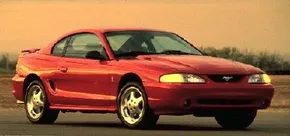

SVT Cobra’s quiet revolution
The 1994 Ford Mustang Cobra doesn’t just carry on the mantle of the 1993 Ford Mustang Cobra. It was developed under the strict supervision of Ford’s Special Vehicle Team (SVT). This is not a complete overhaul, but a carefully planned development. The visual changes are obvious but subtle. A unique front fascia that replaces the front fascia of the standard GT is paired with a rear spoiler that subtly hints at performance. The wheels are 17-inch five-spoke alloys wrapped in P245/45ZR Eagle GS-C tires that look more like race rubber than street tires.
You know you’re looking at a Cobra when you look at the subtle chrome snake badge on each front fender. Inside, the cockpit changes from utilitarian plastic to leather surfaces. The meter has a stylish white dial and the speedometer has a top speed of 160 mph. This is a number you will never see in traffic, but it shows intent.
Handling and brake updates
The chassis underneath is still essentially a Mustang GT chassis. SVT organizes this in what we call “controlled compliance”. In other words, to sacrifice the sharp steering feel enthusiasts demanded
However, the real update is under the pedals. Anti-lock brakes became standard equipment, a significant improvement for the pony car. A significantly larger brake disc improves braking performance. The front features a new dual-piston design with a 13-inch rotor, The rears saw 10.5-inch discs. This is a sturdy unit designed to withstand the forces that press it against the pavement.
The 5.0-Liter V-8: More Tech, Marginal Gains
Ford’s engineers went to town on the 5.0-liter V-8。 彼らは呼吸を改善するためにより大きなバルブを取り付けました。 エキゾーストマニホールドをハイフローユニットに交換しました。 摩擦を軽減するためにローラーフォロワーを備えた押し出しアルミニウムロッカーアームを使用しています。 アクセサリードライブは抗力を減らすために変更され、フライホイールはエンジンの回転を速くするために軽量化されました。
これはエンジニアリングの完全な見直しです。 しかし、結果はどうなったでしょうか? Five more horsepower。
総出力は240馬力です。 自動車ジャーナリストは必ずしも応援していたわけではない。 彼らはため息をついた。 競合他社が懸命に努力している市場では、240馬力はfelt tepid。 コブラは、標準のシボレー カマロ Z28 よりも 35 馬力低いため、依然として競合他社に大きく遅れをとっています。
Performance data and pricing
The Cobra narrowed the gap with GM, but it didn’t close it. Car and Driver tested the performance of the five-speed coupe. The result is a 0-60 mph time of 5.9 seconds. The quarter mile time was 14.7 seconds at 96 mph. Both numbers are half a second slower than the Z28.
“The Cobra is probably the most powerful Mustang on the market…and the most expensive, at $21,240 for the coupe and $24,010 for the convertible.”
At such a price point, the appeal is limited. *Car and Driver concluded that while Mustang enthusiasts will be hooked, it’s doubtful that a “new generation” of customers will flood the roughly 7.
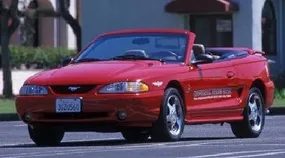

V-6 モデルは引き続き GT モデルを上回っていますが、その差は前年に比べて縮まっています。 高性能コブラクーペの生産は当初予想より約1,000台増え、総生産台数は5,009台となった。 このコンバーチブルは、当初計画されていた 1,000 台に厳しく制限されていました。
これらのコンバーチブルは基本的にインディアナポリス 500 ペースカーのレプリカです。 リオ レッド ペイントで、サドルトーンのトップとレザーのインテリアがマッチしています。 ペースカーのパズルに欠けている唯一のピースは、コックピット上のユニークなフープとライト バーです。 標準のレースデー デカールが外観を完成させます。
フォードは1995年にラインナップにマイナーチェンジを行ったが、売上は増加した。 市場は、マイナーチェンジと永続的な魅力に積極的に反応しました。
1995 フォード マスタング コブラの生産詳細
コンバーチブルの生産を制限するという決定は、よく考えられたものでした。 フォードはコンバーチブルの独占性を維持したいと考えている。 リオ レッド 色は、ラインナップ全体の標準色ではありません。それはこれらの特別なペースカーレプリカのために予約されています。 内側のサドルレザー のインテリアは、車のパフォーマンスの系譜を際立たせるはっきりとしたコントラストを生み出しています。
クーペは期待を上回りましたが、コンバーチブルは依然として希少です。 この希少性が、コレクターの間でこれらの特定のモデルに対する現在の欲求に貢献している可能性があります。 ライトバーがないことが実際のペースカーとは一線を画していますが、それでも視覚的な類似性は驚くべきものです。
Why the 1995 line-up matters
Sales increased, even though there were no major design changes. This suggests that buyers are looking for an improvement, not a revolution. Fox-body architecture has matured and offers better handling and reliability than early iterations. Enthusiasts understand the value of a proven platform that requires enough updates to stay current.
The 1995 Mustang served as a bridge between the classic Fox era and upcoming New Edge design. It retains the familiar proportions and includes subtle aerodynamic improvements. Although this change is small, it helps reduce drag and improve high-speed stability.
For those interested in the larger context, the Mustang’s history spans several important generations. The original 1960s model started the pony car segment. The 1987 redesign brought back the Fox chassis with sharper styling and modern features. The 1999 New Edge design brought a more aggressive look and improved performance. Each iteration builds on the previous and refines the balance of power, style and value.
With its special production number and unique pace-car replica, the 1995 Cobra represents a narrow but important point in the series. It offers a snapshot of Ford’s strategy during the transition period. The decision to limit convertible production created a unique group within the Cobra ownership community. These cars are still in high demand due to their special history and limited availability.
It remains to be seen how these models will hold up as classic car values continue to fluctuate. The 1995 Mustang, especially the Cobra version, is at the interesting intersection of affordable and collectible. It may not command the insane premiums of the early Shelbys, but it offers a different kind of appeal. It is an accessible, functional that is deeply rooted in the car culture of its time.
The Fox-body Mustang legacy lives on in the aftermarket
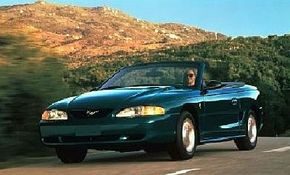

Phantom GTS and SVO performance highlights
Sales figures for the 1995 Mustang tell a simple story. Between the standard GT and the Cobra, 185,986 cars left dealerships. Sales remained strong even though Ford made few changes to the design. Winning isn’t all about horsepower or horsepower curves. It fits well. Consumer Guide and others point out that the build quality has finally caught up to the Badge. The gap between the plates is narrower. The ride feels firm and not loose. The driver knows it. Buyers noticed.
Next is the ghost model. GTS. Ford has introduced a stripped-down version of the GT that lowers the price by $1,200 and shaves 1,200 pounds off the vehicle’s weight. For budget-conscious truck customers who use their trucks daily, this seems like a sensible choice. Then it disappears. AutoWeek reports that the GT will go on sale mid-year for $2,000. It never hit the floor. The factory price list does not include it. There were also rumors about the 1996 package. Nothing was accomplished. GTS remained a footnote that never started as a “what if” story.
But the desire to perform has not disappeared. Ford just changed its approach. Special Vehicle Operations is an old SVO brand and was renamed in 1995. The new name is Special Vehicle Organization. The focus shifts from in-house racing teams to over-the-counter speed parts. You can buy an updated version. You could bolt them on. You could go fast on your own dime.
Motor Trend’s advice is simple. If I had to pick one upgrade it would be the rear end gearbox. The stock GT gear ratio is 2.73:1. The purpose of these is to improve highway driving and fuel economy. The gear ratio of the Cobra SVT has been changed to 3.08:1 for better acceleration. What about 3.55:1 gears? These are a great choice for the 5.0L V-8 engine. You’d pay a penalty at the pump. The set costs $257. But ultimately the torque is transmitted at a frequency suitable for the road.
高速化するには、より高価な方法もあります。 「GT40」と呼ばれる2,995ドルのエンジンパッケージは、出力を290馬力に高める。 これは通常のコブラよりも 50 頭多いです。 標準GTよりも75大きい。 ハードウェアの問題は深刻です。 鋳鉄シリンダーヘッドは、より大きなバルブを備えたアルミニウム GT40 ヘッドに置き換えられました。 インテークマニホールドは流れを良くするためにチューブラーランナーに変更されました。 スロットルボディが大型化します。 管状ヘッダーは、制限のあるストックエキゾーストを置き換えます。 アクセサリドライブは、寄生損失を減らすために低抵抗バージョンに置き換えられました。
結果は測定可能です。 車とドライバーを搭載した GT クーペは、時速 0 マイルから 90 マイルまで 5.5 秒で加速します。 時速 160 マイルで 400 マイルを走るのにかかる時間はわずか 14.2 秒です。 スーパーカーの領域ではありません。 しかし、1995 年の箱型 V-8 エンジンはどうでしょうか?これが信頼の力です。 フォードはファンの注目を集めるために新車を必要としない。 必要なのは適切なレンチだけです。

The aftermarket scene is heating up as aftermarket tuners with unique twists arrive on the Fox chassis platform. *Car and Driver pointed out that a special garage-built “Trojan Horse” could play in the same ballpark as the Z28. Our recommendations for those who want a dealer-installed solution are simple. You pay a flat fee for 10 hours (about $500) and let a Ford dealer do the installation. Looking for even more power? SVO lists a factory-approved Powerdyne supercharger as an option with boost pressures of 6 or 9 psi and prices starting at $2,600.
Ford’s Special Vehicle Team (SVT) shouldn’t be overlooked either. They introduced the new Cobra R, this time replacing the traditional small-block with a 351 cubic-inch V-8. This engine is derived from the hot rod version of the F-150 Lightning, but is completely street-legal. To squeeze power, engineers used a higher compression ratio of 9.2:1, a more aggressive camshaft profile and a larger throttle body. The result is a powerful 300 horsepower and 365 pound-feet of torque.
Despite the significant increase in power, the performance figures fall short of the specifications. The car and driver prototype had a streamlined interior and a dome-shaped fiberglass hood for more clearance. Despite these weight-saving measures and the huge V-8 engine, the car completed the 0-60 mph sprint in just 5.4 seconds and the quarter-mile in 14 seconds. Only the everyday Camaro Z28 can match this performance.
it doesn’t matter. The 1995 Cobra R sold out quickly and only 250 were produced. Most of these rare machines were quickly converted for road and drag racing.
The 1995 Cobra R marked the end of Ford’s line of overhead valve small block engines. It was not returned to the 1996 lineup, marking a major change in Ford’s design direction.
The heritage of pony cars
For those looking to trace the full history of America’s most popular sports car, here are some key eras that defined the Mustang’s evolution.
- The original Fox generation got a new lease of life with the 1987 redesign and was continued into the early 90s.
- In 1999, Ford revamped the timeless pony car with “New Edge” styling, more power and major improvements, making it the fastest and most road-legal Mustang ever.
- Ford’s muscle car is one of the best performers of the era of muscle cars, because its appearance and technical data are those of even the toughest models.
1996 Ford Mustang
The transition to 1996 meant the abandonment of the old small-block. The changes to the 96 Mustang were significant and reflected the transformation of the company. While the V-8 power is still strong, the character of the car has begun to shift away from the original analog feel of the Fox platform towards something more modern. The Cobra R showed that older architectures can still achieve great performance, but the future lies elsewhere.
this
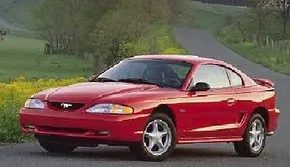

The 1996 model year marked a hard pivot for the Ford Mustang. After nearly four decades of pushing the old small-block V-8, Ford finally retired the overhead-valve architecture. In its place went the “modular” engine family—a design born in the big Lincoln Town Car five years prior. This wasn’t just a facelift. It was a complete rethinking of how a pony car heart beat.
The GT’s Doubtful Transition
Ford started with the 4.6-liter (281 cubic inch) V-8. The GT version got the entry-level iteration: a single-cam setup with an iron block and aluminum heads. Two valves per cylinder. It looked like a step backward on paper. The numbers matched the outgoing 302 exactly.
Straight-line speed took a hit. Car and Driver recorded a 0-60 mph time of 6.6 seconds. The quarter-mile came in at 15.1 seconds at 92 mph. Not impressive compared to the pushrod days.
But there were reasons to swap. The new motor revved higher. It spun faster. It delivered torque lower in the rpm range. It was quieter. Smoother. And critically, it could meet looming emissions regulations. The old pushrod engine simply couldn’t.
The Cobra’s High-Tech Blow
The Cobra told a different story. Hand-assembled and meaner, it featured dual overhead cams and four valves per cylinder. The block was cast aluminum—lighter and more rigid.
Power output jumped to 305 horsepower at 5,800 rpm. Torque sat at 300 pound-feet at 4,800. Suddenly, Mustang enthusiasts didn’t need to worry about stoplight races against GM’s latest pony cars. The technology gap closed.
“It’s the best daily-driver muscle car… Its DOHC 32-valve V-8 is the smallest but highest-tech of the engines here.”
How It Stack Up Against the Competition
Testing all three contenders, Car and Driver ranked them. The Cobra trailed the high-output ’96 Camaro SS. It beat the similarly equipped Firebird Formula.
The verdict highlighted a trade-off. The modular V-8 made as much horsepower as the 5.7-liter V-8s in the competition, but less torque. Yet, because the Mustang weighed less, performance stayed competitive. It turned in nearly the same lap times.
Slower than the Camaro in some metrics. Marginally quicker than the Firebird in others. But when the test drivers had to choose one car to drive home after a long day, the Cobra won.
Some things never change. Weight matters. Tech matters. But comfort? That still wins the day.
Plan the final development of the Fox Body
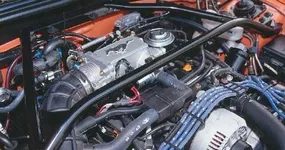
Moving to a taller, “upgraded” V-8 engine is more than just a swap. This required a complete redesign of the geometry. Ford couldn’t just install a new engine. The cross member of the front frame has been redesigned to accommodate the additional height. The steering rack has been changed. The front suspension arms are even lower. The motor attachment point has been changed. The brake booster also had to be shrunk to fit in the tight space.
These changes don’t just give you more space for your hardware. They tightened the frame. Reducing the weight of the engine helps, but strengthening the structure means handling is significantly more nimble. The mess disappears under the hood. Engineers installed the alternator, air conditioning compressor and power steering pump directly into the engine block. The bays are cleaned and maintenance is simplified.
The ignition system also received the latest updates. The old distributor has disappeared. Plug-coil technology is used instead. No more problems with wear points or caps. This change improves efficiency and long-term reliability.
V-6 and Transmission Upgrades
Elsewhere in the lineup, the V-6 isn’t far behind. The block is reinforced to withstand greater pressure. Power was increased by 10 horsepower to a total of 150 horsepower. It also shares the V-8 engine’s new Platinum spark plugs, which promise 100,000 miles of durability.
The transmission story behind it is even more complicated. On paper, they look the same. In fact, the five-speed manual uses a BorgWarner T45 unit instead. It was beefier and better suited for the torque. The automatic got even more significant treatment. The obsolete AOD was replaced by a 4R70W. This new box features advanced electronic controls that control gear shifting more precisely.
Visual Update
The change in appearance is subtle, but noticeable. The Pony Grill logo has lost its solid background and has been replaced with a grid background. Makes the front look more aggressive and modern. The rear got a more radical treatment. The horizontal stabilizer disappeared. Instead, there is a vertical cluster of three elements. Some think this makes the car look narrower. Some people think it’s simply a cleaner design.
Importantly, these were the final tweaks before the arrival of the SN-95 generation. The Fox Body wasn’t just fading out. It has been honed into something sharper. The mechanical updates didn’t just keep up with the times. They elevated the platform one last time.
Does the improved handling justify the complex technical changes? The driving dynamics suggest that. The platform feels more stable. The transmissions shifted with less hesitation. The engine compartment does not look very full.
But what about vertical taillights? This is a polarizing choice. They changed the proportions of the car. Some people prefer a slimmer look. Most people don’t. This was one of the most controversial design changes in Mustang history.
The Fox Body ended not with a whimper, it comes with a series of well-designed upgrades. V-8s are taller. The V-6 is even stronger. The gearbox has become even smarter. The body got slightly different. This is a matter of course for a platform that has worked for a long time.
The SN-95 introduces a new housing. But the mechanical heart of these late-model Fox cars is more advanced than its predecessors. This is a fact worth remembering.
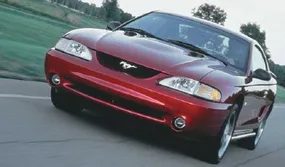
Ford is trying to fix the Fox-body platform by adding modern safety features. Passive Anti-Theft System (PATS) is now available on GT and SVT Cobra models. It’s not just a sticker to put on the dashboard. The coded key chip is required to start the engine with the ignition switch. Try to hot-wire the car? The system cut power entirely. Optional on base models, but not standard everywhere.
The strategy failed. Sales collapsed in the 1996 model year.
Total Mustang sales fell 27% to 135,620 units. That’s a big drop for a segment-defining car. Of these, only 10,006 were high-performance SVT Cobras. The rest was a bleeding body. Ford thought it had a solution in 1997, offering the “thoroughly modern” Mustang. Looks fresher. It handled better. Equipped with new safety technology.
Sales continue to decline. The market did not accept this compromise.
The 1997 and 1998 Ford Mustang
1997 年と 1998 年のモデルイヤーは、SN-95 世代の晩年を表していました。 フォードは、old Fox platformと来たるべき新しいエッジ時代の間のギャップを埋めようとしています。 パワーステアリングを標準装備した。 彼らはサスペンションジオメトリをアップグレードしました。 インテリアのプラスチック感を軽減します。
しかし、購入者はさらに多くのことを望んでいます。
V-8 は 1996 年の 4.6 リッター モジュラー エンジンのままです。 GTの出力は215馬力。 コブラの出力は260馬力。 これらの数は 1990 年代初頭にはかなりの数でした。 1997 年までに、競合他社が追いつきました。 シボレー カマロ Z28 は 275 馬力を発生します。 The Dodge Viper was making 350. それに比べてマスタングは鈍く見える。
フォードはそれを知っています。 だからこそ彼らはシャーシを再び微調整したのです。 1997 モデルにはより硬いブッシュが採用されていました。 より良いショック。 改良されたリアアンチロールバー。 ハンドリングが向上しました。 これはより正確です。 しかし、それ以上の車は売れませんでした。
Why the 1997 Mustang Failed to Gain Traction
Consumers are impatient. They wanted the sharper angles and more aggressive styling that Ford had planned for 1999. The 1997 and 1998 Mustangs felt like a transitional era. Yes, they are great. But they lack the element of surprise.
The base 3.8-liter V-6 engine is still available. It produced only 150 horsepower. It sounded tinny. It accelerates slowly. Enthusiasts hate it. they don’t buy it. People looking for an affordable V-6 Mustang are increasingly turning to the Saturn SL and Mazda Miata. The price range is similar. The Miata drives better. Saturn is more reliable.
Ford tried to counter this with the SVT Cobra. It has a unique grill. fog light. 17 inch wheels. It produced 260 horsepower. This is a serious performance car. But it cost $25,00
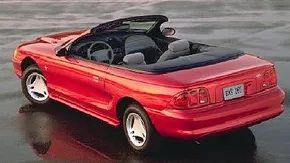

1997 フォード マスタングには、最新のオーバーヘッド カム V-8 エンジンと最新の安全技術が搭載されています。 これは間違いなく、当時の市場で最も技術的に進んだマスタングでした。 この技術的な飛躍は売上に大きな影響を与えていません。 1996年にはその数は減少していた。 1997 年までに、その数はさらに 20% 減少しました。
総生産台数は10万8,344台に達した。 コブラセグメントは安定したままです。 全体的に減少したにもかかわらず、出来高はほぼ同じままでした。
1998 Ford Mustang
Sales quickly recovered for the 1998 model year. Production increased by 62% to 175,522 units. The improvement is still gradual. Ford is not introducing a new generation. They adapt to what they have.
The GT’s V-8 has been retuned. Power increased to 225 horsepower. The new GT Sport Group package is available for $595. Comes with 5-spoke 17-inch wheels. Added engine oil cooler. Stripes on the hood and front fender complete the look.
The less expensive V-6 Sport Appearance Group costs $345. Comes with 16-inch alloy wheels. Comes with a rear spoiler. Accent stripes on the body correspond to the GT’s visual cues. The steering wheel covered with genuine leather adds to the luxurious feel.
Every year through 1998, Mustangs were equipped with safer “depowered” dash airbags. This is a federal mandate. This change does not incur additional costs. It only slightly reduces the explosiveness of the cockpit during slow crashes.
The recovery in sales suggests that buyers are ready to increase the GT’s power. Or maybe the V-6 package appeals to a new kind of budget-conscious enthusiast. In any case, the 1997 slump is behind us. The 1998 model year showed that there was still interest in the final evolution of the Fox platform. But do the modest upgrades justify the increased prices for certain features? The sales figures suggest that this is the case. enthusiast community are divided on whether these tweaks are enough to save the car from obsolescence.
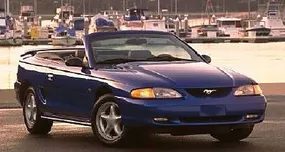

Price tags kept drifting upward. The V-6 coupe started at $15,970. The Cobra convertible pushed past the twenty-thousand mark to $28,135. SVT capped production at roughly 10,000 units. Sales matched 1997 numbers exactly. No growth. Just a steady plateau.
The Blue Oval’s Dominance
For twelve consecutive years, the Mustang held the title of America’s best-selling sporty car. It wasn’t just winning. It was burying the competition. Combined sales of the Chevrolet Camaro and Pontiac Firebird couldn’t touch the blue oval’s output. The gap was massive.
It looked impressive on paper. The market share was undeniable. But for those watching the assembly lines, this dominance felt inevitable. The formula was working. The demand was there. The rest of the industry was simply playing catch-up.
The question wasn’t whether the Mustang could hold the top spot. It was how long the rivals would keep trying to dethrone it. The gap widened every quarter. The Firebird faded. The Camaro struggled to find its footing. Meanwhile, the Mustang kept rolling off the line.
Numbers don’t lie. They just show you who’s really running the race.
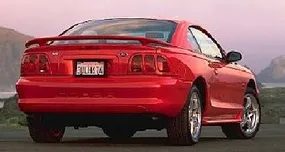
Peter Bohr captured this feeling perfectly in his January 2000 Road & Track review of the 1994-1998 models. “For some, the words ‘Muscle and memories’ describe the Mustang’s seeming timelessness. The Mustang…was loved from the start, and as folks at Ford have refined the car over the years, it has developed a fiercely loyal following that rivals almost any other car.”
That’s true. Nothing like the Mustang before.
But the future always beckons. In 1999, a new milestone approached. The media and the loyal Mustangers expected Ford to do something special on the occasion. They would not be disappointed.
1999-2004 Ford Mustang New Edge Review
フォードの不朽のポニーカーは、1999 年に「ニュー エッジ」スタイルで復活しました。 その結果、more power、多くの重要な改良が加えられました。 これは、yetマスタングの中で最も速く、最も公道走行可能なマスタングの 1 つです。
How the Ford Mustang Works
传奇始于20世纪60年代初。 How the Ford Mustang Works 记录了from inception to today’s all-new models。 这是美国最受欢迎的运动型汽车的完整故事。
1987-1993 Ford Mustang History
The Fox generation got a new lease of life with the 1987 restyle. Further improvements were made in the early 1990s. This era is a must read book for understanding the lineage.
Ford Muscle Cars Comparison
福特肌肉车是肌肉车时代表现最好的车型之一。 一些坚固的福特肌肉车的简介、照片和规格可供比较。