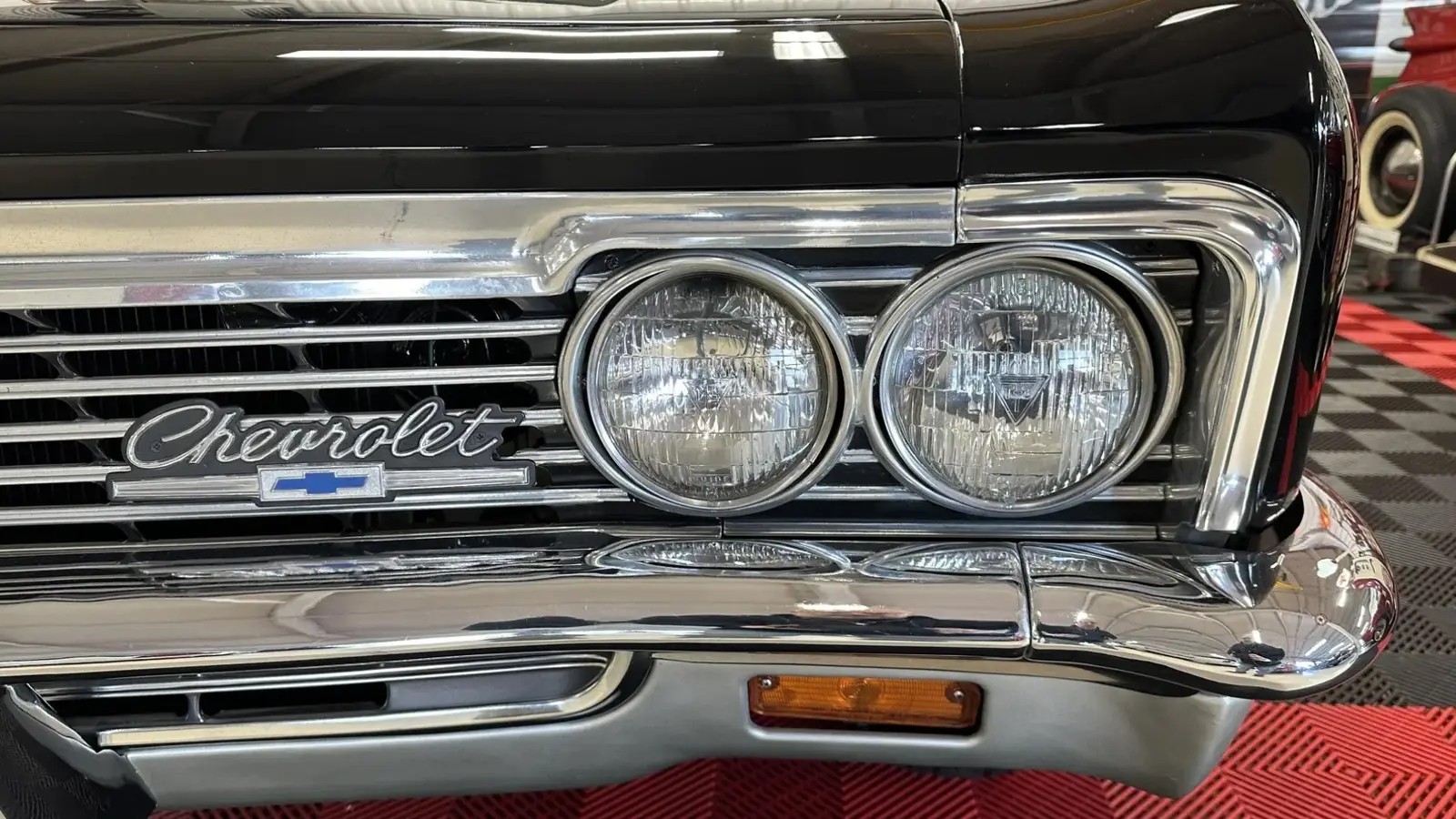
The golden age of American muscle cars – the 1960s and early 70s – produced iconic legends like the Chevelle SS and Ford Mustang. Yet, hidden among these well-known performance vehicles was a sleeper that went largely unnoticed: the 1966 Chevrolet Biscayne with the L72 427 big-block engine. This car wasn’t built for show; it was built for pure, unadulterated speed, making it one of the most underrated performance cars of its era.
The Logic of Raw Performance
During the mid-60s drag racing boom, the focus was on results, not aesthetics. Racers understood that a car’s exterior meant little compared to its capabilities. Factory drag racers like the 1964 Ford Fairlane Thunderbolt were already pushing boundaries with eleven-second quarter-mile times. Enthusiasts prioritized power-to-weight ratios above all else, stripping away unnecessary components to maximize speed. The Biscayne L72 was a product of this same ruthless logic.
The Big-Block Arms Race
Detroit’s engineers were locked in a relentless battle to fit the largest engines into the smallest cars, regardless of safety or practicality. By 1966, big-block V-8s reigned supreme. Chevrolet’s L72 427 was a 425-horsepower behemoth with solid lifters and high compression, a true powerhouse. The question wasn’t whether Chevy could put this engine into a car, but which car would house it.
The Unassuming Sleeper
While enthusiasts flocked to flashy models like the Chevelle, those in the know sought a different path: anonymity. Chevrolet offered fleet vehicles – basic, stripped-down models intended for taxis and bulk orders. These cars were never marketed as performance machines, yet they provided a loophole for those who understood how to read the option sheet.
The Biscayne’s Hidden Potential
The Biscayne’s full-size body was often overlooked due to its lack of prestige. However, its larger engine bay could accommodate the massive L72 427. Racers realized that by ordering the cheapest, lightest Biscayne with the most powerful engine, they could create a devastatingly fast sleeper. The car came with no luxury features—no power windows, no sound deadening, just raw performance.
A Racecar in Disguise
The 1966 Chevrolet Biscayne L72 was an anomaly: a 425-horsepower racing engine in a car that looked like a government fleet vehicle. The solid-lifter camshaft gave it a distinct, aggressive idle, yet it retained the appearance of a basic, unassuming sedan. On the track, the Biscayne L72 ran mid-13-second quarter-miles, outperforming many contemporary muscle cars at a fraction of the cost.
Outpacing the Legends
The Biscayne L72 was faster than iconic models like the Chevelle SS 396 and Pontiac GTO, thanks to its lighter weight and brutal power. The lack of features wasn’t a compromise for racers; it was the very reason they chose the Biscayne. The car’s stripped-down nature made it a perfect lightweight shell for racing.
A Forgotten Legacy
Today, the Biscayne L72 remains largely unknown to casual enthusiasts. Only around 200 were produced in 1966, with an estimated 11 surviving today. This makes it rarer than many better-known muscle cars. The few remaining examples are time capsules of a bygone era, representing a unique moment in American automotive history.
The Chevrolet Biscayne L72 stands as a testament to the power of raw, understated performance. It was a car built not for attention, but for speed, and its legacy continues to inspire those who understand the true meaning of a sleeper.