For decades, the identity of a Lotus was defined by a singular, visceral connection: the mechanical dialogue between a lightweight chassis and a driver. It was a philosophy of “feel over figures,” where the soul of the car lived in its engine note, its vibrations, and its uncompromising purity.
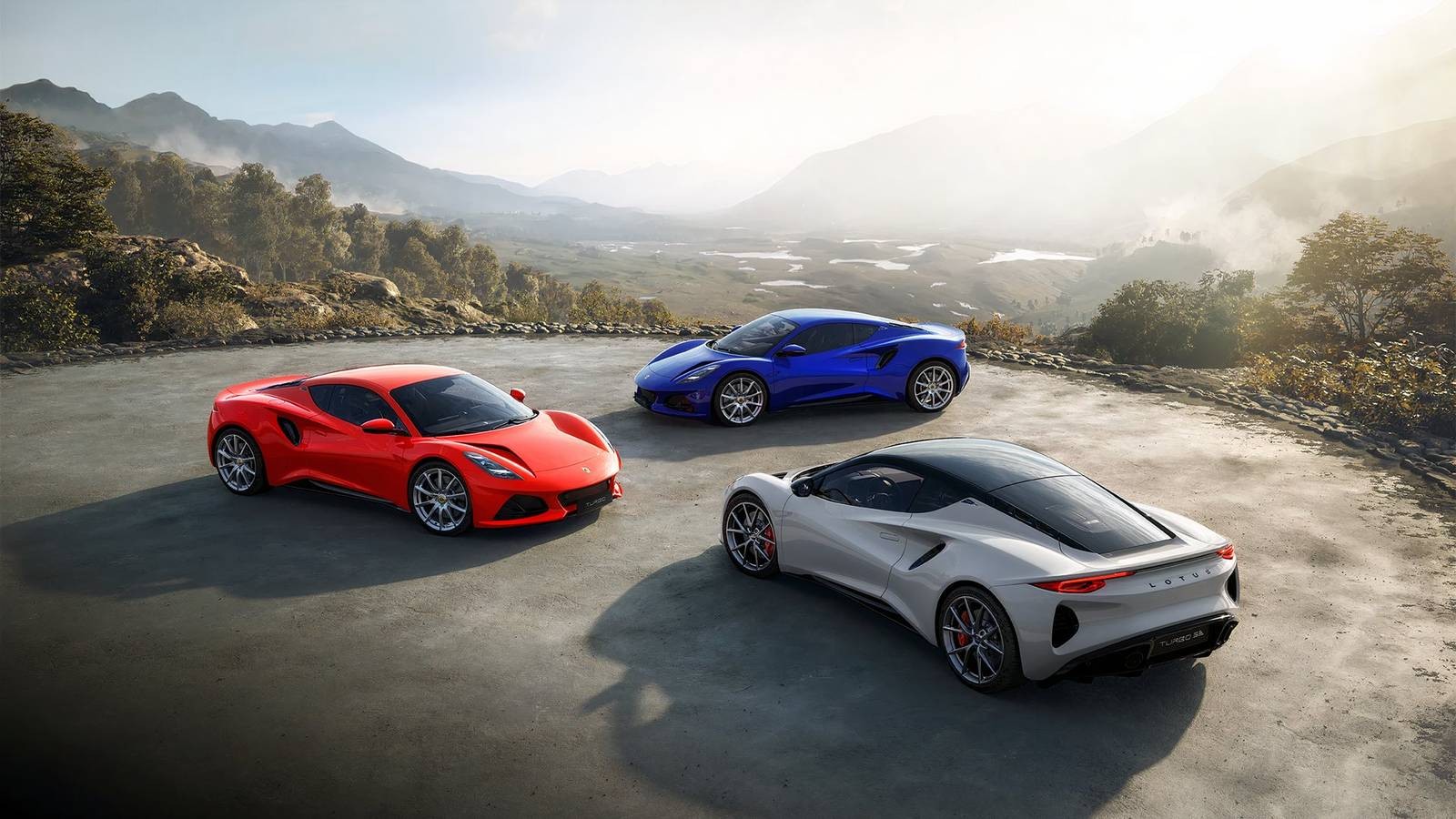
However, the automotive landscape is shifting beneath the feet of even the most dedicated purists. The Lotus Emira arrives not just as a new model, but as a historical marker—the final chapter of Lotus’s long, gasoline-powered legacy.
The End of a Combustion Lineage
The Emira is far more than a successor to the Evora; it is a symbolic farewell. When Lotus unveiled the car in 2021, it signaled that this would be the brand’s last internal combustion engine (ICE) sports car.
To achieve this, Lotus has adopted a pragmatic approach to power, utilizing proven engines rather than developing its own:
– The V6 Option: A supercharged 3.5-liter Toyota engine delivering 400 hp and 310 lb-ft of torque, offering a characterful, linear powerband.
– The Four-Cylinder Option: A turbocharged 2.0-liter Mercedes-AMG engine producing 360 hp and 317 lb-ft of torque, balancing modern efficiency with performance.
This shift is driven by necessity rather than choice. Tightening emissions regulations and global mandates for electrification have made it increasingly difficult for niche manufacturers to justify the development of traditional engines. Consequently, the Emira serves as a “farewell tour” for the era of the rev-hungry, mid-engine petrol engine.
A Radical Transformation: From Niche to Global Tech
To understand why the Emira is being sidelined for electric power, one must look at the broader transformation of the brand. Backed by the Chinese automotive giant Geely, Lotus is undergoing a massive strategic pivot.
The company is moving away from being a niche British maker of featherweight track toys and repositioning itself as a global performance technology brand. The goal is to compete not just with traditional sports car manufacturers, but with high-end EV innovators.
While the brand initially aimed for a fully electric lineup by the end of the decade, slower global EV adoption has prompted a slight course correction, with hybrid technology now serving as a bridge between the combustion past and the electric future.
The Last True “Driver’s Car”
What makes the Emira stand out in a world increasingly dominated by silent, software-driven performance is its commitment to the analog experience. It remains a mid-engine, rear-wheel-drive machine designed for communication—ensuring that every steering correction and throttle input is felt by the driver.
Key features that cement its “last of its kind” status include:
– Refined Chassis Tuning: It offers a level of ride comfort and interior quality that previous Lotus models lacked, without losing the raw connection to the road.
– Manual Transmission: In an era where gearboxes are increasingly automated, the availability of a manual gearbox makes the Emira a rarity.
– Mechanical Focus: It prioritizes the sensation of driving over mere acceleration figures.
The Future: From Emira to Eletre
If the Emira represents the heritage of Lotus, the Lotus Eletre represents its future. The Eletre is a complete departure from the brand’s roots: a large, technologically complex, fully electric SUV.
While the Eletre delivers supercar-level performance—with top variants producing a massive 905 horsepower —the experience is fundamentally different. Instant torque and sophisticated software replace the mechanical grit of a combustion engine. This move toward larger, more luxurious, and scalable electric vehicles shows that Lotus is looking toward a much broader, global consumer base.
Conclusion
The Lotus Emira exists in the narrow window between two worlds: the mechanical simplicity of the past and the digital complexity of the future. It stands as a final tribute to the lightweight, driver-centric ethos that built the brand, serving as a benchmark for how Lotus will navigate its new identity in an electrified world.