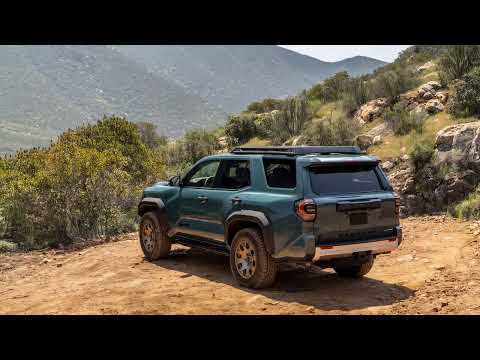
For decades, the Toyota 4Runner has stood as a rugged, body-on-frame SUV that prioritizes off-road capability over all else. But the automotive landscape has changed. Modern consumers now demand both performance and comfort, even in traditionally utilitarian vehicles. The 2025 4Runner marks a turning point: it’s the first generation to embrace a hybrid powertrain and cutting-edge technology while retaining the core durability that made the 4Runner famous.
The Evolution of Ruggedness
The shift towards blending ruggedness with refinement isn’t accidental. Manufacturers realized single-purpose vehicles are no longer viable in a market where consumers expect efficiency, performance, and comfort in one package. The 4Runner’s transformation reflects this trend: the new model offers hybrid power, larger infotainment screens, and advanced safety features alongside its legendary off-road credentials.
A History of Adaptability
The 4Runner’s journey began in 1984 as a basic Hilux-based SUV. Over the generations, it evolved into a dedicated off-roader, but always maintained a focus on durability.
- Second Generation (1990-1995): The first true SUV package, distinct from Toyota pickups.
- Third Generation (1996-2002): Easier to live with, and more refined.
- Fourth Generation (2003-2009): Offered a powerful 4.7-liter V8, a first for the 4Runner.
- Fifth Generation (2010-2024): Stuck to its roots with a naturally aspirated engine and rugged styling.
Now, the sixth generation finally pushes the 4Runner into the modern era, pairing its heritage with contemporary amenities.
Value in the Used Market: A Smart Buy?
Despite the 2026 4Runner’s release, used 2025 models remain in high demand. Top trims like the TRD Pro and Trailhunter still command prices between $65,000 and $70,000. Savvy buyers can save thousands by opting for a low-mileage 2025 model, which offers the same features as the newer version at a significant discount. Dealers are also more willing to negotiate on used inventory, making it an even more attractive option.
Powertrain and Performance: A Step Forward
The 2025 4Runner’s hybrid powertrain is a significant upgrade over the outgoing V6. The new 2.4-liter hybrid delivers peak torque at 1,700 RPM, providing more responsive performance than the older engine, which required 4,400 RPM to reach its maximum torque. The eight-speed automatic transmission further enhances the driving experience, replacing the primitive five-speed from previous models.
Efficiency and Reliability: A Trade-Off?
Fuel efficiency is another win for the hybrid, with city MPG jumping from 16 in the 2024 model to 23 in the 2025 version – a 44% improvement. While the older 4.0-liter V6 was known for its bulletproof reliability, the new hybrid powertrain is more complex and has experienced some initial teething issues, like software glitches and sensor failures. Toyota’s rigorous testing helps mitigate these problems, but first-generation models may require more attention.
Trim Levels and Interior Quality: Modern Comforts
The sixth-generation 4Runner prioritizes modernizing the interior without sacrificing usability. Base models feature an eight-inch display, while higher trims offer a massive 14-inch infotainment screen. Material quality varies:
- SR5: $40,700 (17-inch alloys, smart key, 8-inch display)
- TRD Off-Road: $49,190 (crawl control, Multi-Terrain Select)
- Platinum: $62,860 (hybrid only, 360-degree camera, head-up display)
- Trailhunter: $66,900 (OME shocks, ARB roof rack, snorkel)
Higher trims include genuine leather options and luxury features like heated second-row seats.
The Verdict: A Worthy Upgrade?
The 2025 Toyota 4Runner bridges the gap between rugged capability and modern comfort. While some purists may lament the loss of analog simplicity, the new hybrid powertrain, refined interior, and advanced technology make it a more versatile and appealing SUV for a wider range of buyers. If you’ve always wanted a capable off-roader that can also handle daily commutes, the 2025 4Runner is now a serious contender.