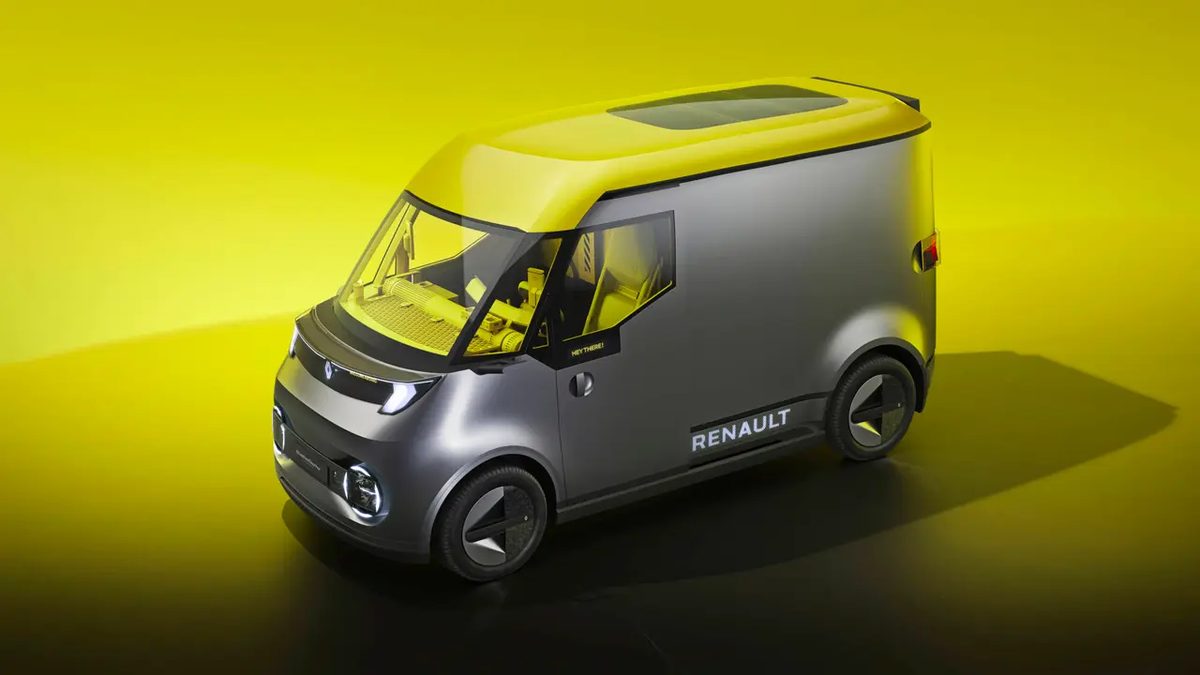
ルノーは象徴的なエスタフェットを引退から引き上げたが、それがガスを食い込むアンティークになるとは期待しないでください。 代わりに、フランスの自動車メーカーは、混雑した都市でのラストワンマイル配送に革命を起こすために設計されたゼロエミッション車である ルノー エスタフェット コンセプト の復活させました。 1959 年のクラシックなモデルを踏襲していますが、ノスタルジーよりも現代の効率性と持続可能性を優先したプラットフォームに基づいて構築されています。
Compact size and strong practicality
The technical challenges here were special. The idea was to create a van that could carry as much cargo as a larger vehicle, but still fit in places other cars couldn’t. Renault says the new Estafette concept strikes a rare balance between agility and payload. In terms of footprint, this vehicle handles a similar ride to the Clio V, but its physical dimensions match the Kangoo L2. Despite its compact appearance, the Trafic L1H2 offers more luggage space.
Why is this important? Because urban logistics are increasingly restrictive. Cities are tightening access rules, tightening delivery windows and demanding cleaner operations. This concept car directly responds to these limitations. Built on the FlexEvan 100% Electric Architecture, it is specifically tailored for the demanding needs of commercial use rather than passenger comfort.
Built for urban loads
It’s not just green. This has something to do with operational speed. The design focuses on the driver’s workflow. In an urban environment, every minute spent loading and unloading money lost. The Estafette concept simplifies these tasks with functional design choices that optimize safety and time.
“It combines the agility of the Clio V with the payload of the Trafic L1H2, tailored for tight access restrictions in urban areas.”
As for the fleets, the appeal is clear. It has the maneuverability you need to navigate narrow roads and tight parking spaces, and the payload capacity to make your run worthwhile. Electric powertrains eliminate noise and emissions, but the real revolution may be in how we organize the physical space to help drivers moving faster.
Renault is not just a tribute to retro. They propose concrete solutions to a very modern problem: how to transport goods efficiently in ever smaller and tighter spaces. The Estafette concept shows that the future of delivery is not in big vans, but in smarter, sharper vans.
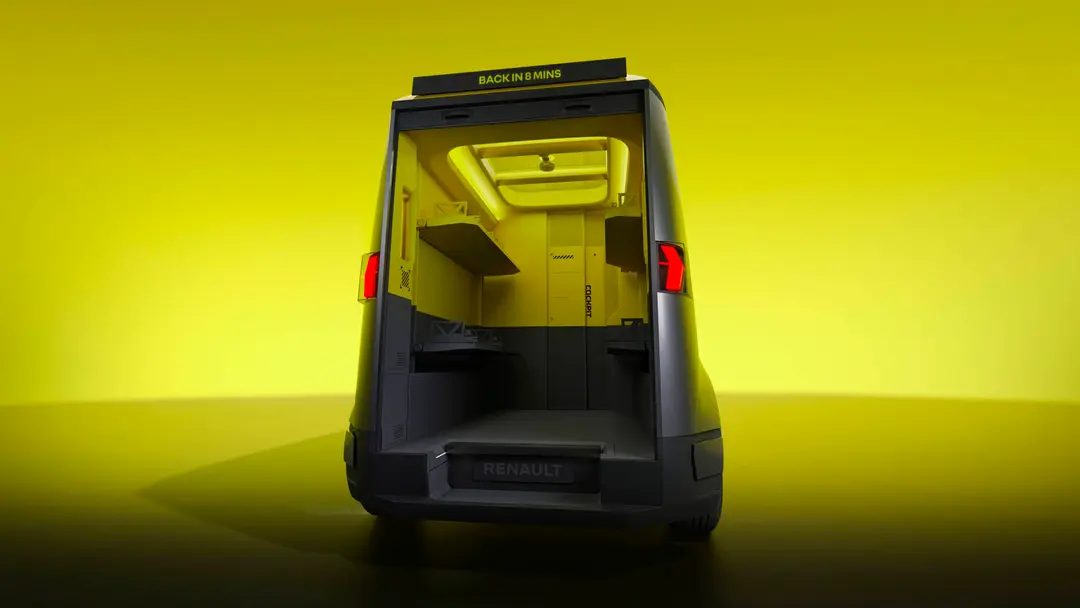

The return of the legend: the FlexEVann platform
Renault is increasing its investment in urban logistics with the launch of the FlexEVan, an electric multi-use platform that forms the basis of the new Estafette concept. This is more than just a renaissance. It’s a new reimagining of how delivery vans work in dense urban areas. The goal? Deliver clean, connected mobility solutions that truly meet the needs of modern supply chains.
At the heart of this change is the Software Defined Vehicle (SDV) architecture. Why is this important? Because it supports real-time over-the-air updates and predictive maintenance features. No more guessing when a part will fail. The vehicle tells you. This keeps uptime high and lowers operating costs. These are the two most important things for fleet managers.
Production schedule and impact on the market
Renault has set a tight deadline, and mass production of the model is expected to begin within the next two years. They don’t just tinker with prototypes. Their goal is to permanently change the urban commercial vehicle landscape.
With this change, the revitalized Estafette plays a key role in promoting emission-free delivery. It sits alongside the Master E-Tech to create a strong product portfolio for various segments of the commercial market.
The return of Estafette is an important milestone in emission-free urban logistics.
Renault believes that by combining traditional design features with the latest software features, connectivity and sustainability will become new differentiators. For fleet owners, the attraction is clear: lower emissions, smarter diagnostics and a platform built for the special needs of last-mile delivery.
The question now is not whether these vans will work, but how quickly competitors will rush to adapt their own SDV strategies. The game of urban delivery has changed. Those who don’t update their software won’t last long.