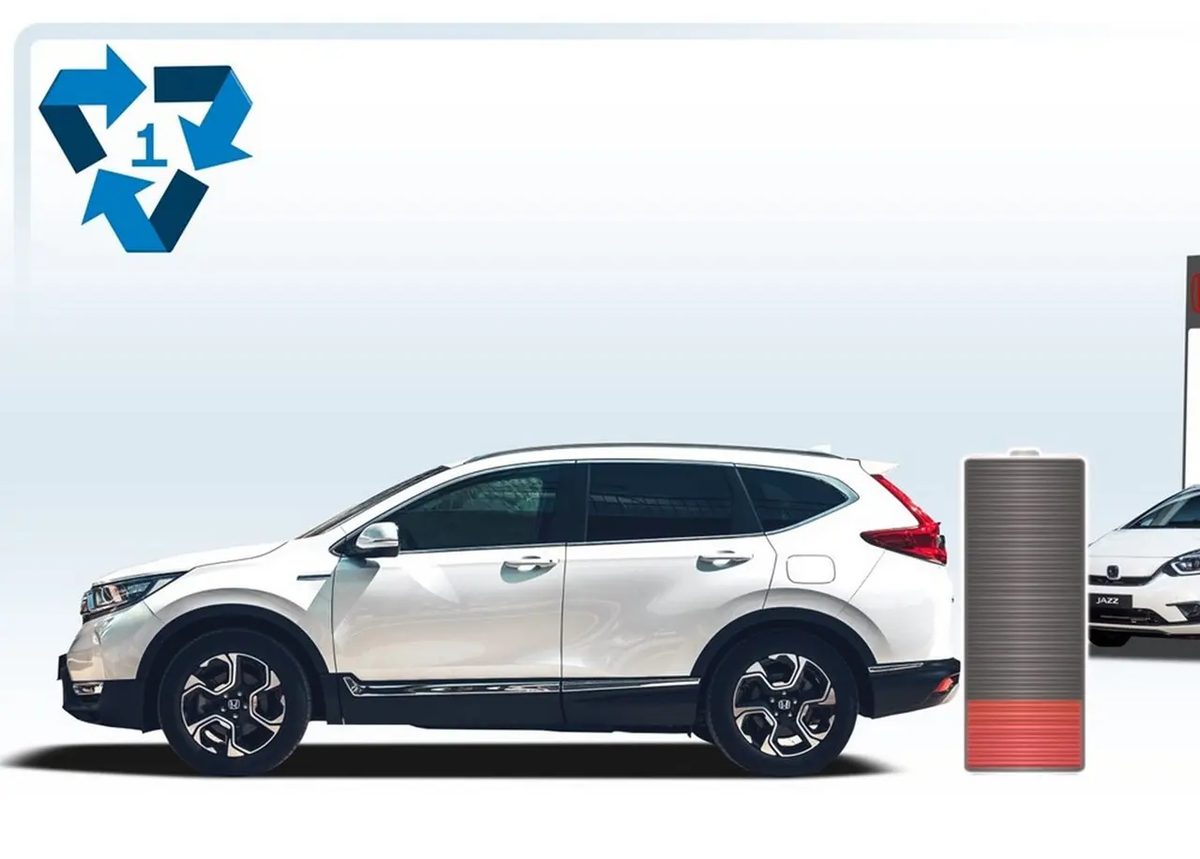
Honda is not waiting for the EU to force it to deal with battery waste. The automaker has signed an agreement with French metallurgical specialist SNAM to handle the end-of-life logistics for its electric and hybrid vehicles. This is not a sudden change. SNAM has been tracking used Honda batteries since 2013. The relationship is now moving from passive tracking to active collection and processing.
The agreement covers Honda’s 22 dealer network in Europe. When a customer unloads an electric or hybrid vehicle, dealers don’t just throw the battery in the corner. SNAM collects lithium ion and nickel metal hydride (NiMH) batteries directly from these locations. target? Keep dealer inventory low to ensure proper handling from day one.
Two paths for end-of-life power packs
SNAM does not destroy the battery as soon as you receive it. They start by the state of health first. Here is the hierarchy. If the cells still have enough juice, they can get a second life. These batteries are reused for industrial renewable energy storage. This is a logical extension. Solar and wind power require stable storage. Old electric car batteries are suitable for this purpose.
If battery performance is too low for storage, SNAM switches to extraction. They use hydrometallurgy to extract valuables. Cobalt and lithium are the target. These are not just wastes. they are critical raw materials. Removing them reduces the need for new mining.
“These materials can be reused in the manufacture of new batteries, as color pigments or additives in concrete,” SNAM said.
Closed-loop material recovery
The result of this process is more than just raw ore. It is a processed material that can be used for industrial purposes. Recycled metals can be returned directly to battery production. This is the holy grail of the circular economy. But that’s not all. These materials can also be pigments or concrete additives. Other components such as copper, steel and plastic are recycled and sold on the open market.
This particular Honda SNAM protocol focuses only on the main propulsion battery. It does not include the small 12 volt lead-acid battery used to start a conventional engine. They are already treated with standard car recycling processes. The deal includes a high-value, high-complexity packs to power the future of driving.
How dealers participate
Logistics is handled digitally. Retailers in Europe can request collection through an online platform maintained by SNAM. If requested, the pickup happens within 15 days. SNAM uses a central storage sites to batch of batteries. This prevents retailers from becoming de facto recycling centers. They don’t need to store hazardous waste on their lots. They send it and SNAM takes it from there.
This is a practical solution to an urgent problem. The battery volumes are about to spike. A clear recycling route for cobalt and lithium could change the economics of recycling. Turn waste into a stream of resources before the network becomes clogged with dead cells. It remains to be seen if this model will be scale to other manufacturers. For now, Honda has a clear path.